
4BT Cummins
4BT Cummins Performance Parts
Compound Turbo Kits, Exhaust Manifolds, and Turbo Upgrades for 4BT Swaps and Conversions
The 4BT 3.9L Cummins is the legendary 4-cylinder diesel that's become the go-to engine for Jeep Wrangler swaps, truck conversions, off-road builds, and custom diesel projects.
Known for bulletproof reliability, simple mechanical design, and excellent torque, the 4BT responds incredibly well to turbo upgrades and compound turbo systems. Diesel Power Source® performance parts deliver 200–300°F cooler EGTs, improve throttle response, and unlock 200–500 HP capability while maintaining the legendary Cummins durability that makes these engines perfect for serious off-road, commercial, marine, and custom swap applications.
Compact Size
30" long, 750 lbs. Fits Jeeps, Broncos, K5s, and trucks where the 6BT won't
200–300°F Cooler EGTs
Essential for reliability in tight swap engine bays
Mechanical Simplicity
P7100 or VE injection. No ECM, no computer, no programmer needed
200–500 HP Capable
From stock replacement turbos to compound turbo kits
4BT Cummins Platform Specifications
- Engine code: 4BT 3.9L (239 cubic inches), 4-cylinder inline diesel
- Production: 1983–1998 (rectangular port, 8V). 1999+ (round port, 16V)
- Fuel system: Bosch P7100 inline injection pump (most common swap engine) or VE rotary pump (earlier models)
- Factory power: 105–170 HP / 265–420 lb-ft depending on application and year
- Stock turbo: Holset HX25, HX30, or HX35 (varies by application)
- Dimensions: Approximately 30" long x 25" wide x 38" tall, approximately 750 lbs
- Common donor vehicles: Bread trucks, step vans (Grumman, P30), shuttle buses, school buses, industrial equipment, agricultural machinery
- Popular swap platforms: Jeep Wrangler (CJ, YJ, TJ, JK), Jeep Cherokee (XJ), Ford Bronco, Chevy K5 Blazer, Toyota Land Cruiser, classic Ford and Chevy trucks, military vehicles, marine vessels
- Compatible transmissions: NV4500, 4L80E, TH400, AX-15, Allison, 700R4, and other common swap transmissions with aftermarket adapters
- Key advantages: No ECM or computer required, gear-driven internals, shares parts with 6BT (5.9L Cummins), 17–25 MPG in most swap applications
Rectangular Port vs Round Port: Which 4BT Do You Have?
Before ordering any exhaust manifold or compound turbo kit, you need to know which port shape your 4BT engine has. The two versions use different manifolds and are not interchangeable.
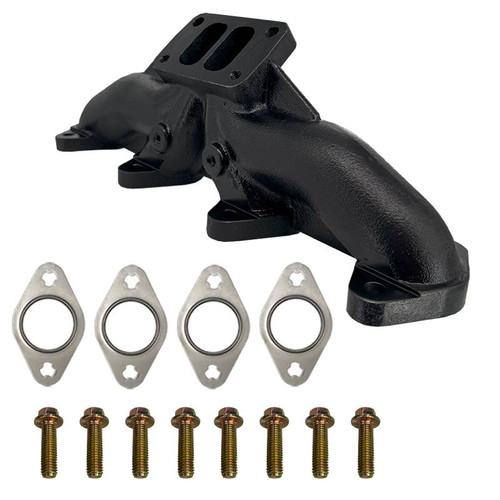
- Rectangular Port (8V): 2 valves per cylinder, 8 valves total. Found on 1998 and older 4BT engines. This is the most common 4BT swap engine, typically sourced from bread trucks, step vans, and shuttle buses. Uses mechanical injection (VE or P7100). Shop Rectangular Port Compound Kit | Shop Rectangular Port Manifold
- Round Port (16V): 4 valves per cylinder, 16 valves total. Found on 1999 and newer 4BT/4BTA/4BTAA engines. Less common in the swap market. Used in later industrial, commercial, and marine applications. Shop Round Port Compound Kit | Shop Round Port Manifold
How to check: Look at the exhaust side of your cylinder head where the manifold bolts on. Rectangular ports are wider than tall. Round ports are circular. If you are unsure, contact Diesel Power Source® with a photo of your exhaust ports.
Popular Upgrade Paths for 4BT Cummins
Daily Driver / Light Duty (180–220 HP)
HX35 or small S300 turbo + moderate P-pump work + 3" exhaust. Great balance for street use and Jeep swaps, 150–200°F cooler EGTs.
Off-Road / Heavy Use (220–280 HP)
S300 single (S362, S366) + full P-pump build + 4" exhaust. Excellent torque for crawling, towing, and work applications, 200–250°F cooler EGTs.
Performance / Compound Turbo (280–500 HP)
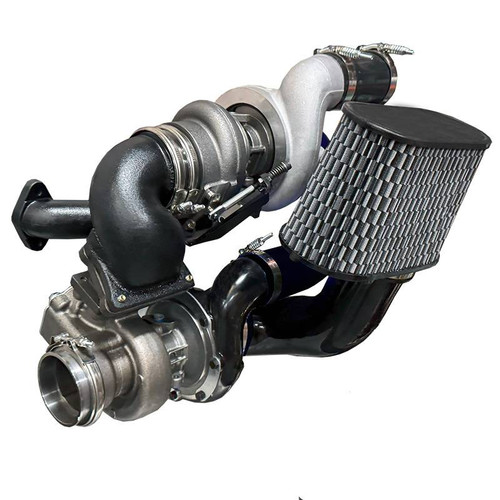
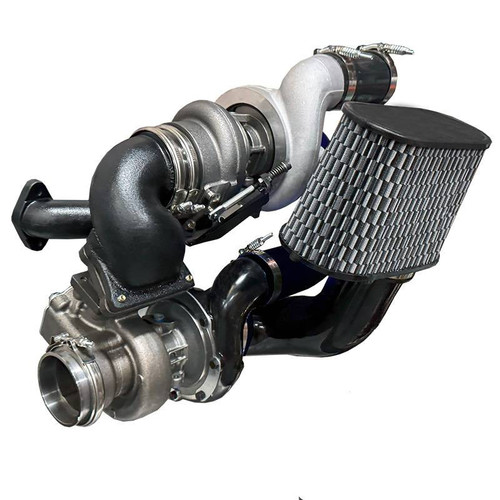
DPS Compound Turbo Kit (HE351CW + S366) + race P-pump + big injectors. Maximum power from 3.9L with 22–27% more HP than single turbo, 250–300°F cooler EGTs.
Why the 4BT Is the Most Popular Diesel Swap Engine
The Cummins 4BT is essentially two-thirds of the legendary 6BT (5.9L Cummins). It shares forged-steel connecting rods, durable pistons, and the same head design as its 6-cylinder sibling. At roughly 30 inches long and 750 pounds, it fits in engine bays where the 6BT simply cannot, making it the preferred diesel conversion for compact vehicles and tight chassis.
The 4BT is 100% mechanically injected with no ECU, no sensors, and no unnecessary electronics to fail. It is gear-driven from the cam to the injection pump and even has a gear-driven oil pump. This mechanical simplicity means the engine can be installed, tuned, and maintained with hand tools and no computer. For off-road, overland, and remote-use vehicles, this is a critical advantage over electronically controlled diesel engines.
While most gas engines in older vehicles average 12–15 MPG, a properly swapped 4BT typically achieves 17–25 MPG depending on the vehicle, tires, gearing, and driving conditions. This fuel economy advantage, combined with diesel torque and Cummins reliability, is why 4BT swaps continue to grow in popularity.
- Jeep Wrangler and Cherokee swaps — The most popular 4BT swap platform (CJ, YJ, TJ, JK, XJ). Diesel torque for trail crawling, overlanding, and daily driving.
- Classic truck builds — Ford F-series, Chevy C/K, Dodge D-series, International, and other vintage trucks where a compact diesel conversion adds torque and fuel economy.
- Off-road and overland rigs — Ford Broncos, Chevy K5 Blazers, Toyota Land Cruisers, and purpose-built trail machines where fuel range and low-RPM torque matter.
- Step vans and commercial vehicles — Where the 4BT was originally found and where reliability and fuel economy are critical for daily commercial use.
- Marine applications — Boats where the 4BT's compact footprint, mechanical injection, and proven durability make it ideal.
- Industrial and stationary power — Generators, pumps, welders, and equipment where the 4BT provides reliable mechanical diesel power.
For more on why the 4BT is so popular for engine swaps, see our blog post: Why Is the 4BT Cummins So Popular for Engine Swaps?
P7100 vs VE Pump: What's in Your 4BT?
The two most common fuel injection pumps found on 4BT swap engines are the Bosch P7100 inline pump and the Bosch VE rotary pump. Both are fully mechanical with no electronics required.
- P7100 (inline pump): Found on later 4BT engines, typically paired with the 12-valve head. The P7100 is the most sought-after fuel system for performance 4BT builds because it is highly upgradeable. Modified delivery valves, larger rack travel, adjusted timing, and governor spring upgrades can add significant horsepower with simple hand tools. This is the same pump family used on the legendary 1994–1998 12-valve 5.9L Cummins.
- VE pump (rotary pump): Found on earlier 4BT engines. The VE pump is simpler and lighter than the P7100 but has less fueling headroom for high-HP builds. Fuel pins, governor springs, and delivery valve modifications can still add meaningful power, but the VE pump reaches its ceiling sooner than the P7100 at approximately 200–250 HP.
Both pumps work with all DPS turbo and manifold products. The turbo system does not need to be matched to the pump type. Choose your turbo or compound kit based on your HP goals, and match your fuel system upgrades separately.
4BT Cummins FAQ
- Is the 4BT a good engine for a Jeep swap? Yes. The 4BT is the most popular diesel swap engine for Jeep Wranglers (CJ, YJ, TJ, JK) and Cherokees (XJ). At 30 inches long and 750 pounds, it fits in the Jeep engine bay without major firewall modifications. It provides massive low-RPM torque for trail crawling and overlanding, fuel economy of 17–25 MPG, and legendary Cummins reliability with zero electronics to fail.
- How much horsepower can a 4BT make? Stock 4BT engines produce 105–170 HP depending on the application. With a turbo upgrade and fuel system modifications, 200–280 HP is achievable on stock internals. With a DPS compound turbo kit and a built fuel system, the 4BT can produce up to 500 HP.
- What transmissions work with a 4BT swap? The most common transmissions used behind a 4BT are the NV4500 5-speed manual, 4L80E automatic, TH400 automatic, AX-15 manual (Jeep applications), Allison automatics, and 700R4 automatic. Aftermarket bellhousing adapters and engine mount kits are widely available for most combinations.
- Does the 4BT need a computer or ECM? No. The 1998 and older 4BT engines (rectangular port, 8V) use fully mechanical fuel injection with no ECU, no sensors, and no electronics required. This is one of the primary reasons the 4BT is so popular for swaps, especially in off-road, agricultural, and marine applications where electronic reliability is a concern.
- What fuel economy does a 4BT swap get? Most 4BT swaps achieve 17–25 MPG depending on the vehicle, tire size, gearing, and driving conditions. This is typically 30–60% better fuel economy than the gas engine the 4BT replaces.
- Where do I find a 4BT engine? The most common sources for 4BT engines are bread trucks, Grumman step vans, Chevy P30 vans, shuttle buses, school buses, and industrial equipment. Engines with the P7100 injection pump are the most desirable for performance builds.
- What is the difference between rectangular port and round port 4BT? Rectangular port engines (1998 and older) have 2 valves per cylinder (8V total) and use mechanical injection. Round port engines (1999 and newer) have 4 valves per cylinder (16V total). The rectangular port 4BT is the most common swap engine. DPS offers manifolds and compound kits for both port configurations.
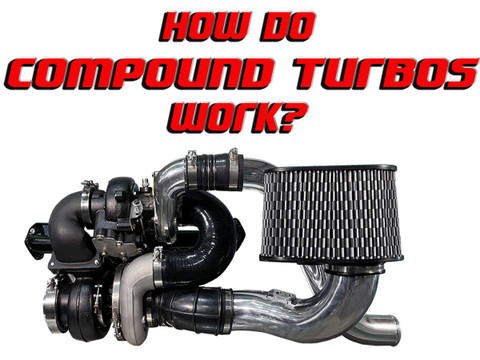
- Can I add compound turbos to a 4BT? Yes. Diesel Power Source® offers a complete compound turbo kit for the 4BT that pairs an HE351CW primary turbo with an S366 atmospheric turbo. This system delivers 22–27% more horsepower than a single turbo with dramatically lower EGTs. It is the same proven compound architecture used on thousands of DPS 5.9L and 6.7L Cummins kits.
Why 4BT is Perfect for Swaps: The 4BT offers genuine Cummins reliability in a package that fits where the 6BT won't. At only 30 inches long and 750 lbs, it fits in Jeeps, Broncos, Blazers, Land Cruisers, and smaller trucks while providing massive low-end torque and legendary durability. The mechanical injection means no computer needed, making it ideal for off-road, overland, agricultural, and marine use.
Shop by component: Compound Turbo Kits | Exhaust Manifolds | 4BT Swap Guide
Frequently Asked Questions 4BT Cummins
The 4BT is a 4-cylinder version of the legendary 6BT Cummins; essentially 2/3 of a 12-valve.
4BT basics:
- Displacement: 3.9L (239 cubic inches) vs. 5.9L (359 cubic inches) 6BT
- Configuration: 4-cylinder inline vs. 6-cylinder inline
- Injection: Mechanical P7100 P-pump (most common) or VE rotary pump (earlier)
- Dimensions: ~30" long, ~750 lbs (vs. 6BT at ~40" long, ~1,100 lbs)
- Design similarity: Shares many parts with 6BT (head design, injection system, etc.)
- Port type: Rectangular port (8V, 2 valves per cylinder) on 1998 and older. Round port (16V, 4 valves per cylinder) on 1999 and newer.
Original applications (where to find 4BT engines):
- Bread delivery trucks (step vans)
- School buses (smaller buses)
- Box trucks and delivery vehicles
- Agricultural equipment (tractors, combines)
- Industrial generators and pumps
- Occasionally in international Land Cruisers and military vehicles
Factory power levels:
- 105-130 HP naturally aspirated (rare)
- 130-170 HP turbocharged (most common)
- 265-420 lb-ft torque depending on application
Why 4BT became popular for swaps:
- Compact size fits in vehicles that can't accommodate 6BT
- Legendary Cummins reliability and simplicity
- Mechanical injection (no computer needed for off-road use)
- Excellent low-end torque for rock crawling and heavy loads
- Parts interchangeability with 6BT (pumps, turbos, injectors)
4BT fits in many vehicles; most popular are Jeeps and smaller trucks.
Most popular 4BT swap platforms:
Jeep Wrangler (all generations):
- Why popular: Perfect size for Jeep; massive torque for crawling
- Fitment: Tight but doable; requires motor mounts, trans adapter, front suspension work
- Power needs: 150-200 HP ideal; too much power breaks axles and drivetrain
- Best for: Serious off-road rigs, rock crawlers, expedition vehicles
Toyota Land Cruiser (40, 60, 80 series):
- Why popular: Legendary Land Cruiser reliability meets Cummins torque
- Fitment: Good engine bay space; straightforward swap
- Power needs: 180-250 HP works well with Land Cruiser chassis strength
- Best for: Expedition vehicles, overlanding, international travel
Pickup trucks (S10, Ranger, Dakota, Tacoma):
- Why popular: Small trucks benefit from diesel torque and economy
- Fitment: Varies by truck; most accommodate 4BT with modification
- Power needs: 200-280 HP appropriate for light truck use
- Best for: Daily drivers, work trucks, fuel economy builds
Military vehicles (HMMWV, M35, etc.):
- Why popular: Reliable power for military truck conversions
- Fitment: Purpose-built for heavy use; good match
Other popular swaps:
- Samurai/Suzuki (tight but extreme builds)
- Early Broncos and Blazers
- Custom rock buggies and trail rigs
- Rat rods and custom builds
Turbo choice depends on application; 3.9L displacement limits airflow needs.
For daily driving / light off-road (180-220 HP):
- HX35 or small HX40: Common upgrade, good spool
- Benefits: Quick response, 150-200°F cooler EGTs, reliable
- Supporting mods: Moderate P-pump work, 3" exhaust
- Best for: Street-driven swaps, daily use, light wheeling
For serious off-road / work use (220-280 HP):
- S300 singles (S362, S366): Excellent for 4BT
- Benefits: Great spool for low RPM torque, 200-250°F cooler EGTs, clean power
- Supporting mods: Full P-pump build, 4" exhaust, upgraded intercooler
- Best for: Rock crawling, heavy towing, work trucks
For maximum power (200-500+ HP):
- DPS Compound Turbo Kit (HE351CW + S366) or S400 singles Pushing 3.9L to limits
- Benefits: Maximum airflow, 250-300°F cooler EGTs, handles extreme fueling
- Caution: This much power stresses small displacement; compounds better than huge single
- Supporting mods: Race P-pump, big injectors, built internals, everything
- Best for: Drag racing, dyno competition, extreme builds
- DPS Compound Turbo Kit: Complete bolt-on system with HE351CW primary + S366 atmospheric, 22-27% more HP than single turbo. See the 4BT Compound Turbo Kit.
4BT-specific turbo considerations:
- Small displacement (3.9L) means you don't need giant turbos
- Too large turbo = terrible low-end response (bad for off-road use)
- S300 singles sweet spot for most applications
- 4BT responds very well to turbo upgrades (significant gains from small changes)
Stock 4BT internals good to 250-280 HP; beyond that requires upgrades.
Stock 4BT (105-170 HP factory):
- Block: Very strong cast iron; can handle significant power
- Rods: Forged; good to ~250 HP
- Pistons: Cast; weak point for extreme power
- Head gasket: Stock gasket adequate to ~250 HP
Reliable power levels:
- 180-220 HP: Very safe, excellent reliability, great for daily use and off-road
- 220-280 HP: Approaching stock limits; monitor closely, quality supporting mods essential
- 280-320 HP: Needs head studs, possibly upgraded pistons, careful tuning
- 320-350+ HP: Full build (studs, forged pistons, possibly rods); approaching practical limits
What limits 4BT power?
- Small displacement: 3.9L has less air capacity than 5.9L or 6.7L
- Heat management: 4 cylinders = more heat per cylinder than 6BT
- Drivetrain in swaps: Jeep/small truck axles often break before engine does
- Vibration: 4-cylinder inherently less balanced; extreme power rough
Recommended power for different applications:
- Jeep swaps: 150-200 HP (more breaks axles and drivetrain)
- Light trucks: 200-250 HP (good balance for daily use)
- Heavy-duty builds: 250-300 HP (with proper supporting mods)
- Competition only: 300-500 HP (full build, not for street reliability)
4BT swaps require significant fabrication and problem-solving.
Physical fitment challenges:
- Engine height: 4BT tall; may interfere with hood (especially in Jeeps)
- Weight distribution: 750 lbs adds significant front-end weight
- Front suspension: Usually requires upgraded springs/coilovers
- Oil pan clearance: Front axle and crossmember clearance tight
- Motor mounts: Custom mounts always required
Drivetrain integration:
- Transmission adapter: Custom adapter plate needed (~$500-800)
- Transmission choice: Need strong trans (NV4500, SM465, TH400, Allison, etc.)
- Transfer case: May need adapter or different case
- Driveshaft lengths: Custom shafts required
Cooling system:
- Radiator: Need larger capacity for diesel heat
- Intercooler: If turbocharged, need to mount intercooler
- Plumbing: Custom radiator hoses, intercooler piping
Electrical and gauges:
- No ECM needed: Mechanical injection simplifies wiring
- Gauges: Need to add EGT, boost, oil pressure, water temp
- Glow plugs: Wire in glow plug system or use block heater
- Alternator: 4BT alternator or adapt existing
Cost reality:
- Engine: $1,500-3,500 (used)
- Mounts, adapters, accessories: $1,500-3,000
- Cooling, exhaust, plumbing: $1,000-2,000
- Labor (if paying shop): $5,000-15,000
- Total: $10,000-25,000+ for complete swap
Worth it? For serious off-road, expedition, or work vehicles, yes. For casual weekend use, maybe not unless you enjoy the project.
Yes, but with compromises; depends on swap quality and application.
Daily driving realities:
Advantages for daily use:
- Fuel economy: 18-25 MPG typical (excellent for a diesel truck/Jeep)
- Reliability: Legendary Cummins durability; simple to maintain
- Torque: Massive low-end pull makes driving easy
- No electronics: Mechanical injection = fewer failure points
- Longevity: 300k-500k+ miles possible with maintenance
Challenges for daily use:
- Noise: 4BT LOUD; sounds like a tractor (vibration and diesel clatter)
- Vibration: 4-cylinder inherently rough; noticeable at idle and cruise
- NVH (noise/vibration/harshness): Not refined like modern diesels
- Cold starts: Glow plugs or block heater needed in cold climates
- Smell: Diesel smell present (especially if any leaks)
By application:
- Jeep: Noisy and rough but acceptable if you love off-roading
- Small truck: Better than Jeep (more sound deadening possible)
- Work truck: Perfect; noise doesn't matter for work duty
- Luxury daily: Probably not ideal unless you're a serious diesel enthusiast
Improving daily drivability:
- Sound deadening material in cabin
- Quality motor mounts to reduce vibration transfer
- Smooth P-pump tuning (avoid lumpy idle)
- Turbo upgrade helps reduce smoke and improve response
Fuel economy excellent; one of the main reasons people do 4BT swaps.
By vehicle and use:
Jeep Wrangler with 4BT:
- Highway: 20-25 MPG (conservative driving)
- Mixed: 18-22 MPG
- Off-road: 15-18 MPG (4-low crawling uses fuel)
- Comparison: Stock gas Wrangler gets 12-17 MPG
Small truck (S10, Ranger, etc.) with 4BT:
- Highway: 22-28 MPG (excellent)
- Mixed: 19-23 MPG
- Towing light loads: 18-22 MPG
- Comparison: Stock gas truck gets 15-20 MPG
Land Cruiser with 4BT:
- Highway: 18-22 MPG
- Mixed: 16-19 MPG
- Towing: 14-17 MPG
- Comparison: Stock gas Cruiser gets 12-15 MPG
Factors affecting fuel economy:
- Tuning: Conservative pump tuning = best MPG; aggressive = worse
- Gearing: Proper gear ratios critical for highway cruising
- Tire size: Larger tires reduce MPG significantly
- Weight: Heavy bumpers, armor, equipment all hurt economy
- Aerodynamics: Lift, roof racks, boxy shape increase drag
- Driving style: Diesel rewards smooth, steady driving
Economy advantage: Even with modifications and off-road use, 4BT swaps typically achieve 30-60% better fuel economy than gas equivalents.
The 4BT was produced with two different cylinder head designs. You must know which one your engine has before ordering manifolds or turbo kits.
Rectangular Port (8V):
- Valves: 2 valves per cylinder, 8 valves total
- Engine years: 1998 and older
- Fuel system: Mechanical injection (VE rotary pump or P7100 inline pump)
- Most common in: Bread trucks, step vans (Grumman, P30), shuttle buses, school buses, industrial equipment
- Swap popularity: This is the most common 4BT swap engine. The majority of Jeep, truck, and custom builds use the rectangular port 8V engine.
- DPS products: Rectangular Port Compound Turbo Kit | Rectangular Port Exhaust Manifold
Round Port (16V):
- Valves: 4 valves per cylinder, 16 valves total
- Engine years: 1999 and newer
- Fuel system: Electronic injection
- Most common in: Later industrial equipment, commercial vehicles, marine applications, some medium-duty trucks
- Swap popularity: Less common in the swap market than the rectangular port engine
- DPS products: Round Port Compound Turbo Kit | Round Port Exhaust Manifold
How to check your port shape: Look at the exhaust side of the cylinder head where the manifold bolts on. Rectangular ports are wider than tall. Round ports are circular. The manifolds and compound turbo kits are not interchangeable between port types. If you are unsure, contact Diesel Power Source® with a photo of your exhaust ports before ordering.