

Chummins Conversion Kits
Chummins Turbo Kits: Compound Turbos for Cummins-Swapped Chevy and GMC Trucks
The only compound turbo kits engineered for Chummins swaps, with the manifold and piping built to clear a Chevy engine bay.
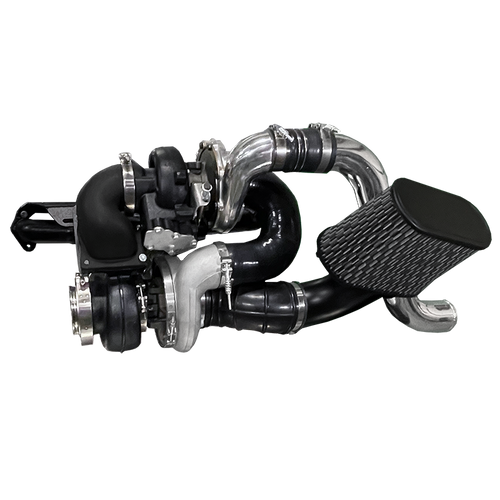
A Chummins is a Chevy or GMC truck with a Cummins diesel swapped in. A standard Dodge compound kit does not fit these builds, because the Chevy engine bay, motor mount positions, and accessory routing differ from a factory Cummins truck. Diesel Power Source® is the only company that makes compound turbo kits engineered for Chummins and Fummins chassis. The kits use the same turbo pairings as DPS 5.9L and 6.7L Cummins compound kits, with conversion-specific piping, mounting hardware, and a rear-mount manifold that places the turbo low and to the rear to clear the heater box.
Shop Chummins Turbo Kits and Parts
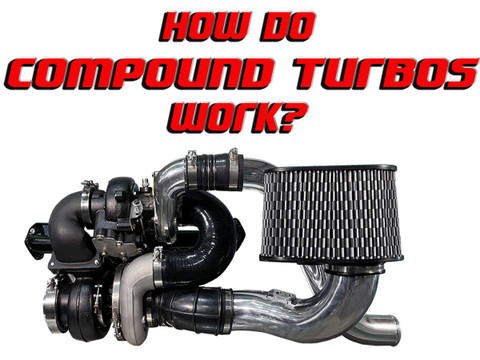
- Fummins and Chummins Compound Turbo Kit
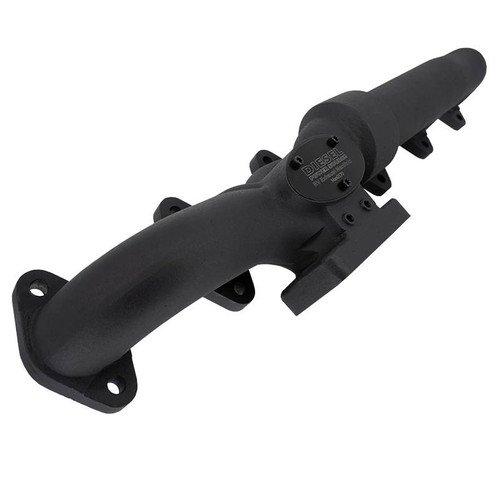
- T3 Exhaust Manifold for 12V Fummins, Chummins, RV and Bus
- 19-Inch Stainless Flexible Turbo Oil Drain Tube
Built for the Swap
Piping and mounting engineered for Chevy and Ford chassis
Clears the Heater Box
Rear-mount manifold places the turbo low and to the rear
5.9L or 6.7L Cummins
The same turbo pairings as DPS pickup compound kits
VGT and Ball Bearing Options
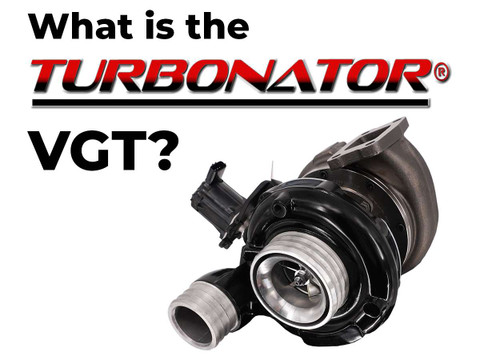
Turbonator® VGT and ball bearing upgrades on every kit
Why a Chummins Needs a Swap-Specific Kit
- Engine bay geometry: The engine bay, motor mount positions, and accessory routing in a Chevy or GMC truck differ from a factory Dodge Cummins. A generic compound kit runs into major fitment problems.
- Turbo location: The standard Dodge center-mount manifold does not clear the heater box. The DPS rear-mount (90°) manifold directs the turbo lower and inward.
- Shared with Fummins: Chummins and Fummins kits use the same turbo and manifold components, so the same engineering clears both Ford and GM engine bays.
- Complete system: Both turbos, the manifold, hot-side and cold-side piping, oil lines, intake tubing, air filter, and hardware.
Chummins Compound Kit Stages
Kit sizing follows the Cummins engine in the swap. A 5.9L can run any stage below. A 6.7L starts at Stage 5, because its larger displacement spools bigger turbos the way a 5.9L spools smaller ones.
| Stage | Small Turbo | Large Turbo | HP Range (RWHP) |
|---|---|---|---|
| Stage 2.5 | S362/68/.70 | S475/96/1.32 | 400-625 |
| Stage 3 | S362/68/.70 | S480/96/1.32 | 425-650 |
| Stage 4 | S363/68/.70 | S475/96/1.32 | 425-700 |
| Stage 4B | S363/68/.70 | S480/96/1.32 | 450-725 |
| Stage 4.5 | S363/68/.70 Ball Bearing | S475/96/1.32 | 400-700 |
| Stage 4.5B | S363/68/.70 Ball Bearing | S480/96/1.32 | 425-725 |
| Stage 5 | S363/73/.80 | S475/96/1.32 | 475-750 |
| Stage 5.5 | S363/73/.80 Ball Bearing | S475/96/1.32 | 450-750 |
| Stage 6 | S363/73/.80 | S480/96/1.32 | 500-800 |
| Stage 6.5 | S363/73/.80 Ball Bearing | S480/96/1.32 | 475-800 |
| Stage 8 | S366/73/.80 | S480/96/1.32 | 600-1,100 |
| Stage 8.5 | S366/73/.80 Ball Bearing | S480/96/1.32 | 575-1,100 |
HP figures are approximate rear wheel horsepower and vary with tuning, fueling, and supporting modifications. Ball bearing stages spool approximately 200 RPM sooner, which is why they start at a lower HP point. The Turbonator® VGT is available on any stage and adds exhaust brake capability with the electronic version.
What Compound Turbos Do for a Chummins
Two Turbos Share the Load
The small turbo spools early for low-RPM response, and the large turbo supplies high-RPM airflow. Splitting the work between two turbos means neither one takes all the load, which helps both last longer.
Lower EGTs Under Load
Compounds push enough air for more complete combustion, so more of the fuel's energy becomes power and less leaves as exhaust heat. That is what drops EGTs when towing or making power.
Street Manners and Power Together
Above about 600-650 HP, a single turbo large enough to make the power gives up low-end response. Compounds are typically the only way to get mild street manners and strong towing at that level.
Boost to Horsepower
Expect roughly 10 HP per PSI of boost on a 5.9L Cummins and about 13.5 HP per PSI on a 6.7L. Head studs are recommended above 45 PSI on 1988-2002 engines, 55 PSI on 2003-2007 engines, and 48 PSI on 2007.5-2018 engines.
Fitment
- Chevy and GMC trucks with a swapped 5.9L or 6.7L Cummins
- Cummins engine years 1988-2018; select your engine year at checkout
- T3 manifold: all 1988-1998 5.9L 12-valve Cummins with a T3-flange turbo
- Tell DPS which Cummins engine and which Chevy or GMC chassis generation you are building when you order
Notes
- Swap-specific questions such as motor mounts, transmission interface, and wiring are outside the turbo kit. Your conversion shop or chassis resources are the best source for those.
- 6.7L compound kits replace the factory turbo and are for engines that have already been deleted. Diesel Power Source® does not sell emissions delete components.
- Tuning is the owner's responsibility. DPS does not sell tuners or tuning.
- Warranty under the Diesel Power Source® PMA: S300 and S400 turbos 1 year / 15,000 miles; ball bearing turbos 1 year / 15,000 miles, whichever comes first. Registration within 14 days of purchase is required.
Related categories: Fummins Turbo Kits | Compound Turbo Kits | Turbonator® VGT Upgrades | Ball Bearing Turbos. Need help sizing a kit? Call 801-930-8404 or email sales@dieselpowersource.com. Free shipping on orders over $350.
Cummins is a registered trademark of Cummins Inc. Diesel Power Source® is not affiliated with Cummins Inc.
Find the Right Fit: Which Vehicles Work with Cummins Conversion Kits?
- Ford F-Series Trucks (like the F-250, F-350, F-450)
- Ford Excursion (heavy duty Class 2- years 2000-2005)
- Chevrolet Silverado Trucks (like the 2500HD, 3500HD)
- GMC Sierra Trucks (like the 2500HD, 3500HD)
How difficult is it to install a Cummins conversion kit?
Chummins Turbo Kit FAQ's
Chummins = Chevy/GMC truck with Cummins engine swap. These swaps are increasingly popular for replacing failed Duramax engines or building ultimate diesel workhorses.
Why Chummins needs different turbo approach:
- GM chassis constraints: IFS (independent front suspension) geometry, steering components, and crossmember placement differ significantly from Dodge trucks
- Hood clearance challenges: GM hoods sit lower than Dodge, limiting tall turbo setups without modification
- Frame and mount differences: GM frame rails and engine mount locations require custom turbo bracket positioning
- Intercooler routing: GM intercooler location and charge pipe routing completely different from Dodge
- A/C and power steering: GM accessory drive layout requires different clearance considerations
Our Chummins kits address these challenges with turbo systems proven to fit GM chassis, properly routed piping for GM intercooler locations, and mounting solutions that work around IFS and GM-specific obstacles.
Common Chummins platforms we support:
- 1988-1998 GMT400 (OBS) C/K series - classic platform, popular for 12V swaps
- 1999-2006 GMT800 Silverado/Sierra - very popular for all Cummins swaps
- 2007-2013 GMT900 Silverado/Sierra - common for 5.9L and 6.7L swaps
- 2014-2018 K2XX Silverado/Sierra - challenging but doable, mostly 6.7L swaps
- 2019+ T1XX Silverado/Sierra - rare, significant complexity
Our Chummins kits include everything for the turbo system:
- Turbocharger(s): Single or compound turbos sized for your power goals
- Exhaust manifold: High-flow manifold compatible with Chummins applications
- Turbo pedestal/mounting: Adapts turbo to manifold
- Intercooler piping: Custom routing for GM chassis (charge pipes from turbo to GM intercooler location)
- Oil lines: Feed and drain with proper fittings
- Downpipe: Turbo outlet to exhaust system connection
- All hardware: Gaskets, clamps, bolts, studs
- Installation instructions: Chummins-specific guidance
What you'll need to supply (typical Chummins swap components):
- Completed Cummins engine swap with mounts and wiring
- GM chassis and existing intercooler (or upgraded intercooler)
- Exhaust system from downpipe back
- Tuning for your Cummins ECM (12V needs injection pump setup, 24V/6.7L need ECM tuning)
Note: These are turbo system kits for already-swapped trucks. We do not provide engine mounts, transmission adapters, wiring harnesses, or other swap components—just the turbo performance system.
GM chassis presents significantly different challenges than Dodge trucks:
1. IFS (Independent Front Suspension) clearance:
- Biggest Chummins challenge: GM IFS upper control arms, CV axles, and differential are positioned very differently than Dodge solid axle
- Turbo downpipe and oil drain routing must avoid IFS components
- Some swaps require modified oil pans for IFS clearance
- Our kits account for IFS geometry in piping design
2. Hood clearance (critical for GM):
- GM hoods sit lower than Dodge: Limits vertical height for turbos
- Single turbos usually fit under stock GMT800/GMT900 hoods
- Compound setups almost always require cowl hood or hood modification on GM trucks
- OBS GM trucks have slightly more hood clearance than newer models
- We provide height measurements for each turbo configuration before you order
3. Steering system interference:
- GM steering box, pitman arm, and idler arm positioned differently than Dodge
- Downpipe routing must clear GM steering linkage
- More critical on 4WD trucks due to front axle and steering overlap
4. Frame rail and crossmember differences:
- GM frame rails narrower than Dodge in engine bay area
- Crossmember placement affects oil pan and turbo bracket mounting
- Compound turbo brackets often mount to frame—GM requires different positioning
5. Intercooler piping complexity:
- GM intercoolers mount in front bumper area (like Duramax)
- Charge pipe routing from Cummins turbo to GM intercooler completely custom
- Must route around IFS, radiator, A/C condenser, GM-specific obstacles
- Our kits include piping designed specifically for GM routing challenges
6. Accessory drive and A/C:
- GM A/C compressor and power steering pump locations different from Dodge
- May need GM-specific or custom accessory brackets
- Plan during swap—turbo kit works around your accessory setup
Our recommendation: Before ordering turbo kit, send us photos of your completed Chummins swap showing: engine bay from multiple angles, IFS components, hood clearance measurement, and intercooler location. We'll confirm fitment and advise on any needed modifications.
12-Valve Mechanical Chummins (very popular):
- 400-500 HP: S300 single turbo (S362, S366) - fits under most GM hoods, great street/tow
- 500-650 HP: Larger S300 or moderate S400 (S369, S472) - may require hood clearance check
- 650+ HP: Compound system - almost certainly requires cowl hood on GM trucks
24-Valve VP44 or Common Rail Chummins:
- 400-550 HP: S300 single or VGT upgrade - excellent for daily/tow, hood-friendly
- 550-700 HP: S400 single or S300/S400 compounds - compounds need cowl hood
- 700+ HP: S400/S400 compounds - definitely cowl hood required
6.7L Cummins Chummins (less common):
- 450-600 HP: VGT upgrade or S300 single - best hood clearance
- 600-750 HP: S300/S400 compounds - cowl hood needed
Hood clearance guidelines by GM generation:
- OBS GMT400 (88-98): Most hood clearance of GM trucks, single turbos usually fine, compounds tight but possible
- GMT800 (99-06): Moderate clearance, most singles fit, compounds usually need cowl hood
- GMT900 (07-13): Tighter hood, larger singles may touch, compounds definitely need cowl hood
- K2XX+ (14+): Tightest hoods, even some singles may require trimming, compounds absolutely need cowl hood
Cowl hood options:
- 2-3 inch cowl induction hoods available for most GM platforms ($500-1,200)
- Adds clearance for compounds and improves engine bay airflow
- Many Chummins owners prefer the look anyway
Not sure? Tell us: GM year/model, which Cummins engine, power goals, and whether you're willing to run cowl hood. We'll recommend the right turbo configuration.
Power potential matches standard Cummins applications—not limited by GM chassis:
12-Valve Chummins:
- Stock P-pump with turbo upgrade: 350-450 HP
- Modified P-pump + turbo: 450-600 HP
- Built P-pump + compounds: 600-800+ HP
- Advantage: Mechanical injection = no electronics to integrate with GM systems
- Most popular Chummins combo: P-pumped 12V is favored for simplicity
24-Valve VP44 Chummins:
- Tuned with turbo upgrade: 400-500 HP
- Injectors + turbo: 500-600 HP
- VP44 limitations: Pump maxes around 600 HP reliably
Common Rail (5.9L or 6.7L) Chummins:
- Tuned with single turbo: 450-600 HP
- Compounds with injectors: 600-750 HP
- Full build (compounds, dual CP3s, etc.): 750-900+ HP
- Challenge: More complex wiring integration with GM chassis
Real-world Chummins examples:
- 2000 Silverado 2500, 12V P-pump, S366 single: 485 HP - great daily tow truck
- 2004 Sierra 2500HD, 5.9L 24V, S369/S475 compounds: 640 HP - weekend racer/work truck
- 2010 Silverado 3500, 6.7L, S300/S400 compounds: 725 HP - serious puller
GM chassis capabilities:
- GM 2500/3500 frame handles power well—similar to Dodge
- IFS provides better street ride quality than Dodge solid axle
- With turbo upgrades, Chummins can match or exceed Duramax and stock Dodge performance
Same excellent EGT benefits as other Cummins applications—200-300°F improvement possible.
Why Chummins owners love turbo upgrades for towing:
- GM chassis + Cummins torque: Exceptional combination—best of both worlds
- EGT control: Single turbo drops EGTs 150-200°F, compounds drop 200-300°F
- IFS ride quality: Smoother ride when towing vs. Dodge solid axle (personal preference)
- GM Allison transmission option: Many Chummins retain GM Allison for excellent towing behavior
Typical towing improvements:
- Before (stock Cummins turbo): 1,375-1,450°F towing 18k lbs up grades
- After (DPS single turbo): 1,175-1,250°F same load, better response
- After (DPS compounds): 1,025-1,125°F, massive confidence and engine protection
Chummins towing advantages:
- GM HD suspension designed for heavy loads
- IFS provides stable, controlled ride when loaded
- Cummins torque curve perfect for towing
- With proper turbo setup, rivals or beats both Duramax and stock Dodge Cummins for towing
Popular Chummins towing configurations:
- GMT800 (99-06) 2500HD with 12V, S366 turbo, Allison trans - legendary towing combo
- GMT900 (07-13) 3500 with 6.7L, S300/S400 compounds - modern serious hauler