





5.9 Cummins
5.9 Cummins Performance Parts and Turbo Upgrades
Compound turbo kits, single turbo upgrades, and multi-piece exhaust manifolds for the 1989-2007 5.9L Cummins, from Diesel Power Source®.
Whether you have a P-pump 12-valve, a daily-driven 24-valve, or a common rail tow rig, Diesel Power Source® builds 5.9 Cummins parts to lower EGTs, improve spool, and make towing more reliable. Every 5.9L Dodge Cummins uses a T3 turbo flange from the factory, but the manifold, turbo, and piping change with each generation, so start with your truck year.
Browse 5.9 Cummins Performance Upgrades
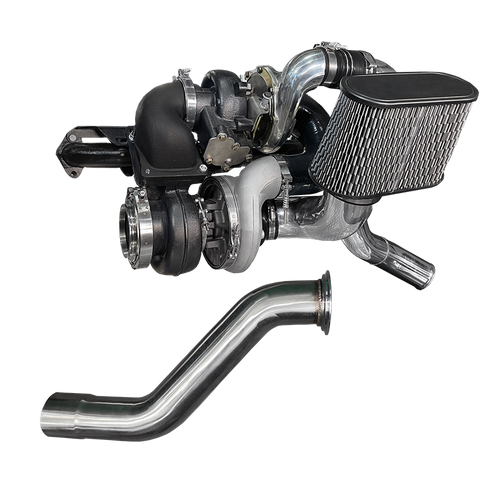
- Compound Turbo Kits
- Add-A-Turbo Kits
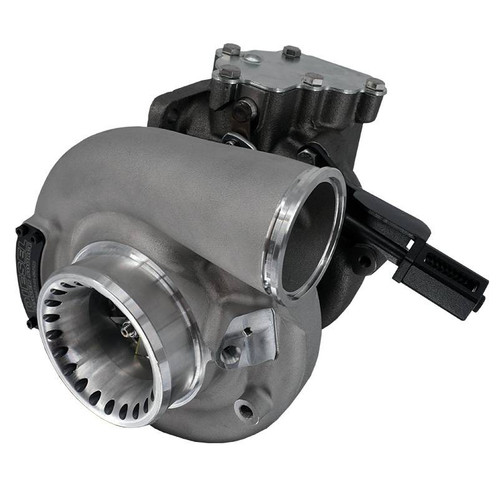
- S300 Single Turbos
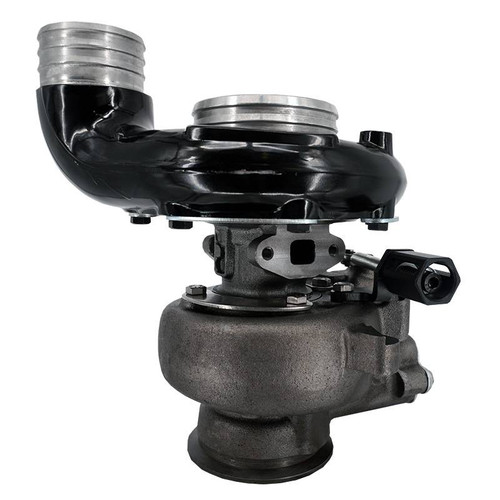
- All 5.9 Cummins Turbos
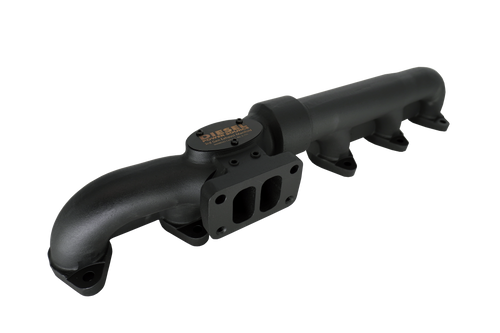
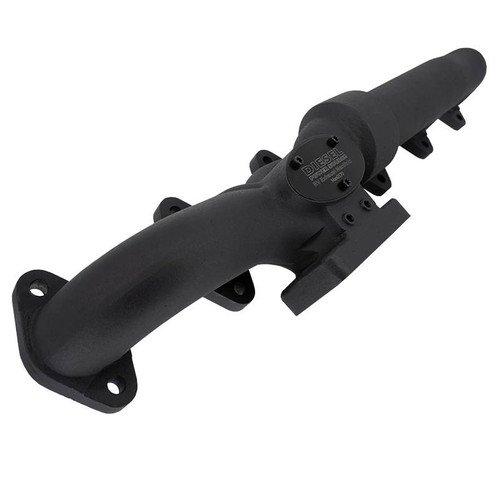
- 5.9 Cummins Exhaust Manifolds
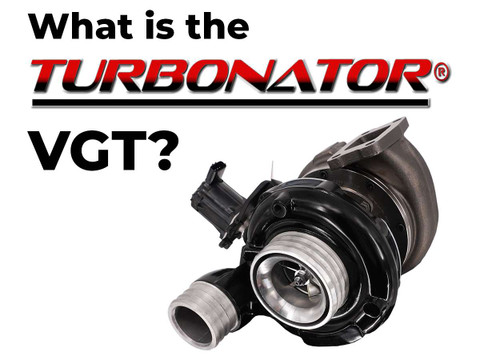
- Turbonator® VGT Upgrades
- Ball Bearing Turbos
Lower EGTs
Single turbos and compound kits both cut exhaust heat under load
Earlier Spool
Turbos sized to the engine and the fuel it is running
Multi-Piece Manifolds
HSMD castings with expansion joints that absorb thermal stress
Made in the USA
Designed and supported from West Jordan, Utah
Shop by 5.9 Cummins Generation
- 5.9L 12V, 1989-1993: 1st Gen trucks with the mechanical VE injection pump.
- 5.9L 12V, 1994-1998: 2nd Gen trucks with the P7100 inline pump.
- 5.9L 24V, 1998.5-2002: Four valves per cylinder with the electronic VP44 pump.
- 5.9L common rail, 2003-2007: 3rd Gen trucks with high-pressure common rail injection.
The 12V head has rectangular exhaust ports and the 24V head has round ports, so 12V and 24V manifolds are not interchangeable.
Turbo and Manifold Options for the 5.9L
- S300 single turbos: DPS turbos built on the S300 platform with 62mm to 69mm compressor wheels.
- Add-A-Turbo kits: Keep the factory turbo and add an S475 in front of it. The 5.9L kit includes the exhaust manifold.
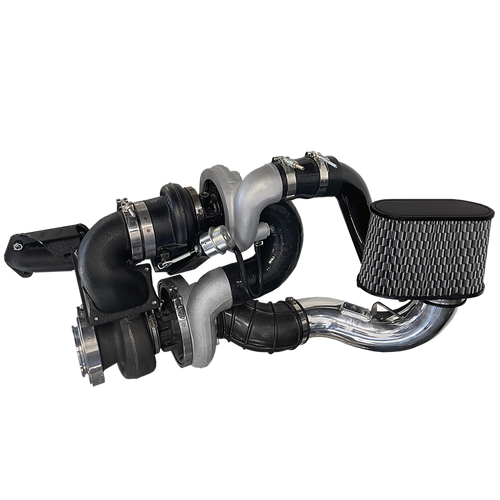
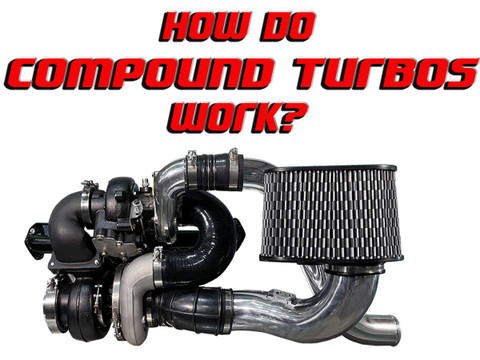
- Compound turbo kits: An S300 small turbo with an S475 or S480 large turbo, plus the manifold, piping, oil lines, air intake, and hardware. DPS is the only manufacturer with a bolt-on compound kit for 1st Gen trucks.
- Exhaust manifolds: 3-piece center-mount manifolds for 12V and 24V engines, and a 2-piece rear-mount manifold for 2003-2007 trucks.
- Turbonator® VGT and ball bearing upgrades: Available on S300 singles and compound kits.
Why Upgrade a 5.9 Cummins with Diesel Power Source® Parts
Air Matched to the Fuel
A turbo sized for the build moves enough air to burn the fuel completely. The truck accelerates harder, tows stronger, and holds speed on grades with less throttle.
Cooler EGTs Under Load
More complete combustion means more of the fuel's energy becomes power and less leaves as exhaust heat. Compound kits give the largest EGT reduction in the DPS lineup, and many customers run them on stock fuel.
Manifolds That Last
One-piece manifolds crack with enough heat cycles on a long inline six. DPS manifolds are cast from High Silicon Molybdenum Ductile iron (HSMD) in sections that are hydraulically pressed together, and every one is pressure-tested before it ships.
Engineered In-House
DPS turbos, manifolds, and piping are CFD tested during design and machined on CNC equipment. The 12V T3 manifold flows approximately 23% more than the factory manifold.
How to Choose a 5.9 Cummins Upgrade Path
Towing and Daily Driving
An S362 single covers stock to 450 RWHP and an S363/68 covers 375-525 RWHP, both with quick spool. An Add-A-Turbo kit with the S475 is matched from stock power to 600 RWHP.
Street Performance
The S363/73 single covers 400-575 RWHP, the S366 covers 450-650 RWHP, and the S369 covers 500-750+ RWHP. A compound kit with an S362 or S363 over an S475 keeps low-end response as power climbs.
High-Power Builds
Above about 600-650 HP, compounds are typically the way to keep street manners, with an S363/73 or S366 over an S480. Plan the supporting modifications listed below.
HP figures are approximate rear wheel horsepower and vary with tuning, fueling, and supporting modifications. Not sure which path fits? Use the Turbo Selector or call 801-930-8404.
Before You Order
- Confirm your year and generation: 12V, 24V, or common rail.
- Tell DPS whether the truck has the factory turbo or an aftermarket turbo, and the flange if it is aftermarket.
- Running an aftermarket intercooler? Tell DPS when you order so the piping matches.
- Order new gaskets and hardware with a manifold. An oil drain line is worth replacing at the same time.
Supporting Modifications
- Expect roughly 10 HP per PSI of boost on a 5.9L Cummins.
- Head studs are recommended above 45 PSI on 1988-2002 engines and 55 PSI on 2003-2007 engines.
- The factory transmission typically needs attention around 400 RWHP.
- The stock fuel system reaches its limit around 500-550 RWHP.
- Past about 800 RWHP, aftermarket connecting rods are the smart move.
- Tuning is the owner's responsibility. DPS does not sell tuners or tuning.
Ready to compare options? Visit 5.9 Cummins Manifolds, 5.9 Cummins Turbos, or all Dodge and Ram Cummins parts. Have a 6.7L? See 6.7 Cummins parts. Free shipping on orders over $350.
Cummins is a registered trademark of Cummins Inc. Diesel Power Source® is not affiliated with Cummins Inc.
5.9L Cummins FAQs
The 12V (1989-1998) has 12 valves - two per cylinder - and uses a fully mechanical fuel injection pump (Bosch VE in 1989-1993, the legendary Bosch P7100 inline pump in 1994-1998). The 24V (1998.5+) has 24 valves — four per cylinder — and uses an electronically controlled injection pump (VP44 in 24V trucks, common rail injectors from 2003 forward). The 12V is mechanically simpler and the favorite for high-horsepower builds because of its rod strength. The 24V offers more refinement, better breathing, and easier electronic tuning.
The factory bottom end on a 12V or early 24V Cummins reliably handles approximately 800 RWHP on stock rod bolts. With ARP rod bolts, street builds up to approximately 1,000 RWHP are common - these rods bend rather than snap. The 5.9 Common Rail (2003-2007) uses fractured-cap rods that are safer to approximately 650-800 RWHP for street use, with aftermarket rods becoming the smart choice beyond that. Note: head studs and head gaskets are typically the first upgrade needed at boost levels above 45-55 PSI depending on the year, and the transmission usually needs attention around 400 RWHP.
Yes. One of the most common misconceptions about compound turbos is that they're only for high-horsepower builds. Many of our customers run compound kits on completely stock fuel with zero other modifications. Properly sized for the engine, a compound kit improves combustion efficiency, lowers EGTs, and improves towing performance, all on stock fueling. The compound advantage isn't just "more power" - it's the engine working the way it was designed to.