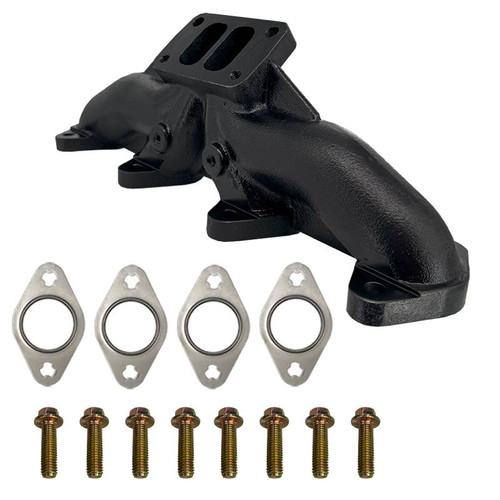


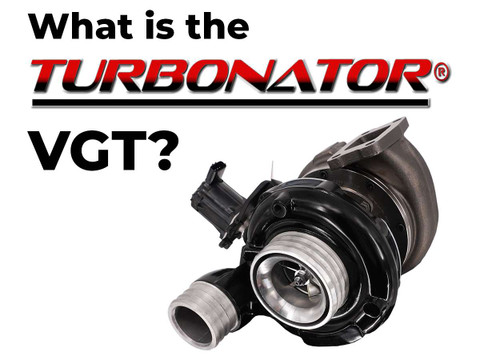
4BT Cummins
4BT Cummins Performance Parts
Compact 4-Cylinder Diesel Power for Conversions and Swaps
The 4BT 3.9L Cummins is the legendary 4-cylinder diesel that's become the go-to engine for truck, Jeep, and custom vehicle conversions.
Known for bulletproof reliability, simple mechanical design, and excellent torque, the 4BT responds incredibly well to modifications. Our performance parts deliver 200-300°F cooler EGTs, improve throttle response, and unlock 200-350+ HP capability while maintaining the legendary Cummins durability that makes these engines perfect for serious off-road, commercial, and custom applications.
Compact Size
Fits where 6BT won't; perfect for swaps
200-300°F Cooler EGTs
Essential for reliability in tight engine bays
Mechanical Simplicity
P-pump or VE injection; no electronics needed
200-350+ HP Capable
Serious power from small displacement
4BT Cummins Platform Specifications
- Engine code: 4BT 3.9L (239 cubic inches), 4-cylinder inline
- Fuel system: Bosch P7100 P-pump (most common) or VE rotary pump (earlier models)
- Factory power: 105-170 HP / 265-420 lb-ft depending on application and year
- Stock turbo: Holset HX25, HX30, or HX35 (varies by application)
- Common sources: Bread trucks, school buses, industrial equipment, agricultural machinery
- Popular swaps: Jeep Wrangler, Land Cruiser, pickup trucks, rock crawlers, military vehicles
- Key features: Compact size, light weight (~750 lbs), mechanical simplicity, legendary reliability
Popular Upgrade Paths for 4BT Cummins
Daily Driver / Light Duty (180-220 HP)
HX35 or small S300 turbo + moderate P-pump work + 3" exhaust. Great balance for street use, 150-200°F cooler EGTs.
Off-Road / Heavy Use (220-280 HP)
S300 single (S362, S366) + full P-pump build + 4" exhaust. Excellent torque for crawling and work, 200-250°F cooler EGTs.
Performance / Competition (280-350+ HP)
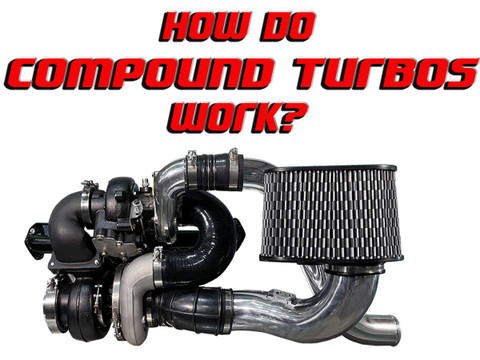
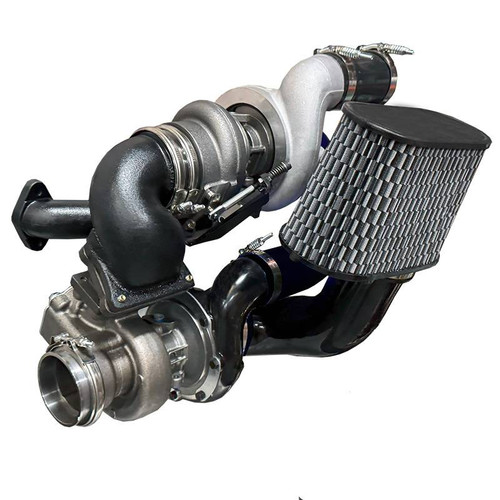
S400 single or compounds + race P-pump + big injectors. Maximum power from 3.9L, 250-300°F cooler EGTs critical.
Why 4BT is Perfect for Swaps: The 4BT offers genuine Cummins reliability in a package that fits where the 6BT won't. At only 30 inches long and 750 lbs, it fits in Jeeps, smaller trucks, and custom builds while providing massive low-end torque and legendary durability. The mechanical injection means no computer needed, making it ideal for off-road and agricultural use.
Shop by component: Turbo Systems | Exhaust Manifolds | Compound Kits
Frequently Asked Questions 4BT Cummins
The 4BT is a 4-cylinder version of the legendary 6BT Cummins; essentially 2/3 of a 12-valve.
4BT basics:
- Displacement: 3.9L (239 cubic inches) vs. 5.9L (359 cubic inches) 6BT
- Configuration: 4-cylinder inline vs. 6-cylinder inline
- Injection: Mechanical P7100 P-pump (most common) or VE rotary pump (earlier)
- Dimensions: ~30" long, ~750 lbs (vs. 6BT at ~40" long, ~1,100 lbs)
- Design similarity: Shares many parts with 6BT (head design, injection system, etc.)
Original applications (where to find 4BT engines):
- Bread delivery trucks (step vans)
- School buses (smaller buses)
- Box trucks and delivery vehicles
- Agricultural equipment (tractors, combines)
- Industrial generators and pumps
- Occasionally in international Land Cruisers and military vehicles
Factory power levels:
- 105-130 HP naturally aspirated (rare)
- 130-170 HP turbocharged (most common)
- 265-420 lb-ft torque depending on application
Why 4BT became popular for swaps:
- Compact size fits in vehicles that can't accommodate 6BT
- Legendary Cummins reliability and simplicity
- Mechanical injection (no computer needed for off-road use)
- Excellent low-end torque for rock crawling and heavy loads
- Parts interchangeability with 6BT (pumps, turbos, injectors)
4BT fits in many vehicles; most popular are Jeeps and smaller trucks.
Most popular 4BT swap platforms:
Jeep Wrangler (all generations):
- Why popular: Perfect size for Jeep; massive torque for crawling
- Fitment: Tight but doable; requires motor mounts, trans adapter, front suspension work
- Power needs: 150-200 HP ideal; too much power breaks axles and drivetrain
- Best for: Serious off-road rigs, rock crawlers, expedition vehicles
Toyota Land Cruiser (40, 60, 80 series):
- Why popular: Legendary Land Cruiser reliability meets Cummins torque
- Fitment: Good engine bay space; straightforward swap
- Power needs: 180-250 HP works well with Land Cruiser chassis strength
- Best for: Expedition vehicles, overlanding, international travel
Pickup trucks (S10, Ranger, Dakota, Tacoma):
- Why popular: Small trucks benefit from diesel torque and economy
- Fitment: Varies by truck; most accommodate 4BT with modification
- Power needs: 200-280 HP appropriate for light truck use
- Best for: Daily drivers, work trucks, fuel economy builds
Military vehicles (HMMWV, M35, etc.):
- Why popular: Reliable power for military truck conversions
- Fitment: Purpose-built for heavy use; good match
Other popular swaps:
- Samurai/Suzuki (tight but extreme builds)
- Early Broncos and Blazers
- Custom rock buggies and trail rigs
- Rat rods and custom builds
Turbo choice depends on application; 3.9L displacement limits airflow needs.
For daily driving / light off-road (180-220 HP):
- HX35 or small HX40: Common upgrade, good spool
- Benefits: Quick response, 150-200°F cooler EGTs, reliable
- Supporting mods: Moderate P-pump work, 3" exhaust
- Best for: Street-driven swaps, daily use, light wheeling
For serious off-road / work use (220-280 HP):
- S300 singles (S362, S366): Excellent for 4BT
- Benefits: Great spool for low RPM torque, 200-250°F cooler EGTs, clean power
- Supporting mods: Full P-pump build, 4" exhaust, upgraded intercooler
- Best for: Rock crawling, heavy towing, work trucks
For maximum power (280-350+ HP):
- S400 singles or compounds: Pushing 3.9L to limits
- Benefits: Maximum airflow, 250-300°F cooler EGTs, handles extreme fueling
- Caution: This much power stresses small displacement; compounds better than huge single
- Supporting mods: Race P-pump, big injectors, built internals, everything
- Best for: Drag racing, dyno competition, extreme builds
4BT-specific turbo considerations:
- Small displacement (3.9L) means you don't need giant turbos
- Too large turbo = terrible low-end response (bad for off-road use)
- S300 singles sweet spot for most applications
- 4BT responds very well to turbo upgrades (significant gains from small changes)
Stock 4BT internals good to 250-280 HP; beyond that requires upgrades.
Stock 4BT (105-170 HP factory):
- Block: Very strong cast iron; can handle significant power
- Rods: Forged; good to ~250 HP
- Pistons: Cast; weak point for extreme power
- Head gasket: Stock gasket adequate to ~250 HP
Reliable power levels:
- 180-220 HP: Very safe, excellent reliability, great for daily use and off-road
- 220-280 HP: Approaching stock limits; monitor closely, quality supporting mods essential
- 280-320 HP: Needs head studs, possibly upgraded pistons, careful tuning
- 320-350+ HP: Full build (studs, forged pistons, possibly rods); approaching practical limits
What limits 4BT power?
- Small displacement: 3.9L has less air capacity than 5.9L or 6.7L
- Heat management: 4 cylinders = more heat per cylinder than 6BT
- Drivetrain in swaps: Jeep/small truck axles often break before engine does
- Vibration: 4-cylinder inherently less balanced; extreme power rough
Recommended power for different applications:
- Jeep swaps: 150-200 HP (more breaks axles and drivetrain)
- Light trucks: 200-250 HP (good balance for daily use)
- Heavy-duty builds: 250-300 HP (with proper supporting mods)
- Competition only: 300-350+ HP (full build, not for street reliability)
4BT swaps require significant fabrication and problem-solving.
Physical fitment challenges:
- Engine height: 4BT tall; may interfere with hood (especially in Jeeps)
- Weight distribution: 750 lbs adds significant front-end weight
- Front suspension: Usually requires upgraded springs/coilovers
- Oil pan clearance: Front axle and crossmember clearance tight
- Motor mounts: Custom mounts always required
Drivetrain integration:
- Transmission adapter: Custom adapter plate needed (~$500-800)
- Transmission choice: Need strong trans (NV4500, SM465, TH400, Allison, etc.)
- Transfer case: May need adapter or different case
- Driveshaft lengths: Custom shafts required
Cooling system:
- Radiator: Need larger capacity for diesel heat
- Intercooler: If turbocharged, need to mount intercooler
- Plumbing: Custom radiator hoses, intercooler piping
Electrical and gauges:
- No ECM needed: Mechanical injection simplifies wiring
- Gauges: Need to add EGT, boost, oil pressure, water temp
- Glow plugs: Wire in glow plug system or use block heater
- Alternator: 4BT alternator or adapt existing
Cost reality:
- Engine: $1,500-3,500 (used)
- Mounts, adapters, accessories: $1,500-3,000
- Cooling, exhaust, plumbing: $1,000-2,000
- Labor (if paying shop): $5,000-15,000
- Total: $10,000-25,000+ for complete swap
Worth it? For serious off-road, expedition, or work vehicles, yes. For casual weekend use, maybe not unless you enjoy the project.
Yes, but with compromises; depends on swap quality and application.
Daily driving realities:
Advantages for daily use:
- Fuel economy: 18-25 MPG typical (excellent for a diesel truck/Jeep)
- Reliability: Legendary Cummins durability; simple to maintain
- Torque: Massive low-end pull makes driving easy
- No electronics: Mechanical injection = fewer failure points
- Longevity: 300k-500k+ miles possible with maintenance
Challenges for daily use:
- Noise: 4BT LOUD; sounds like a tractor (vibration and diesel clatter)
- Vibration: 4-cylinder inherently rough; noticeable at idle and cruise
- NVH (noise/vibration/harshness): Not refined like modern diesels
- Cold starts: Glow plugs or block heater needed in cold climates
- Smell: Diesel smell present (especially if any leaks)
By application:
- Jeep: Noisy and rough but acceptable if you love off-roading
- Small truck: Better than Jeep (more sound deadening possible)
- Work truck: Perfect; noise doesn't matter for work duty
- Luxury daily: Probably not ideal unless you're a serious diesel enthusiast
Improving daily drivability:
- Sound deadening material in cabin
- Quality motor mounts to reduce vibration transfer
- Smooth P-pump tuning (avoid lumpy idle)
- Turbo upgrade helps reduce smoke and improve response
Fuel economy excellent; one of the main reasons people do 4BT swaps.
By vehicle and use:
Jeep Wrangler with 4BT:
- Highway: 20-25 MPG (conservative driving)
- Mixed: 18-22 MPG
- Off-road: 15-18 MPG (4-low crawling uses fuel)
- Comparison: Stock gas Wrangler gets 12-17 MPG
Small truck (S10, Ranger, etc.) with 4BT:
- Highway: 22-28 MPG (excellent)
- Mixed: 19-23 MPG
- Towing light loads: 18-22 MPG
- Comparison: Stock gas truck gets 15-20 MPG
Land Cruiser with 4BT:
- Highway: 18-22 MPG
- Mixed: 16-19 MPG
- Towing: 14-17 MPG
- Comparison: Stock gas Cruiser gets 12-15 MPG
Factors affecting fuel economy:
- Tuning: Conservative pump tuning = best MPG; aggressive = worse
- Gearing: Proper gear ratios critical for highway cruising
- Tire size: Larger tires reduce MPG significantly
- Weight: Heavy bumpers, armor, equipment all hurt economy
- Aerodynamics: Lift, roof racks, boxy shape increase drag
- Driving style: Diesel rewards smooth, steady driving
Economy advantage: Even with modifications and off-road use, 4BT swaps typically achieve 30-60% better fuel economy than gas equivalents.