null Skip to main content

Dodge/Ram Cummins

Dodge and Ram Cummins Performance Parts and Turbo Upgrades

Turbochargers, compound turbo kits, and exhaust manifolds for 1989-2024 Dodge and Ram trucks with the 5.9L or 6.7L Cummins.

Diesel Power Source® designs and builds turbochargers, turbo kits, and exhaust manifolds for the Dodge and Ram Cummins, from the 12-valve 5.9L through the 5th Gen 6.7L. Fitment changes with every generation, so this page is the starting point: pick your truck, pick the type of upgrade, or follow the upgrade paths below. Every DPS air and exhaust product is CFD tested during design.

CFD Tested

Turbos, manifolds, and piping are flow tested in design

Complete Kits

Piping, oil supply and drain lines, and hardware are included

Factory Connections

Kits bolt to the stock intercooler, intake, and exhaust

Emissions-Compatible Options

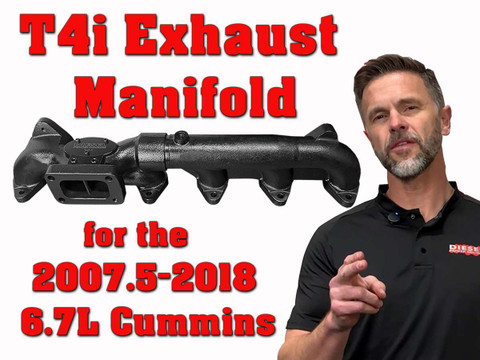
HE-series turbos and T4i and 5G manifolds keep factory equipment

Shop Cummins Performance Parts by Truck

Or start with the engine: 5.9 Cummins parts and 6.7 Cummins parts.

Shop by Upgrade Type

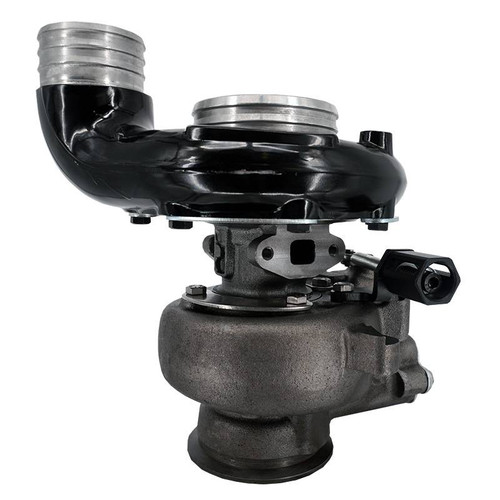
  • HE-series VGT replacement turbos: Factory-location turbos for the 2007.5-2024 6.7L in 60mm, 63mm, and 66mm sizes, with a new actuator. The factory exhaust brake stays.
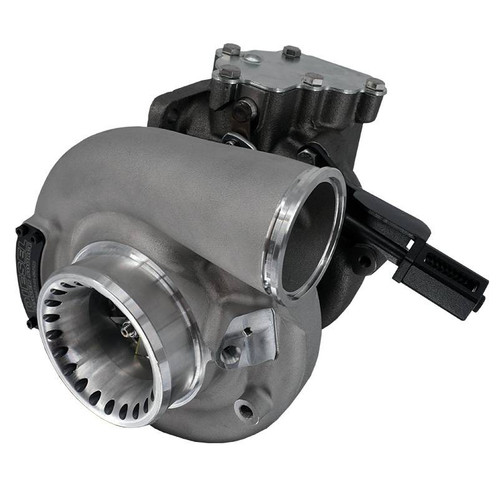
  • S300 single turbos: DPS turbos built on the S300 platform, from the S362 through the S369.
  • 3rd Gen Swap kits: An S300 turbo and 2-piece manifold for 2007.5-2018 6.7L trucks that replaces the factory VGT.
  • Add-A-Turbo kits: Keep the factory turbo and add a larger turbo in front of it, for compound benefits with one new turbo.
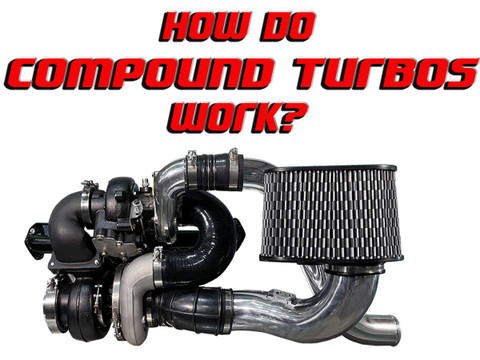
  • Compound turbo kits: Two new DPS turbos in series. The largest EGT reduction and power improvement in the DPS lineup.
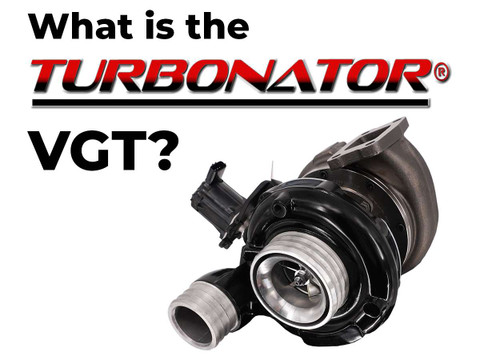
  • Turbonator® VGT upgrades: Variable geometry turbine housings for S300 and S400 builds. The electronic version adds exhaust brake capability.
  • Ball bearing turbos: Spool approximately 200 RPM sooner than a journal bearing turbo at the same horsepower.
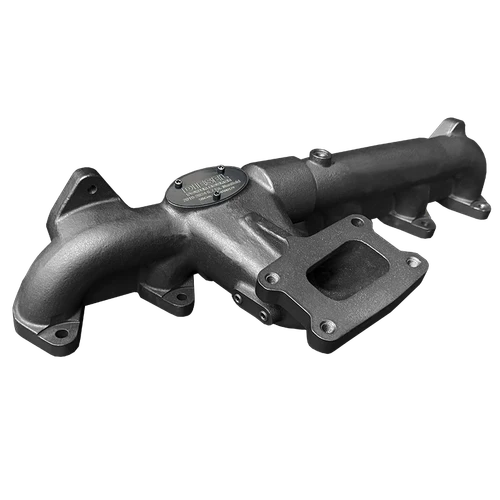
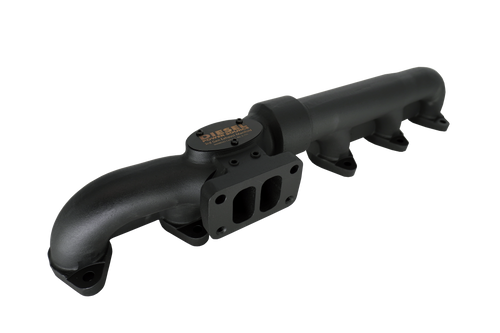
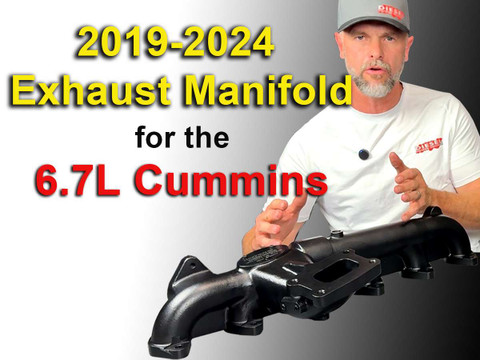
  • Exhaust manifolds: Multi-piece manifolds for the 5.9L and the 6.7L.

Comparing turbos by engine? See 5.9 Cummins turbos and 6.7 Cummins turbos.

How to Choose an Upgrade Path

Towing and Daily Driving

On the 6.7L, the HE363VG keeps factory fitment and the exhaust brake and covers stock to 550 RWHP. On the 5.9L, an S362 single covers stock to 450 RWHP with quick spool.

More Power from One Turbo

Larger S300 singles step up with the build: the S363/73 at 400-575 RWHP, the S366 at 450-650 RWHP, and the S369 at 500-750+ RWHP.

Keep the Factory Turbo

An Add-A-Turbo kit with the S475 is matched from stock power up to 600 RWHP, and it leaves a path to a full compound kit later.

600 HP and Up

Above about 600-650 HP, a single turbo large enough to make the power gives up low-end response. Compounds are typically the way to keep street manners and towing at that level.

HP figures are approximate rear wheel horsepower and vary with tuning, fueling, and supporting modifications. Not sure which path fits? Use the Turbo Selector or call 801-930-8404.

What to Plan for as Power Goes Up

Boost and Horsepower

Expect roughly 10 HP per PSI of boost on a 5.9L Cummins and about 13.5 HP per PSI on a 6.7L.

Head Studs

Head studs are recommended above 45 PSI on 1988-2002 engines, 55 PSI on 2003-2007 engines, and 48 PSI on 2007.5-2018 engines.

Transmission, Fuel, and Rods

The factory transmission typically needs attention around 400 RWHP. The stock fuel system reaches its limit around 500-550 RWHP. Past about 800 RWHP, aftermarket connecting rods are the smart move on any modern Cummins.

Tuning

Tuning is the owner's responsibility. Diesel Power Source® does not sell tuners or tuning.

Before You Order

  • Confirm your year, engine, and generation.
  • Know your turbo flange: T3 on 1989-2007 5.9L engines, T4i on 2007.5-2018 6.7L engines, and a different flange on 2019-2024 trucks.
  • Cab and chassis trucks: send DPS photos of the factory manifold before ordering.
  • Running an aftermarket intercooler? Tell DPS when you order so the piping matches.

Good to Know

  • Diesel Power Source® does not sell emissions delete components.
  • On the 6.7L, full compound kits and 3rd Gen Swap kits replace the factory turbo and are for trucks that have already been deleted.
  • For 2019-2024 trucks, DPS currently offers the HE300VG replacement turbo, the 5G exhaust manifold, and the turbo and manifold kit.
  • Warranty coverage varies by product under the Diesel Power Source® PMA. Registration within 14 days of purchase is required.
  • Free shipping on orders over $350.

Cummins is a registered trademark of Cummins Inc. Diesel Power Source® is not affiliated with Cummins Inc.

Refine:

Frequently Asked Questions

It depends on the turbo, the load, and the tune. More airflow means more complete combustion, so less of the fuel's energy leaves as exhaust heat. Compound kits give the largest EGT reduction in the DPS lineup. An exhaust manifold alone typically lowers EGTs by approximately 25-75°F on a pickup.

Typical EGT reductions: 150-300°F depending on turbo configuration and load.

Real-world towing improvements:

Stock turbo baseline:

  • Towing 18,000 lbs up 6% grade: 1,350-1,475°F typical
  • Towing 22,000 lbs up 7% grade: 1,425-1,550°F (danger zone)
  • Driver often backing out of throttle or downshifting to manage heat

After S300 single turbo upgrade:

  • Same 18,000 lbs load: 1,150-1,250°F (150-200°F cooler)
  • Same 22,000 lbs load: 1,225-1,325°F (200°F cooler)
  • Can maintain highway speed without excessive heat

After compound turbo upgrade:

  • Same 18,000 lbs load: 1,025-1,125°F (250-325°F cooler)
  • Same 22,000 lbs load: 1,100-1,200°F (275-350°F cooler)
  • Complete confidence on any grade, any load

Why this matters for engine life:

  • Head gasket stress: Every 100°F over 1,300°F dramatically increases failure risk
  • Manifold cracking: Repeated thermal cycling above 1,400°F causes cracks
  • Turbo longevity: Sustained high EGTs shorten turbo bearing life
  • Overall reliability: Cooler operation = longer engine life, period

Some upgrades, such as compound turbo kits or larger single turbos, may require custom tuning to run properly and safely. Other bolt-on components can be installed without tuning. Always check the product description or contact our team to confirm tuning requirements.

Yes. Many of our Dodge Cummins performance products are engineered with towing in mind, focusing on controlled boost, lower exhaust temperatures, and long-term durability. We also offer options specifically intended for daily-driven and work trucks.

The best upgrade depends on your goals, such as towing, daily driving, or high horsepower. Diesel Power Source offers expert guidance to help you choose the right turbo, manifold, or kit based on your truck, budget, and performance goals.

Compounds use TWO turbos working together—small primary + large secondary.

How compounds work:

  • Primary (small) turbo: Mounted on manifold, spools instantly, provides low-end response
  • Secondary (large) turbo: Mounted downstream, takes air from primary and compresses again, adds massive top-end airflow
  • Result: Quick spool like small turbo + huge airflow like big turbo = no compromises

Compound advantages over single turbo:

  • No lag: Primary handles instant response, you're in boost from idle
  • Better EGTs: 200-300°F cooler vs. 150-200°F with singles
  • Lower drive pressure: Two turbos sharing work = less backpressure = less cylinder stress
  • More usable power: 700 HP from compounds is drivable daily; 700 HP from S480 single is laggy and frustrating
  • Best for towing: Instant response when you need it, massive power when you want it

Compound disadvantages:

  • Higher cost: $4,500-7,500 vs. $2,500-4,000 for singles
  • More complex install: Two turbos to mount and plumb (12-20 hours vs. 6-10)
  • More piping: Additional intercooler piping, more potential leak points

When to choose compounds:

  • Heavy towing (18k+ lbs) regularly or commercially
  • Want 600-800+ HP that's drivable daily
  • Need absolute best EGT control
  • Mountain terrain or sustained high-load operation
  • Refuse to compromise between response and power

The best 6.7 Cummins turbo upgrade depends on how you use the truck. Stock-style VGT upgrades are great for towing and daily driving, while S300, S400, and compound turbo systems are better for higher horsepower goals.

High EGT on a 6.7 Cummins is commonly caused by airflow restriction, inefficient turbo performance, fueling imbalance, or excessive load. Upgrading the turbocharger or exhaust manifold can help lower exhaust gas temperatures.

Yes. Compound turbos can improve airflow efficiency, lower EGTs, and increase horsepower, especially on trucks used for towing or higher-performance builds.

Common signs include slow spool, loss of power, excessive smoke, boost-related trouble codes, and sticking VGT behavior.

#1 RATED COMPOUND TURBO KITS - FREE SHIPPING ON ORDERS OVER $350 - MADE IN THE USA - BACKED BY INDUSTRY LEADING ENGINEERING - SHOP WITH CONFIDENCE -