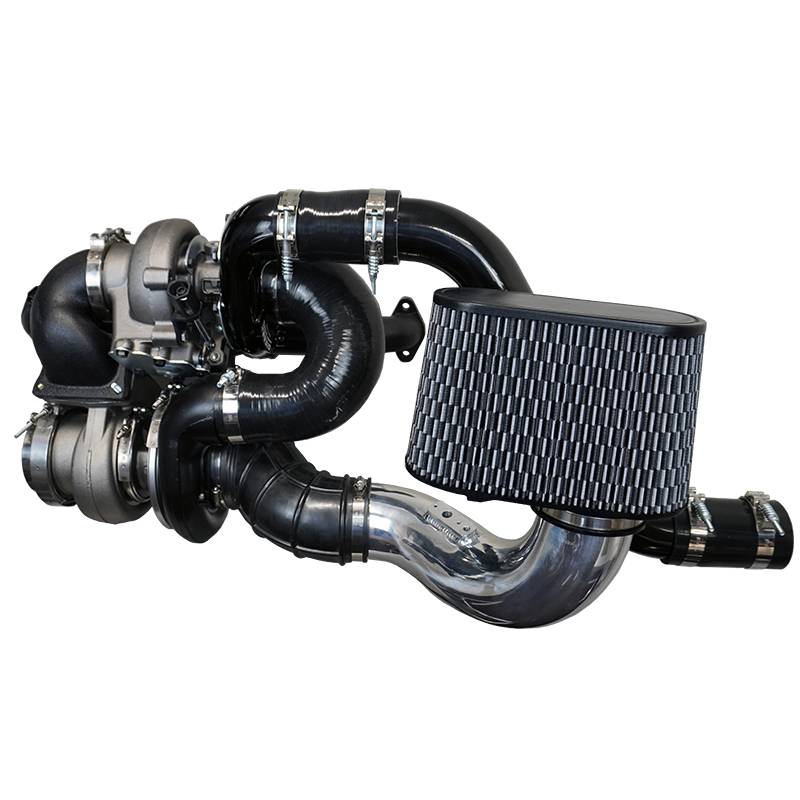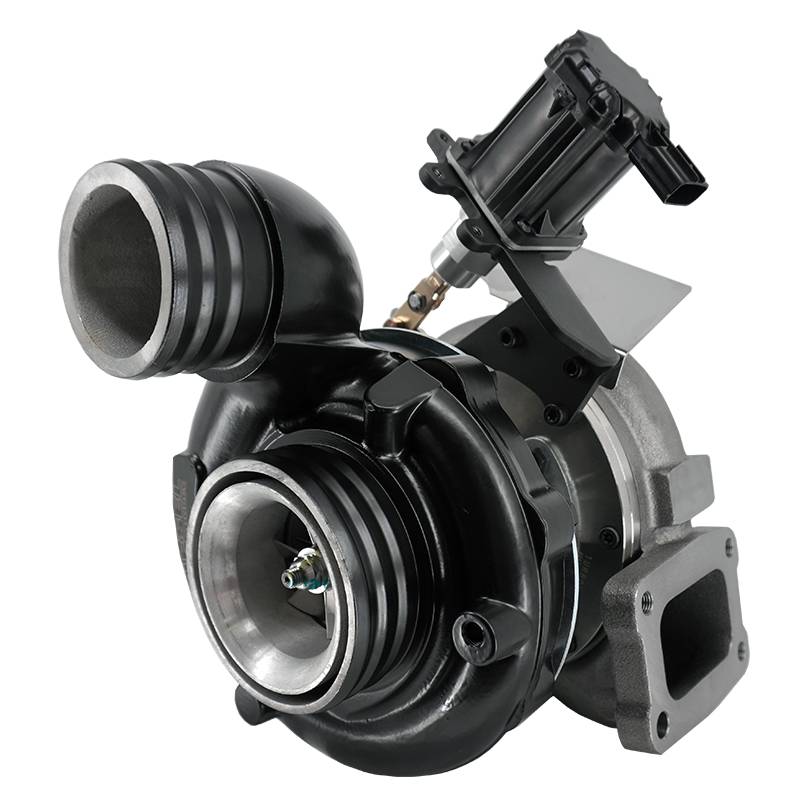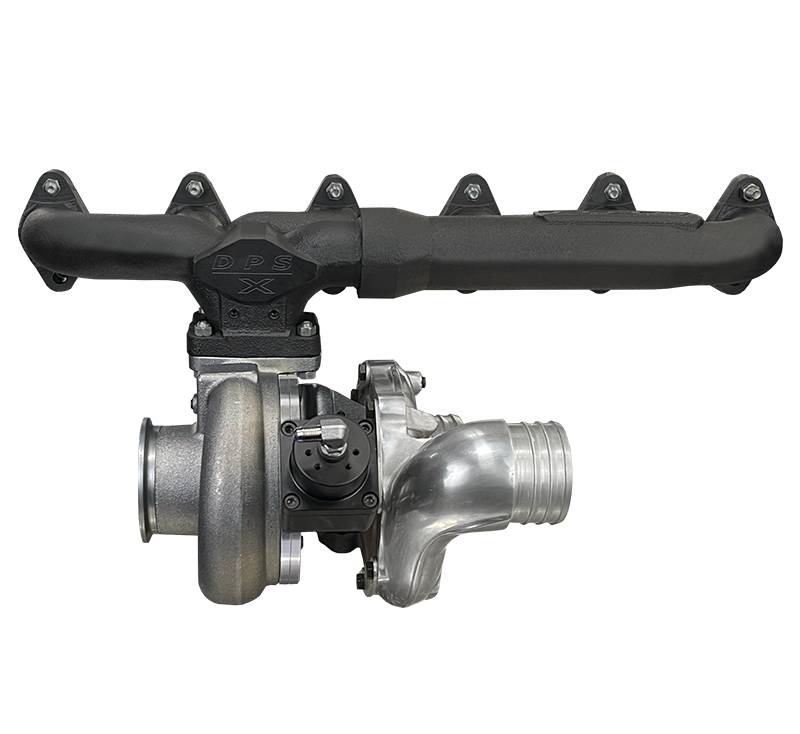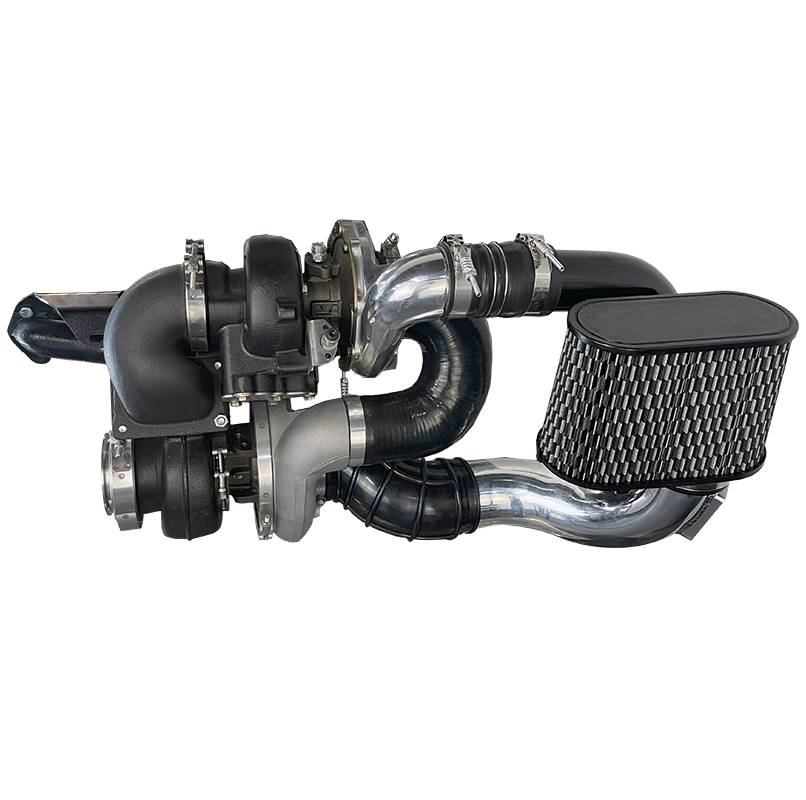
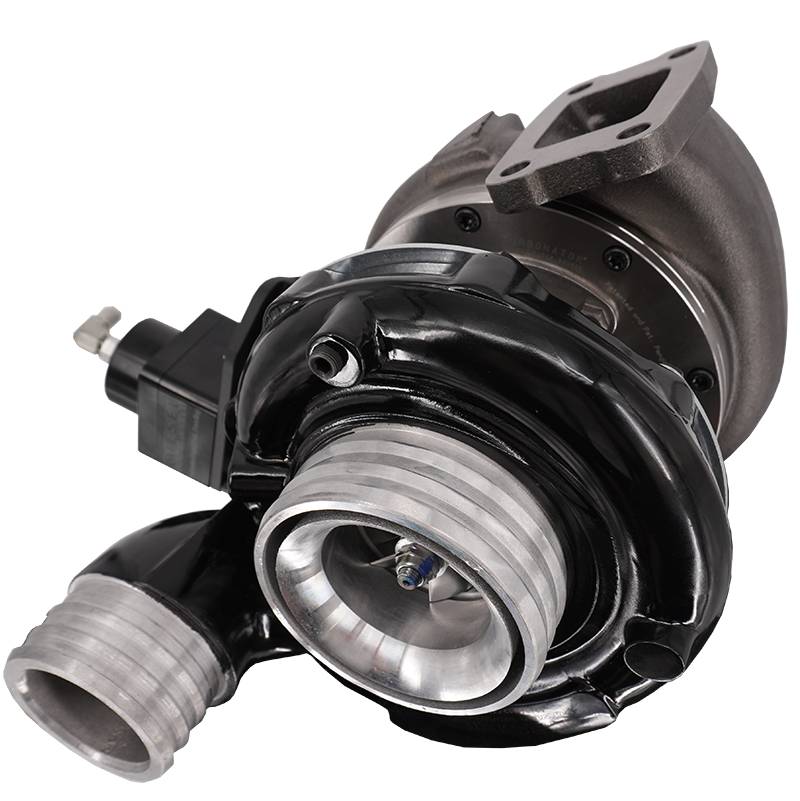
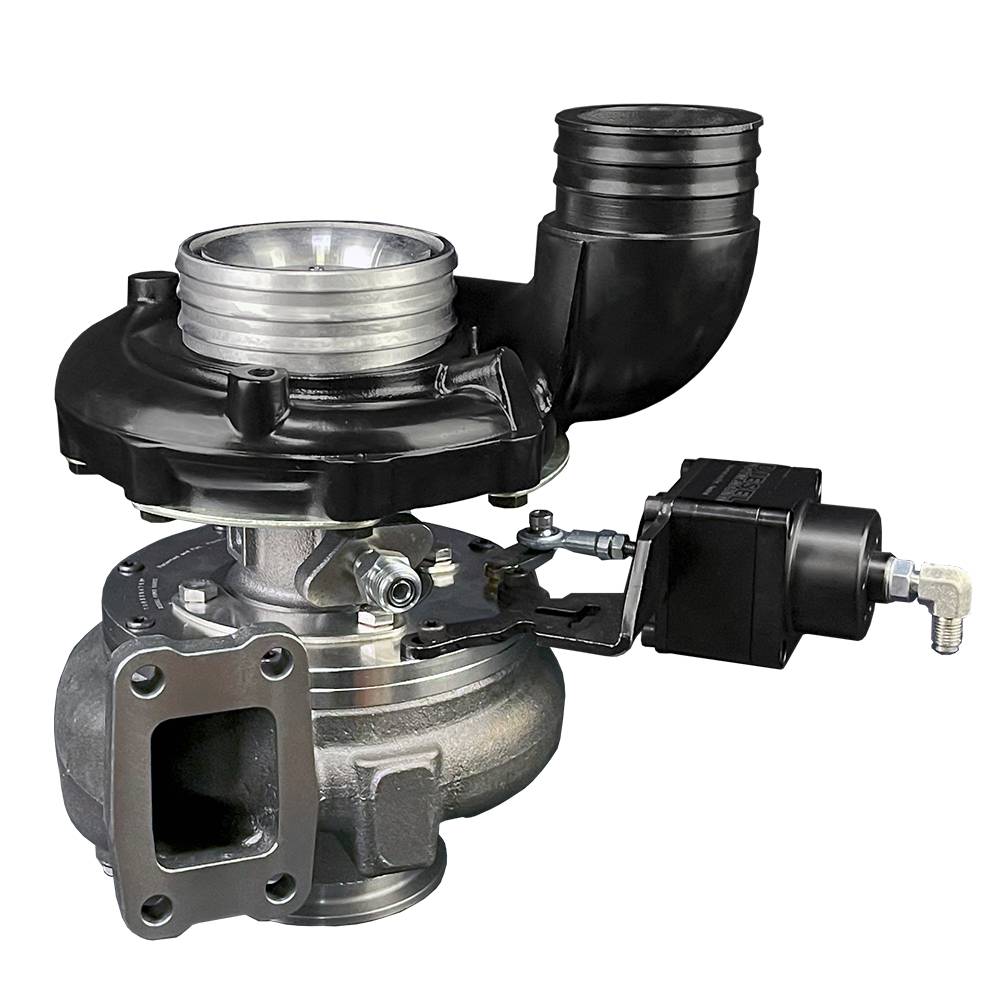
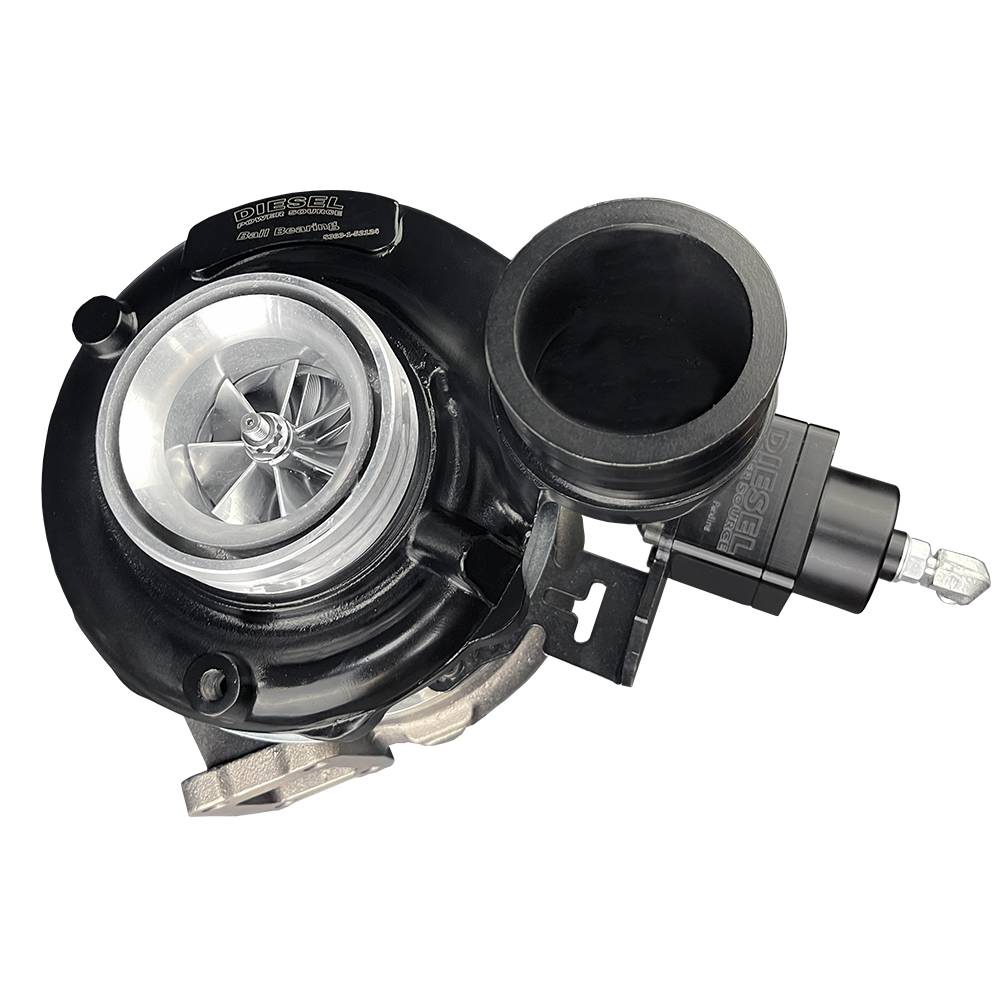
Turbonator® VGT S300 and S400 Turbos | T3 and T4 | Cummins 5.9L and 6.7L
Diesel Power SourceSKU: SGT0110·MPN: SGT0110
Turbonator® VGT Turbo for Cummins | S300 and S400 Platforms | T3 and T4 | Variable Geometry Performance
The Diesel Power Source® Turbonator® VGT is a patented variable geometry turbocharger built from scratch on the S300 and S400 platforms for 5.9L and 6.7L Cummins diesel trucks. This is not a modified Holset VGT. It is an entirely new, patented design that uses aerospace-grade variable stator technology to deliver the spool-up of a small turbo and the top-end airflow of a large turbo in one unit. The result is 200 to 300 RPM faster spool-up compared to a fixed A/R turbo of the same compressor size, 12 to 15% more rear-wheel horsepower, lower EGTs, improved fuel economy, and exhaust braking capability on any 1988–2018 Cummins truck year.
Available in 11 stage configurations spanning S300 (62mm to 69mm compressor) and S400 (67.7mm and 72mm compressor) platforms. Choose your Cummins year, turbo size, VGT actuator type, flange size (T3 or T4), and single or compound application at checkout. DPS builds the turbo for your specific truck.
What Makes the Turbonator® Different
Every other "VGT turbo" on the Cummins aftermarket (Fleece Cheetah, BD Screamer, etc.) is a modified factory Holset HE300VG with stock housings and stock internal geometry. These turbos are limited by the small factory housing size and cannot flow enough air or exhaust to match a true S300 or S400 platform turbo.
The Turbonator® VGT is built entirely from scratch on the BorgWarner S300 and S400 turbo platforms using DPS-patented aerospace-grade stator technology. The variable stators start at approximately .45 A/R at idle (extremely tight for maximum exhaust velocity at low RPM) and open progressively as exhaust flow increases, reaching approximately 1.1 A/R at peak flow. A fixed A/R turbo is locked at one ratio and must compromise between spool and top-end. The Turbonator® eliminates that compromise entirely.
Because the Turbonator® is built on the S300 and S400 platforms rather than the smaller factory Holset housing, it flows dramatically more air and exhaust than any modified stock VGT. This keeps drive pressures low and allows boost-to-drive pressure ratios approaching or exceeding 1:1, which is virtually impossible with factory-sized VGT housings.
Stage Selection Guide
Stage 1.5: S362/68/.70
- Platform: S300
- Max HP: 450 HP
- Best For: Towing, daily driving, stock to moderate builds
Stage 2.5: S362/68/.70 BB
- Platform: S300
- Max HP: 450 HP
- Best For: Same as 1.5 with 150 to 200 RPM faster spool (ball bearing)
Stage 3: S363/68/.70
- Platform: S300
- Max HP: 500 HP
- Best For: Moderate builds, towing with increased fueling
Stage 3.5: S363/68/.70 BB
- Platform: S300
- Max HP: 500 HP
- Best For: Same as 3 with faster spool (ball bearing)
Stage 4: S363/73/.80
- Platform: S300
- Max HP: 530 HP
- Best For: Higher HP builds, larger turbine for top-end flow
Stage 4.5: S363/73/.80 BB
- Platform: S300
- Max HP: 530 HP
- Best For: Same as 4 with faster spool (ball bearing)
Stage 7: S366/73/.80
- Platform: S300
- Max HP: 700 HP
- Best For: Performance builds, higher fueling, competition
Stage 7.5: S366/73/.80 BB
- Platform: S300
- Max HP: 700 HP
- Best For: Same as 7 with faster spool (ball bearing)
Stage 9: S369/73/.80
- Platform: S300
- Max HP: 775 HP
- Best For: High HP builds, sled pulling, drag racing
Stage 9.5: S369/73/.80 BB
- Platform: S300
- Max HP: 775 HP
- Best For: Same as 9 with faster spool (ball bearing)
Stage 10: S467.7/83 VGT
- Platform: S400
- Max HP: 800 HP
- Best For: S400 VGT with exhaust brake capability
Stage 11: S472/83 VGT
- Platform: S400
- Max HP: 1,000 HP
- Best For: Maximum HP S400 VGT platform
BB = Dual Ceramic Ball Bearing. Ball bearing stages spool 150 to 200 RPM faster than the journal bearing equivalent. Ball bearing is recommended for towing and compound setups.
VGT Actuator Options
Every Turbonator® VGT turbo includes the variable geometry exhaust housing. You choose which actuator controls the vanes:
- VGT Without Exhaust Brake (+$0 with turbo): 3-stage pneumatic actuator. Non-electronic, fully mechanical operation. Improves spool by 200 to 300 RPM over a fixed A/R turbo of the same size. Does NOT provide exhaust braking. Good option for customers who prefer a fully mechanical, non-electronic setup.
- VGT With Exhaust Brake (+$900): Electronic actuator with dash-mounted dial control (0 to 11 scale). Same spool improvements plus full exhaust brake capability. Includes ball bearing unison ring standard. Self-contained electronics. Recommended for trucks that tow regularly or want the combination of VGT performance with exhaust braking on any truck year, including trucks that never had exhaust braking from the factory.
The electronic actuator has a slight advantage in spool and overall drivability compared to the 3-stage pneumatic due to the adjustable dial and fine-tuned programming. For the best spool-up and exhaust brake capability, the electronic version is the recommended choice.
Turbonator® VGT Exhaust Brake Performance: 5.9L Cummins with Automatic Transmission
Overview: The Turbonator® VGT exhaust brake closes the vanes to build exhaust back pressure in the cylinder, creating an engine braking effect. This is the same operating principle used by the factory VGT exhaust brake on 2008-and-newer 6.7L Cummins trucks.
Exhaust Brake Pressure (5.9L vs 6.7L): The Turbonator® VGT exhaust brake on a 5.9L Cummins produces exhaust brake pressure equal to or greater than the factory exhaust brake on a 2008-and-newer 6.7L Cummins, typically 60 to 70 PSI and often higher. The turbo-side performance is not the limiting factor.
Why Braking Feel Differs (Torque Converter Lockup): The functional difference in perceived braking between the 5.9L and 6.7L is in the transmission, not the turbo. The 6.7L Cummins automatic transmission holds the torque converter in lockup during exhaust braking. The 5.9L Cummins automatic transmission does not lock the torque converter during braking. Without torque converter lockup, approximately 300 to 500 RPM of slip occurs between the engine and the drivetrain. This slip reduces the effective transfer of engine braking force to the wheels, making the exhaust brake feel less effective even when exhaust pressure is normal or above specification.
How to Maximize Exhaust Brake Effectiveness on 5.9L Automatic:
- Place the transmission in tow/haul mode before engaging the exhaust brake
- Downshift one to two gears to raise engine RPM when engaging the brake
- These steps are required for the transmission to contribute meaningfully to braking force. Without them, the torque converter will slip and reduce effective engine braking regardless of exhaust pressure.
Optional upgrade: For the closest possible feel to a 6.7L locked-converter exhaust brake on an automatic transmission, an aftermarket torque converter lockup switch can be added and is recommended.
Manual transmission: 5.9L trucks with a manual transmission are not affected by this issue. The exhaust brake operates at full effectiveness without any additional steps.
Fitment by Cummins Generation
1988 to 1993 (1st Gen, 12V)
- Flange: T3 (standard)
- Downpipe: 4" HX40/S300 downpipe required (sold separately)
- Notes: Direct replacement for factory turbo. Stock exhaust is 3.5" and turbo is slightly longer, so the aftermarket downpipe bends around the firewall.
1994 to 1998 (2nd Gen, 12V)
- Flange: T3 (standard)
- Downpipe: 4" HX40/S300 downpipe required (sold separately)
- Notes: Direct replacement for factory turbo.
1998.5 to 2002 (2nd Gen, 24V)
- Flange: T3 (standard)
- Downpipe: 4" HX40/S300 downpipe required (sold separately)
- Notes: Direct replacement for factory turbo.
2003 to 2007 (3rd Gen, CR)
- Flange: T3 (standard)
- Downpipe: Not required (bolts to factory exhaust)
- Notes: Direct stock replacement on T3 flange. No downpipe needed.
2007.5 to 2018 (4th Gen, 6.7L)
- Flange: T3 or T4
- Downpipe: Varies by swap kit
- Notes: Requires a 3rd gen swap kit or 2nd gen swap kit. Factory manifold is T4i flange. T4 available with VGT option. This is NOT a direct factory replacement on 6.7L trucks.
Looking for a direct bolt-on VGT for the 6.7L factory T4i manifold? See the S300 Ball Bearing Turbonator® VGT for 6.7 Cummins 2007.5 to 2018, which bolts directly to the factory T4i exhaust manifold without a swap kit.
How the Variable A/R Works
A fixed A/R turbo is locked at one exhaust housing ratio. If you choose a tight A/R (.70), the turbo spools quickly at low RPM but chokes on top-end airflow. If you choose a loose A/R (.80), the turbo breathes well on top but spools slowly from idle. You are always compromising one end of the RPM range for the other.
The Turbonator® VGT eliminates this compromise. The variable stators start at approximately .45 A/R at idle, which is significantly tighter than even the tightest fixed option available on the S300 platform. As exhaust flow increases with RPM, the stators open progressively and reach approximately 1.1 A/R at peak flow. This means you get the spool-up of a turbo sized for quick response AND the top-end flow of a turbo sized for maximum power, all in one unit.
This variable A/R range is why the Turbonator® VGT improves spool by 200 to 300 RPM over a fixed A/R turbo of the same compressor wheel size. On larger compressor wheels (66mm and above), the improvement tends toward 300 RPM because larger wheels have more inertia at low RPM and benefit more from the tight starting A/R.
Ball Bearing Unison Ring
The Turbonator® VGT (electronic version) includes ball bearings in the unison ring as standard. The unison ring is the mechanical linkage that coordinates all of the VGT vane movements. Ball bearings in this location provide tighter, more precise vane positioning, faster response to flow changes, and reduced friction and wear compared to traditional bushings. Unlike bushing-style unison rings, the ball bearing design does not degrade with soot or use over time.
This is separate from the optional CHRA (center section) ball bearing upgrade. The electronic Turbonator® VGT has ball bearings in TWO locations: the unison ring (standard) and optionally the CHRA (approximately $550 upgrade).
Key Features
- Patented Variable Geometry Technology: Not a modified Holset VGT. Entirely new design built from scratch on S300 and S400 platforms.
- Aerospace-Grade Variable Stators: .45 to 1.1 A/R range, infinitely variable
- 200 to 300 RPM Faster Spool: Compared to a fixed A/R turbo of the same compressor size
- 12 to 15% More Rear-Wheel HP: Depending on truck modifications and fueling
- Lower EGTs: More efficient exhaust energy conversion reduces thermal stress
- Improved Fuel Economy: More complete combustion from better air management
- Exhaust Braking on Any Truck Year: Electronic actuator version adds exhaust braking even on trucks that never had it
- Ball Bearing Unison Ring (Electronic Version): Precision vane control that does not degrade over time
- Clockable Housing: Can be clocked to fit nearly any 5.9 or 6.7 Cummins application
- S300 and S400 Platforms: 11 stage configurations from 450 to 1,000 HP
- T3 and T4 Flange Options: T3 standard, T4 available with VGT option
- Single or Compound Compatible: Can be used as a single turbo or as the high-pressure turbo in a DPS compound system
- Dash-Mounted Dial Control (Electronic): 0 to 11 scale for adjustable VGT behavior. Recommended sweet spot: 4 to 7.
If ordering for a compound application, notify DPS at checkout. The turbo must be clocked specifically for compound piping clearance.
Fitment
This Turbonator® VGT turbo fits 1988 to 2018 Dodge Ram trucks with the 5.9L or 6.7L Cummins engine. Select your Cummins year, turbo size, VGT actuator type, flange size, and application (single or compound) at checkout. DPS builds and clocks the turbo for your specific truck.
1988 to 2002 trucks (12V and 24V): A 4" HX40/S300 style exhaust downpipe is required (sold separately).
2003 to 2007 trucks: No downpipe required. Bolts to factory exhaust.
2007.5 to 2018 6.7L trucks: This turbo is NOT a direct factory replacement on 6.7L trucks. It requires a 3rd Gen Swap Kit or 2nd gen swap kit for installation. For a direct bolt-on VGT that fits the 6.7L factory T4i manifold, see the S300 Ball Bearing Turbonator® VGT for 6.7 Cummins.
Related Cummins Products
- S300 Ball Bearing Turbonator® VGT for 6.7 Cummins (Direct T4i Bolt-On)
- Turbonator® VGT Housing Only (S300 and S400)
- S300 Single Turbo for 12V Cummins 1989 to 1998
- S300 Single Turbo for 24V Cummins 1998.5 to 2002
- S300 Single Turbo for 5.9 Cummins 2003 to 2007
- 3rd Gen Swap Kit for 6.7 Cummins (Required for 6.7 Installation)
- 4" Exhaust Downpipe (Required for 12V and 24V Trucks)
- Customer Testimonial: S400 Turbonator® VGT
Frequently Asked Questions
Not always, but it is often a sign that the stock VGT system is reaching the end of its reliable service life, especially on high-mileage trucks. Many P003A and P2262 cases are resolved with an actuator replacement and relearn procedure alone. However, if your truck has had repeated actuator failures, has over 150,000 miles, or you want to prevent the issue from recurring, upgrading to the Turbonator® VGT is the stronger long-term solution. Its upgraded internals and improved actuator reliability address the root causes of repeated VGT failures rather than just replacing the same worn components.
Yes, when the codes are caused by actuator failure or worn VGT internals, which covers the majority of P003A, P2262, and P226C cases. The Turbonator® VGT replaces the entire turbo assembly including the actuator, eliminating the failed components entirely. After installation the VGT relearn procedure must be performed with a scan tool so the ECM can establish the new actuator's range of travel. Once complete, the codes will not return as long as the rest of the charge air system (piping, boots, intercooler, and exhaust manifold) is in good condition.
Yes. The Turbonator® VGT is a direct bolt-in replacement that retains the variable geometry mechanism and its electronic actuator interface, so exhaust brake function, tow/haul mode, and all factory ECM control logic work exactly as designed. This is a significant advantage over fixed-geometry turbo conversions, which eliminate exhaust braking entirely. For trucks used in heavy towing or mountain driving, keeping the VGT platform and upgrading within it is often the right call.
Yes, and this is worth checking before replacing the turbo or actuator. P2262 specifically flags a mechanical boost production problem: a significant boost leak in the charge air piping or a cracked 6.7 Cummins exhaust manifold can prevent the turbo from building detectable boost even when the turbo itself is functioning correctly. Always pressure test the charge air system and inspect the manifold as part of the diagnosis. Resolving a boost leak or manifold crack first can save a turbo replacement that wasn't actually needed.
Replacing just the actuator restores your truck to stock VGT condition: same turbo internals, same vane assembly, same baseline reliability. It is the right repair when the turbo itself is in good mechanical condition and the failure is isolated to the actuator. Upgrading to the Turbonator® VGT replaces the entire assembly with upgraded bearings, improved vane geometry, and a more durable actuator, supporting 400 to 500+ HP while eliminating the conditions that led to the original failure. For owners who want to stop chasing the same fault codes, the upgrade is the more permanent solution.
No. The Fleece Cheetah and BD Screamer are modified factory Holset HE300VG VGT turbos that reuse the stock housing and internal components. The Turbonator® VGT is a completely new, patented design built from scratch on the S300 and S400 turbo platforms using aerospace-grade stator technology. Because it is built on the larger S300/S400 platforms rather than the small factory Holset housing, it flows dramatically more air and exhaust, keeps drive pressures lower, and achieves boost-to-drive pressure ratios approaching 1:1, which is virtually impossible with factory-sized VGT housings.
The electronic actuator includes exhaust brake capability, a dash-mounted dial control (0 to 11 scale), ball bearing unison ring standard, and fully electronic operation with no air lines. The 3-stage pneumatic actuator is a mechanical, non-electronic option that provides the VGT spool-up benefits but does NOT provide exhaust braking. The electronic version has a slight advantage in spool and overall drivability due to the adjustable dial and programming. DPS recommends the electronic version for customers who tow or want exhaust braking. The pneumatic is a good option for customers who prefer a fully mechanical setup.
It depends on your truck year. 1988 to 2002 trucks (12V and 24V) require a 4" HX40/S300 style exhaust downpipe, which is sold separately. 2003 to 2007 trucks bolt directly to the factory exhaust with no downpipe required. 2007.5 to 2018 6.7L trucks require a swap kit, and the downpipe situation depends on the swap kit configuration.