Shop by Truck
Shop Cummins Turbos and Exhaust Manifolds by Truck
Pick your truck and engine to see the Diesel Power Source® turbos, exhaust manifolds, and turbo kits built for it.
Diesel Power Source® builds turbochargers, exhaust manifolds, and compound turbo kits for Cummins engines, along with parts for Ford and Chevy/GMC trucks, Cummins swaps, and Class 8 semi trucks. Fitment changes with every engine generation, from the mechanical 12-valve to the 6.7L common rail, so the fastest way to the right part is to start with your truck. Confirm your year, engine, and generation before you order.
Dodge/Ram Cummins by Engine and Year
- 5.9L 12V Cummins, 1989-1993: 1st Gen trucks with the mechanical VE injection pump.
- 5.9L 12V Cummins, 1994-1998: 2nd Gen trucks with the P7100 injection pump.
- 5.9L 24V Cummins, 1998.5-2002: 2nd Gen trucks with the VP44 injection pump.
- 3rd Gen 5.9L Cummins, 2003-2007: Common rail trucks.
- 4th Gen 6.7L Cummins, 2007.5-2012: 6.7L trucks with the factory HE351VE VGT turbo.
- 4th Gen 6.7L Cummins, 2013-2018: 6.7L trucks with the factory HE300VG VGT turbo.
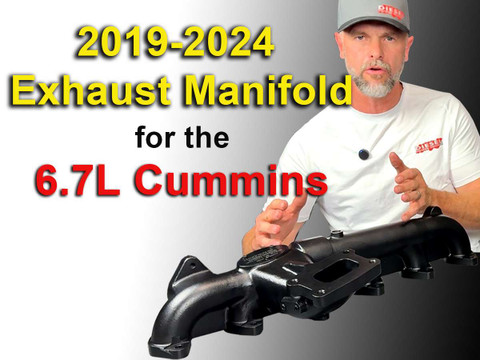
- 5th Gen 6.7L Cummins, 2019-2024: 5th Gen trucks, which use their own manifold and turbo flange.
- 4BT Cummins: The 3.9L four-cylinder used in industrial and swap applications.
Shopping by engine instead? See everything for the 5.9 Cummins, the 6.7 Cummins, or all Dodge/Ram Cummins parts.
Ford, Chevy/GMC, and Semi Trucks
- Ford Powerstroke: Parts for the 6.0L, 6.4L, and 6.7L Powerstroke.
- Ford with a Cummins swap (Fummins): Swap information, plus Fummins turbo kits engineered for the Ford chassis.
- Chevy / GMC: Parts for Chevy and GMC diesel trucks.
- Chevy or GMC with a Cummins swap (Chummins): Swap information, plus Chummins turbo kits engineered for the Chevy chassis.
- Semi Class 8 and 7: Turbo and manifold upgrades for the Cummins ISX15 / X15 and parts for CAT engines.
Four Upgrade Paths, from Smallest to Largest Gain
Stock-Replacement Turbo
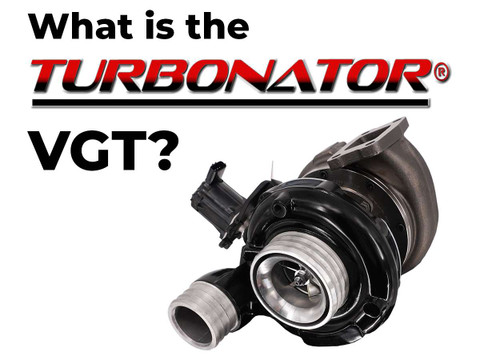
The same style of turbo the truck came with, in a direct-fit package. On the 6.7L, DPS also offers larger-wheel versions. See HE-series VGT turbos.
Single Turbo Upgrade
Replaces the stock turbo with a larger DPS turbo built on the S300 or S400 platform for more airflow and lower EGTs. See S300 single turbos.
Add-A-Turbo Kit
Keeps the factory turbo and adds a larger DPS turbo in front of it, for compound turbo benefits with one new turbo. See Add-A-Turbo kits.
Full Compound Turbo Kit
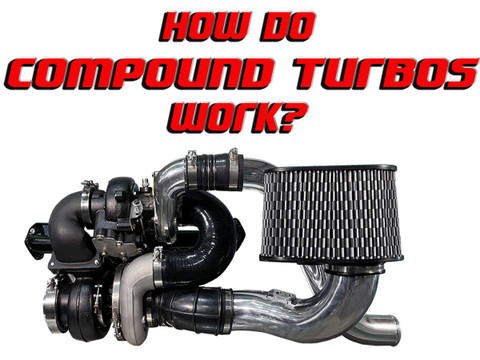
Two new DPS turbos working in series. This is the largest EGT reduction and power improvement in the DPS lineup. See compound turbo kits.
Not sure which path fits your truck? Use the Turbo Selector or call 801-930-8404.
Before You Order
- Confirm your year, engine, and generation.
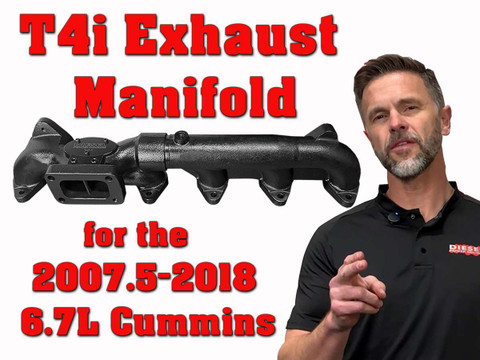
- Know your turbo flange: T3 on 1989-2007 5.9L engines, T4i on 2007.5-2018 6.7L engines, and a different flange on 2019-2024 trucks.
- Cummins ISX15 / X15: an engine serial number (ESN) is required on every order.
- Cab and chassis trucks: send DPS photos of the factory manifold before ordering.
- Running an aftermarket intercooler? Tell DPS when you order so the piping matches.
Good to Know
- Diesel Power Source® does not sell emissions delete components. Many DPS turbos and manifolds are emissions compatible.
- For 2019-2024 trucks, DPS currently offers the HE300VG replacement turbo, the 5G exhaust manifold, and the turbo and manifold kit.
- DPS products are made in the USA.
- Free shipping on orders over $350.
Already know what you want? Go to Turbo Systems, Exhaust Manifolds, Cummins Conversion Kits, or Turbonator® VGT Upgrades.
Cummins is a registered trademark of Cummins Inc. Diesel Power Source® is not affiliated with Cummins Inc.
Refine:
Frequently Asked Questions
Understanding the major Cummins generations helps you choose the right turbo solution:
12-Valve Cummins (1989-1998):
- Fuel system: Mechanical P-pump injection (no electronics)
- Turbo upgrades: Simplest platform—just bolt on and adjust pump
- Power potential: 400-800+ HP with proper pump and turbo
- Advantages: No ECM tuning needed, mechanical simplicity, bulletproof reliability
- Emissions: Pre-emissions (no EGR, DPF, or DEF)
- Best for: Towing, off-road, agricultural use, simplicity lovers
24-Valve VP44 (1998.5-2002) & Common Rail (2003-2007):
- Fuel system: Electronic injection (VP44 or common rail)
- Turbo upgrades: Require ECM tuning to match turbo
- Power potential: VP44 to ~600 HP, Common rail 400-800+ HP
- Advantages: Better fuel economy, quieter, more refined
- Emissions: 2003-2006 have some emissions, 2007+ full EPA
- Best for: Daily drivers, street/tow balance, modern drivability
6.7L Cummins (2007.5-present):
- Fuel system: High-pressure common rail with advanced electronics
- Turbo upgrades: VGT or aftermarket, complex ECM tuning
- Power potential: 450-900+ HP depending on year and build
- Advantages: Most power potential, best fuel economy, modern features
- Emissions: Full EPA (EGR, DPF, SCR/DEF)
- Best for: Modern trucks, highest power goals, emissions compliance
Follow this simple process to find your perfect turbo system:
Step 1: Identify your truck generation
- Find your truck's year and engine (look at door sticker or VIN)
- Determine if you have 12V, 24V, 5.9L, or 6.7L engine
- Select the corresponding category on our site
Step 2: Define your goals
- Daily driver + light towing (under 12k lbs): Single turbo, 400-500 HP range
- Heavy towing (12-20k lbs regularly): Larger single or compounds, 500-650 HP
- Extreme towing/hot-shot (20k+ lbs): Compound systems, 650-800+ HP
- Competition/performance: Aggressive singles or compounds, 700-1000+ HP
Step 3: Consider your budget
- $2,500-3,500: Single turbo upgrade kits
- $3,500-5,000: Larger singles or VGT upgrades
- $4,500-7,500: Complete compound turbo systems
- Plus supporting mods: Intercooler, exhaust, tuning, etc.
Step 4: Check compatibility
- Each product in your truck's category lists specific fitment details
- Look for "fits [your year]" in product descriptions
- Check if your truck has manual/auto trans (affects some fitment)
- Note if you have 2WD or 4WD (clearance differences)
Still not sure? Contact our tech team with: truck year, engine, current mods, power goals, and typical use. We'll recommend the perfect turbo system for your specific platform.
Some cross-compatibility exists, but it's limited and risky without proper knowledge.
What typically does NOT interchange:
- VGT turbos: Year-specific actuators and ECM communication
- Intercooler piping: Routing changes between chassis generations
- Oil supply fittings: Thread sizes and locations vary
- Exhaust manifolds: Bolt patterns changed over the years
- Sensors and electronics: Connector types and ECM compatibility differs
What sometimes can work (with caution):
- Fixed-geometry single turbos: S300/S400 turbos can often adapt across years with proper oil fittings and mounting
- Compound systems: May work across years if you address oil supply and mounting differences
- Downpipes and exhaust: Can be modified to fit, but not direct bolt-in
Our recommendation: Always shop within your truck's year category for guaranteed fitment. If you want to use parts from another year, contact our tech team first-we'll tell you what modifications are needed to make it work (if possible).