Compound Kits
Complete Compound Turbo Kits for Cummins
Turn-Key Twin Turbo Systems for 5.9L, 6.7L, ISX15, 4BT, Fummins, and Chummins
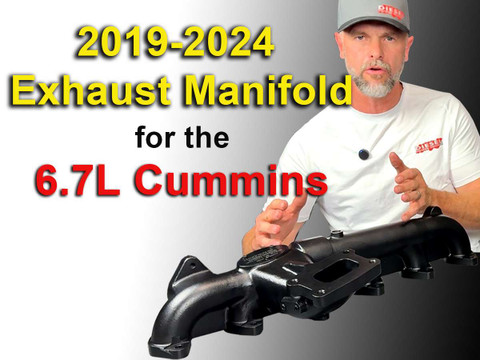
Diesel Power Source® compound turbo kits include both turbos, exhaust manifold, all piping, oil lines, and hardware in one box. From stock power to 1,200+ HP, these kits bolt on with no cutting or fabrication.
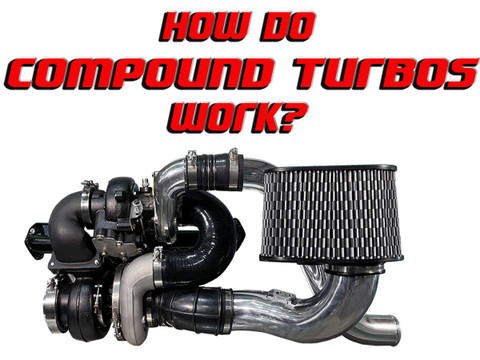
Every DPS compound turbo kit uses two turbochargers working in series: a smaller high-pressure turbo for instant spool and a larger atmospheric turbo for sustained airflow. This two-stage compression delivers intake air that is over 100°F cooler than a single turbo at the same boost pressure, with boost-to-drive pressure ratios approaching 1:1. The result is 200–400°F lower EGTs, 22–30% more horsepower, dramatically better towing performance, and improved fuel efficiency at every power level. Many customers run compounds on stock fuel with zero other upgrades.
Both Turbos Included
S300 high-pressure + S400 atmospheric, perfectly matched
200–400°F Lower EGTs
Two-stage compression runs cooler than any single turbo
Everything in One Box
Manifold, piping, oil lines, downpipe, hardware, instructions
Stock to 1,200+ HP
Works at any power level, from stock fuel to full competition
Compound Turbo Kits by Platform
DPS manufactures compound turbo kits for every Cummins platform. Select your engine to see available configurations, stage options, and pricing.
- 12V Cummins 1989–1998 (1st Gen and 2nd Gen) — S300 over S400 compound system. Mechanical injection, no ECM required. Includes 3-piece manifold. Stock to 1,200+ HP.
- 24V Cummins 1998.5–2002 (2nd Gen) — S300 over S400 compound system. VP44 compatible, no ECM tuning required for turbo. Includes 3-piece manifold. Stock to 1,200+ HP.
- 5.9 Cummins 2003–2007 (3rd Gen Common Rail) — S300 over S400 compound system. Includes 3-piece CARB exempt manifold. Stock to 1,200+ HP.
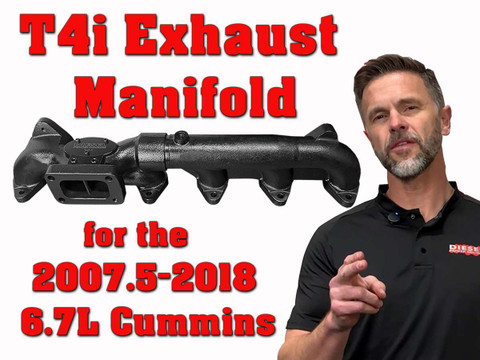
- 6.7 Cummins 2007.5–2018 (4th Gen) — S300 over S400 compound system. Includes 3-piece manifold. Designed for trucks that have had EGR removal. Stock to 1,200+ HP.
- Fummins (Ford Cummins Swap) — The only compound kit on earth engineered for Cummins-into-Ford conversions. Chassis-specific piping and mounting.
- Chummins (Chevy Cummins Swap) — The only compound kit on earth engineered for Cummins-into-Chevy conversions. Chassis-specific piping and mounting.
- 4BT 3.9L Cummins (Rectangular Port, 8V) — HE351CW over S366 compound system for 4BT swaps. 200–500 HP.
- 4BT 3.9L Cummins (Round Port, 16V) — Same compound system with round port manifold for 1999+ 4BT engines.
- ISX15/X15 Compound Kit — S472 or S475 over S488 compound system for Class 7 and Class 8 semi trucks. 550–800 HP.
Why Compound Turbos Outperform Single Turbos
The compound advantage is not just "more air equals more power." It is a fundamental change in how the engine converts fuel into usable power. Here is what compound turbos actually do inside the combustion chamber:
- More complete combustion: Compounds push enough air into the cylinder that combustion becomes so complete the engine extracts maximum energy from every drop of fuel, rather than wasting it as unburned fuel and heat out the exhaust. This is why EGTs drop 200–400°F.
- Excess air absorbs heat: The extra air molecules that compounds push into the cylinder that are not consumed during combustion actually absorb heat inside the cylinder and pull temperatures down further. Most people do not know this. You get EGT reduction from two sources: better combustion AND cooler cylinders.
- Boost-to-drive pressure ratio (1:1 or better): Compounds bring intake boost pressure up to match or exceed exhaust drive pressure. This means the intake stroke is actually creating power that balances what the exhaust stroke takes from the engine. You are not just adding air. You are changing how efficiently the engine converts fuel into power.
- Fuel mileage improvement: The fuel economy gain is not magic. It is the engine finally working the way it should. More complete combustion, cooler cylinders, and a more efficient pressure ratio across the engine. Every drop of fuel produces more usable power instead of being wasted as heat.
Bottom line: Compounds do not just add power. They make the engine work more efficiently at whatever power level you are at. Many DPS customers run compounds on completely stock fuel with zero other upgrades. EGTs drop 200–300°F, the truck tows better, and fuel mileage improves because the engine is finally burning fuel the way it was designed to.
Complete Compound Kit vs Add-a-Turbo Kit
DPS offers two paths to compound turbo performance. The right choice depends on whether you want to replace everything or keep your existing turbo.
- Complete Compound Kit (this category): Includes BOTH turbos (S300 + S400), exhaust manifold, all piping, oil lines, and hardware. Both turbos are new DPS units sized to work together. Best for trucks starting from scratch, replacing the entire turbo system, or building for maximum HP potential (up to 1,200+ HP).
- Add-a-Turbo Kit: Keeps your existing factory turbo and adds a large S475 or S480 atmospheric turbo in front of it. Lower cost because only one new turbo is included. Best for trucks with a healthy factory turbo, budget-conscious builds, and trucks targeting up to 600–700 HP.
Compound Turbo Kits FAQ
Do I need to modify my truck to install a compound kit?
DPS compound kits are designed as bolt-on systems with no cutting or fabrication required. They attach to the factory exhaust, intercooler, and intake connections. On 6.7L trucks (2007.5–2018), the kit is designed for trucks that have had EGR removal. DPS does not provide emissions delete components. On 2010–2018 trucks, an optional A/C Line Relocation Kit may be needed for clearance.
Can I run compounds on stock fuel?
Yes. Many DPS customers run compound turbos on completely stock fuel with zero other upgrades and see 200–300°F lower EGTs, better towing performance, and improved fuel economy. Increasing fueling to match the turbo's airflow capacity is what unlocks the full power potential, but compounds deliver benefits at any fueling level.
What is the Turbonator® VGT upgrade?
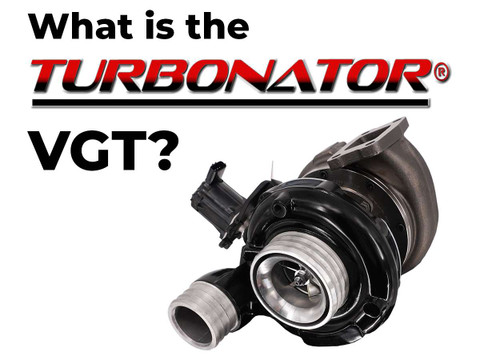
The Turbonator® VGT is a patented variable geometry exhaust housing available on the S300 high-pressure turbo in any compound kit. It improves spool by 200–300 RPM and is available with or without exhaust brake capability. The electronic version with exhaust brake is recommended for trucks that tow regularly.
What is the ball bearing upgrade?
Dual ceramic ball bearings replace the standard journal bearing in the S300 high-pressure turbo. Ball bearings reduce rotational friction and deliver 150–200 RPM faster spool-up. This upgrade costs approximately $550 and is available on every compound kit stage.
What other modifications do I need?
At stock to moderate power levels, the compound kit is often the only modification needed. As power increases: transmission upgrades are recommended above approximately 400 RWHP, fuel system upgrades above approximately 500 RWHP, and head studs at generation-specific boost thresholds. See individual product pages for detailed supporting modification guidance.
Does DPS make compound kits for Fummins and Chummins?
Yes. Diesel Power Source® is the only manufacturer in the world that makes compound turbo kits specifically engineered for Fummins (Cummins-into-Ford) and Chummins (Cummins-into-Chevy) conversions. These kits use the same turbo options as the standard 5.9L or 6.7L compound kits with chassis-specific piping and mounting hardware.
CFD-Tested Engineering
Every DPS compound turbo kit is designed using CAD/CAM software and validated with CFD (Computational Fluid Dynamics) testing. DPS has a full engineering staff with degrees in thermal and fluid dynamics operating proprietary CFD software. This testing verifies runner sizing, flow balance, exhaust velocity, turbulence reduction, and EGT management before a single part is manufactured. Very few competitors have this engineering capability, and their products cannot match DPS flow optimization as a result.
Related categories: Add-a-Turbo Kits | S300 Single Turbos | S400 Single Turbos | Exhaust Manifolds | Blog: How Do Compound Turbos Work?
Frequently Asked Questions for Compound Turbo Kits
A compound turbo kit uses two turbochargers working together, typically a smaller high-pressure turbo and a larger low-pressure turbo. The smaller turbo provides quick spool and low-RPM response, while the larger turbo supports high airflow and boost at higher RPMs. This setup delivers faster spool, higher horsepower potential, and lower exhaust drive pressure compared to a single turbo system.
Kits are available in configurations based on your power goals:
S300/S400 Complete Kit (Example: S366 small + S475 large):
- Power range: 600-750 HP
- Best for: Heavy towing (18-25k lbs), hot-shot, serious performance
- EGT improvement: 200-300°F cooler
- Ideal user: Hot-shot driver, heavy RV, performance enthusiast
- MOST POPULAR configuration
S300/S300 Complete Kit (Example: S362 small + S369 large):
- Power range: 500-650 HP
- Best for: Daily drivers, moderate towing (12-18k lbs)
- EGT improvement: 175-250°F cooler
- Ideal user: Weekend tower, daily driver wanting compounds without going extreme
S400/S400 Complete Kit (Example: S475 small + S483 large):
- Power range: 750-900+ HP
- Best for: Competition, extreme builds
- EGT improvement: 225-300°F cooler at high power
- Ideal user: Sled puller, drag racer, extreme applications
- Note: Requires extensive supporting mods
Quick guide:
- Daily driver, 12-18k lbs, 500-600 HP → S300/S300
- Heavy towing, hot-shot, 600-700 HP → S300/S400
- Competition, extreme, 700-900 HP → S400/S400
Power depends on turbo sizes and supporting mods:
S300/S300 with moderate mods: 500-650 HP, great daily/tow balance
S300/S400 with full mods: 600-750 HP, best for heavy towing and performance
S400/S400 with extreme mods: 750-900+ HP, competition-level
Real examples:
- 2005 5.9L, S366/S475: 685 HP, 1,425 lb-ft
- 2015 6.7L, S369/S480: 745 HP, 1,550 lb-ft
- 2006 5.9L, S475/S483: 875 HP, 1,825 lb-ft
Beyond numbers: Compounds make power smoothly, usably, and with 200-300°F cooler EGTs that protect your engine.
Compound turbo setups are designed for serious diesel performance. Benefits include quicker spool-up, improved throttle response, higher boost capability, reduced exhaust gas temperatures, and better overall efficiency under load. They are ideal for towing, racing, and high-horsepower diesel builds where a single turbo becomes a restriction.
Yes, when properly sized and tuned, compound turbo kits can work very well for towing and street-driven diesel trucks. The small turbo improves low-RPM response and drivability, while the larger turbo handles airflow under load. Many compound systems are specifically designed to balance daily driving manners with heavy towing and performance use.
Complete kits include BOTH turbos. Add-a-turbo includes only the large turbo.
Complete Compound Kit:
- Includes: Small turbo + Large turbo + Manifold + ALL components
- Best for: Stock setups, complete overhauls, wanting perfectly matched system
- You get: Both turbos optimally sized to work together
- Cost: $4,500-7,500
Add-A-Turbo Kit:
- Includes: ONLY large turbo + piping/mounting (you use your existing turbo as small turbo)
- Best for: Owners with upgraded single turbo who want to convert to compounds
- You supply: Your existing turbo becomes the small turbo
- Cost: $2,500-4,500 (lower because you're not buying small turbo)
Which should you choose?
- Complete Kit if: You have stock turbo, want best-matched system, prefer turn-key solution
- Add-A-Turbo if: You already have quality S300/S400/VGT turbo you want to keep
EVERYTHING for a twin-turbo compound system—both turbos and all components.
Complete kits include:
- Small primary turbocharger: The first turbo (high-pressure) that mounts on manifold
- Large secondary turbocharger: The second turbo (low-pressure) that mounts downstream
- High-flow exhaust manifold: Upgraded manifold for small turbo
- Turbo pedestal/adapter: Mounts small turbo to manifold
- Large turbo mounting bracket: Secures large turbo to chassis
- Complete intercooler piping: Small turbo → large turbo → intercooler (all piping)
- Oil lines for both turbos: Feed and drain lines with proper fittings
- Downpipe: Connects small turbo outlet to large turbo inlet
- All gaskets, O-rings, seals
- Complete hardware kit: Every bolt, stud, clamp, coupler
- Air filter adapter: Connects to large turbo inlet
- Detailed installation instructions with photos
What you'll need (not included):
- Upgraded intercooler (large core for compound airflow)
- Exhaust from large turbo to tailpipe (4" or 5" turbo-back)
- Compound-specific ECM tuning
- Supporting mods based on power goals
Why complete kits are best: No guessing at turbo sizing compatibility, no hunting for parts, no mismatched components. Everything is engineered to work together perfectly.
A larger single turbo lowers EGTs by increasing airflow, but it comes with a tradeoff — larger turbines require more exhaust flow to spool, which means lag and reduced low-RPM response. Compound turbos achieve the same airflow increase without that penalty because the small high-pressure turbo spools quickly on modest exhaust flow while the large low-pressure turbo handles the high-load volume. Additionally, two-stage compression at lower individual pressure ratios adds less heat to the charge air than a single large turbo compressing to the same final boost pressure in one stage. The result is more airflow, cooler charge air, and better drivability than a comparably capable large single turbo can deliver.
On a complete compound kit, yes — the existing turbo is removed and replaced by the small high-pressure turbo included in the kit, which is matched specifically to the large secondary turbo. On an Add-a-Turbo kit, your existing turbo stays in place and becomes the high-pressure stage. The Add-a-Turbo path is the right choice when you have already invested in a quality upgraded single turbo — S300, S400, or VGT — and want to convert to compounds without losing that investment.
Compound turbo kits require 4-inch or 5-inch turbo-back exhaust from the large secondary turbo outlet. The large turbo flows significantly more exhaust than a stock or single-turbo setup, and restrictive exhaust downstream of the large turbo creates backpressure that limits how efficiently it can spin. If your truck already has a 4-inch or larger exhaust from a previous upgrade, it may be reusable depending on the routing — verify with your installer. If it is still on the stock exhaust, plan for an exhaust upgrade as part of the compound build.
A custom compound build requires sourcing two turbos separately, fabricating or sourcing a manifold, bending all crossover piping, making custom oil lines, and verifying that every component clears the specific engine bay's obstacles. For a skilled fabricator this is a viable path. For most owners, the Diesel Power Source® kits eliminate weeks of work and the risk of turbo mismatch by delivering a pre-engineered system where every component was designed to work together in your specific truck. The cost difference between a kit and a quality custom build is typically minimal once fabrication labor is factored in.
For most compound kit configurations that replace the factory turbo system, the truck would not pass a visual emissions inspection in states that require it. The Add-a-Turbo kit for the 6.7 Cummins is the exception — it retains the factory VGT and all emissions equipment while adding the large secondary turbo upstream, making it an emissions-compatible compound option for trucks that must remain street-legal in regulated states. Contact the Diesel Power Source® team to discuss your specific situation and state requirements.