S300 Turbo for Cummins: Sizes, Variants and How to Choose
Posted by Will on Apr 06, 2026
S300 Turbo for Cummins: Sizes, Variants and How to Choose
The S300 is the most popular turbo upgrade for Cummins diesel trucks, and it has been for decades. Not because it's flashy or because it's the biggest option available — but because it hits the sweet spot between street drivability, towing capability, and power potential that most real-world diesel owners actually need.
If you're trying to figure out which S300 size is right for your truck, what the difference is between the S362, S363, S366, and S369, whether to stay with a single or go compound, or how the Turbonator® VGT fits into the picture — this guide covers all of it.
What Is an S300 Turbocharger?
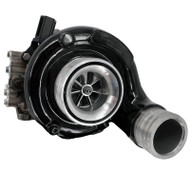
S300 refers to the Borg Warner S300 compressor frame — a family of turbochargers that share the same basic compressor housing bolt pattern and general architecture but are available in a range of compressor and turbine wheel sizes. The "S300" designation is a frame size, not a specific turbo. Within that frame, the compressor wheel inducer diameter is what most people are referring to when they talk about S362, S366, S369, and so on — those numbers indicate the inducer diameter in millimeters.
The S300 frame is well suited to the 5.9L and 6.7L Cummins because its size range aligns with what these engines need for street and towing applications. Large enough to move serious airflow, compact enough to spool quickly on diesel exhaust volumes, and mechanically simple enough to be reliable in daily and working truck use.
S300 Variants: S362, S363, S366, S369 Explained
Understanding the differences between the common S300 variants helps match the right turbo to how the truck is actually used.
S362
The S362 has a 62mm compressor wheel inducer and is the most street-friendly option in the S300 family. It spools quickly, delivers strong low-RPM torque, and maintains excellent daily drivability. Power ceiling is in the 450 to 475 HP range depending on supporting modifications. The S362 is the right choice for owners who prioritize throttle response and towing manners over maximum top-end airflow — a daily driver that tows 10,000 to 15,000 pounds regularly will be very well served by an S362.
S363
The S363 sits between the S362 and S366 in terms of airflow capacity. With a 63mm inducer it offers a meaningful step up in top-end flow over the S362 while preserving most of its spool characteristics. Available in two turbine housing options — 68mm and 73mm — the S363 covers a power range of 500 to 530 HP and suits owners who want more headroom than the S362 provides without fully committing to the S366's larger compressor. It is a popular choice on the 3rd gen 5.9 for owners tuning for moderate power increases alongside towing use.
S366
The S366 is the most popular S300 variant for serious towing and performance applications. Its 66mm compressor wheel flows enough air to support 600 to 650 HP with the right supporting modifications, and the 73mm turbine housing keeps spool manageable at street RPM. This is the turbo most hot-shot drivers and heavy towers reach for when they want a single turbo that handles everything — moderate daily driving, 18,000 to 20,000 pound tow loads, and enough headroom for future fuel work. The S366 is also the most common high-pressure turbo choice in S300/S400 compound setups.
S369
The S369 is the largest common S300 variant with a 69mm compressor wheel. It supports up to 775 HP on the right build and is better suited to performance-focused applications than pure towing. Spool is somewhat later than the S366 — not unmanageable on a street truck, but noticeable under light loads. The S369 is the right choice for owners who want maximum airflow from a single S300 frame turbo and are willing to accept slightly less low-RPM response in exchange for top-end capability.
Journal Bearing vs. Ball Bearing: What's the Difference
Every S300 variant is available in both journal bearing and ball bearing configurations. The core difference is in how the turbo shaft is supported.
A journal bearing turbo uses a film of pressurized oil to support the shaft — it is the traditional turbo bearing design and is proven, reliable, and cost-effective. A ball bearing turbo replaces the oil film with ceramic ball bearings that support the shaft with direct contact. Ball bearings reduce shaft friction, which means the turbo spools approximately 150 to 200 RPM faster and responds more quickly to throttle input. They also run cooler and are more tolerant of oil supply interruptions during cold starts and hot shutdowns.
For daily drivers and tow trucks where spool response and daily drivability matter, the ball bearing upgrade is worth the additional cost. For dedicated tow rigs where the truck is always warmed up before being loaded, journal bearing turbos perform excellently and are more budget-friendly.
The Turbonator® VGT Option
Diesel Power Source® offers a unique upgrade path that combines the S300 compressor with a variable geometry turbine housing — the Turbonator® VGT. This is not a stock replacement VGT; it is an S300-based performance turbo with a variable geometry exhaust housing that uses movable vanes to improve spool characteristics.
The Turbonator® VGT improves spool by approximately 200 to 300 RPM compared to a standard wastegated S300 housing, delivers a wider usable powerband, and enables exhaust brake function on all Cummins generations — including the 5.9L engines that never had factory exhaust braking. It is available with or without the exhaust brake controller depending on application.
For owners who want S300 performance with VGT-level drivability and the added utility of exhaust braking, the Turbonator® VGT is the most capable single-turbo option in the Diesel Power Source® lineup.
S300 vs S400: How to Know Which Frame Is Right
The S400 frame uses a larger compressor housing that flows more air than any S300 variant. The tradeoff is size and spool — S400 turbos are physically larger and require more exhaust energy to spin, which means later spool and reduced low-RPM response compared to a well-matched S300.
For most real-world Cummins applications — daily driving, towing up to 20,000 pounds, builds targeting up to 600 HP — an S300 single turbo is the better choice. It provides excellent airflow for these use cases while maintaining the street manners that make a diesel truck livable every day.
S400 singles make sense when the power target exceeds what an S369 can support, when the truck is primarily a performance or competition build rather than a working street truck, or when the S400 will serve as the large low-pressure turbo in a compound setup with an S300 as the small high-pressure turbo. The S300/S400 compound configuration — an S366 paired with an S475, for example — is the most popular compound arrangement precisely because it combines the spool characteristics of the S300 with the top-end airflow of the S400.
S300 Single vs. Compound: When to Go Compound
An S300 single turbo is the right starting point for most Cummins owners. It is a meaningful upgrade over stock, it does not require custom fabrication, and it handles a wide range of daily and towing duty cycles extremely well. For trucks targeting up to 550 HP and towing up to 18,000 to 20,000 pounds, an S300 single is entirely sufficient.
Compound turbos become the better answer when EGTs are consistently high at tow weights the truck regularly sees, when power targets exceed 550 to 600 HP, or when the truck is used for hot-shot or heavy hauling where maximum airflow and minimum EGTs matter more than simplicity. The good news is that an S300 single turbo is not a dead end — it can become the high-pressure turbo in a compound system later. Many owners start with an S300 single and add a large secondary turbo using the DPS Add-a-Turbo kit when their needs grow, preserving the initial investment entirely.
S300 Turbo by Cummins Generation
Diesel Power Source® offers S300 turbos specifically engineered for each Cummins generation. Each kit is application-specific — not a universal turbo bolted to an adapter — with compressor and turbine housings designed for the specific engine bay, flange pattern, and oil line routing of that generation.
- S300 Turbo for 12V Cummins 1989–1998 — fits 1st gen and early 2nd gen trucks, T3 manifold, P-pump compatible
- S300 Turbo for 24V Cummins 1998.5–2002 — fits VP44-equipped 2nd gen trucks
- S300 Turbo for 5.9 Cummins 2003–2007 — the most popular platform, available in the full range of S300 sizes and bearing options
- S300 Turbo for 6.7 Cummins 2007.5–2018 — T4i flange, compatible with 4th gen engine bay geometry
Not sure which size or configuration is right for your specific truck and use case? Use the DPS Turbo Selector or contact the team directly with your year, current mods, tow weight, and power goals.
What Supporting Parts Does an S300 Upgrade Require
An S300 turbo upgrade does not require custom fabrication, but a few supporting components make the most of the upgrade and protect the new turbo.
A quality exhaust manifold is strongly recommended. Stock cast manifolds are restrictive and prone to cracking at higher exhaust temperatures — an upgraded manifold reduces backpressure, improves spool, and lowers EGTs. On the 5.9 Cummins, a T3 ported manifold matched to the S300's turbine inlet is the most common pairing.
Fresh oil feed and drain lines are worth replacing at the same time as the turbo. Restricted or degraded oil supply is a leading cause of premature turbo bearing failure. Starting with clean lines when the new turbo is installed extends service life significantly.
Tuning is required to get the full benefit of the upgrade. A quality Cummins tune matched to the turbo size adjusts fueling and boost targets to work with the S300's flow characteristics. Running an S366 on a stock tune or a tune calibrated for a smaller turbo leaves significant performance on the table and can result in unoptimized EGTs.
Frequently Asked Questions: S300 Turbochargers for Cummins
What does the number in S362, S366, and S369 mean?
The number refers to the compressor wheel inducer diameter in millimeters. S362 has a 62mm inducer, S366 has a 66mm inducer, and S369 has a 69mm inducer. A larger inducer flows more air at high RPM and supports higher power levels, but requires more exhaust energy to spool — meaning slightly later boost onset at low RPM. The S300 designation refers to the compressor frame size, which is shared across all variants in the family. All Borg Warner S300-frame turbos use the same basic compressor housing bolt pattern, making them interchangeable in terms of fitment when paired with the correct exhaust housing and manifold flange.
Which S300 turbo is best for towing on a 5.9 Cummins?
For most towing applications on the 5.9L Cummins, the S362 or S363 is the best choice for loads up to 15,000 pounds where daily drivability and quick spool are priorities. For heavier towing in the 15,000 to 20,000 pound range or for owners who also want meaningful performance gains alongside towing capability, the S366 is the most popular and well-rounded choice. It spools well enough for street use and flows enough air to keep EGTs in check at high tow weights while supporting 600 HP with fuel system work. The S369 is better suited to performance builds than dedicated tow rigs due to its later spool characteristics.
Is the S300 turbo a direct bolt-on replacement for the stock Cummins turbo?
Yes, with the correct application-specific kit. Diesel Power Source® S300 kits are designed for each specific Cummins generation and use the factory manifold flange pattern, factory oil line connections, and factory intercooler outlet dimensions wherever possible. Installation requires standard hand tools and does not involve welding or custom fabrication. The 3rd gen 5.9 and 12V applications use a T3 manifold flange that mates directly to the stock manifold. The 6.7 application uses a T4i flange with a specific manifold to match the 4th gen engine bay geometry.
What is the difference between a wastegated S300 and the Turbonator® VGT?
A standard wastegated S300 uses a fixed geometry turbine housing with a wastegate valve that opens at a set boost pressure to prevent overboosting. It is a proven, mechanically simple design that performs excellently across a wide range of applications. The Turbonator® VGT replaces the fixed geometry turbine housing with a variable geometry housing that uses movable vanes to actively control exhaust flow — improving spool by 200 to 300 RPM, widening the usable powerband, and enabling exhaust brake function on all generations including the 5.9. The Turbonator® VGT costs more but delivers meaningfully better drivability and the added utility of exhaust braking for towing applications.
Can I use my S300 single turbo as the small turbo in a compound setup later?
Yes, and this is one of the most common upgrade paths for Cummins owners. An S300 single installed today can become the high-pressure turbo in a compound system when the DPS Add-a-Turbo kit is added later. The Add-a-Turbo kit supplies a large secondary low-pressure turbo and all the piping and hardware to integrate it with the existing S300. This means the initial S300 investment is not lost when moving to compounds — it becomes part of a more capable system. The S366 is the most commonly used high-pressure turbo in compound builds due to its airflow characteristics at higher RPM.
How much horsepower does an S366 support on a 5.9 Cummins?
The S366 supports up to 650 HP on the 5.9L Cummins with appropriate supporting modifications including upgraded injectors, a performance tune, quality exhaust, and depending on the power level, CP3 or fuel system work. For most street and tow applications targeting 500 to 600 HP, the S366 is not the limiting factor — fueling and engine components typically become the constraint before the turbo reaches its ceiling. As a single turbo, the S366 is well matched to the 5.9's displacement and exhaust characteristics across a wide range of RPM, making it the most versatile option in the S300 family for serious builds.
Do I need to upgrade my exhaust manifold when installing an S300 turbo?
It is strongly recommended. Stock Cummins exhaust manifolds are cast iron designs that restrict exhaust flow and are prone to cracking under the increased heat cycles that a performance tune and upgraded turbo produce. An upgraded exhaust manifold reduces backpressure, which directly improves spool speed and lowers EGTs. On the 5.9 Cummins, a quality T3 manifold matched to the S300's turbine inlet is the standard pairing. Diesel Power Source® offers exhaust manifolds for each generation designed specifically to work with S300 turbos and the Turbonator® VGT housing.
What is the S300 turbo power range compared to an S400?
S300 turbos in the S362 to S369 range support approximately 450 to 775 HP depending on compressor size, bearing type, and supporting modifications. S400 turbos — typically S475, S480, or S483 — support 600 HP and beyond, with the larger variants capable of supporting 900 HP or more in the right build. For most street and tow applications targeting under 600 HP, an S300 is the better choice due to its superior spool characteristics and daily drivability. S400 singles are better suited to high-output builds and are most commonly used as the large low-pressure turbo in a compound system paired with an S300 high-pressure turbo.
Ready to find the right S300 turbo for your Cummins? Browse by generation at turbo system or use the Turbo Selector to match the right size to your truck and goals.