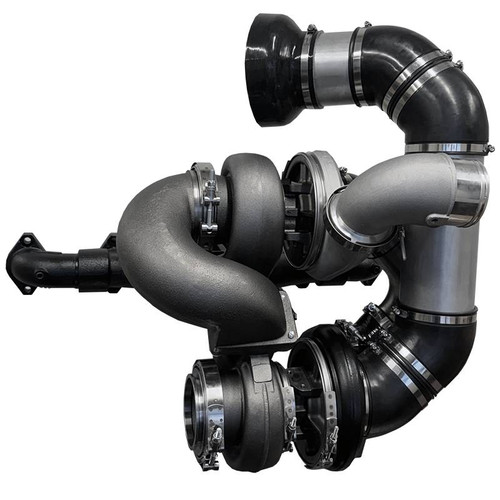
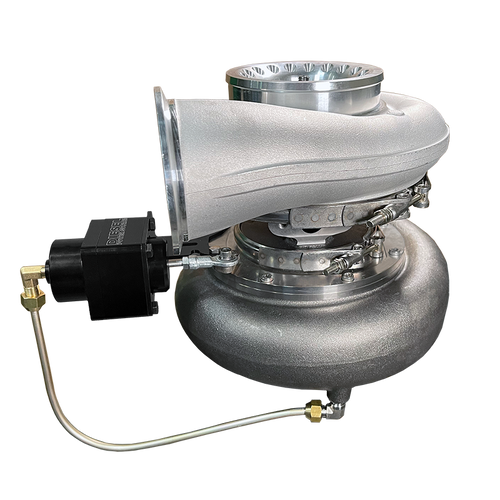
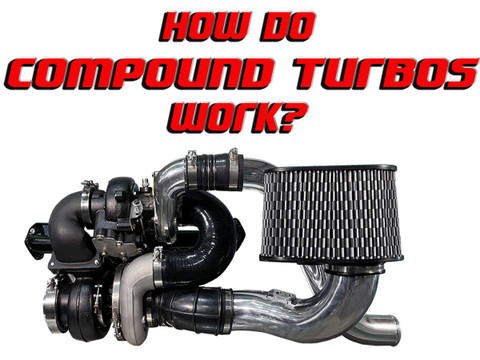
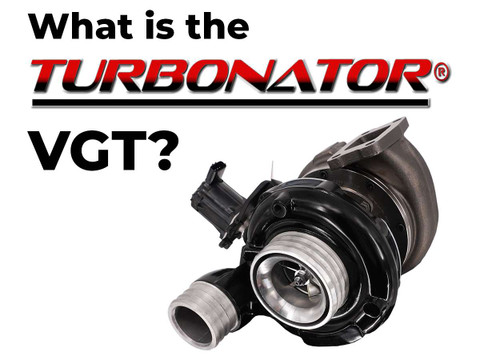
This category covers conversion systems—the brackets, manifold adapters, hot-side and charge-air plumbing, oil feed/return, and related hardware needed to change from a stock configuration to a specified turbo arrangement. If you only need a manifold or a single replacement turbo, see the dedicated categories linked below; use this page for a complete conversion path.
Why run an ISX conversion kit
- Lower drive pressure & EGT: Correct turbine/compressor pairing with efficient plumbing reduces pumping losses on sustained grades.
- Steadier boost control: Better boost-to-drive ratios support consistent speed under load and cleaner combustion.
- Service-ready design: Hardware placement and straight-line access shorten turnaround in fleet maintenance bays.
- Turbo longevity: Thermal management and sealing integrity help protect bearings and seals across long duty cycles.
Fitment overview
Intended for Cummins ISX15 and X15 families including CM570, CM871, CM2250, CM2350 (and select X15 variants). Verify ECM/engine family tag, emissions package (EGR/DPF/SCR), actuator style, chassis clearance, and charge-air routing on each product page before ordering.
Common conversion paths
- Enhanced-flow direct replacement: For near-stock fueling seeking reduced backpressure and improved grade control.
- Fixed-geometry performance conversion: Simplified service with higher sustained airflow; expect later spool than small VGT.
- Atmospheric charger (compound-ready): For routes with heavy GCW, heat, or elevation—prioritizes thermal headroom and stable EGT.
What a typical conversion kit includes
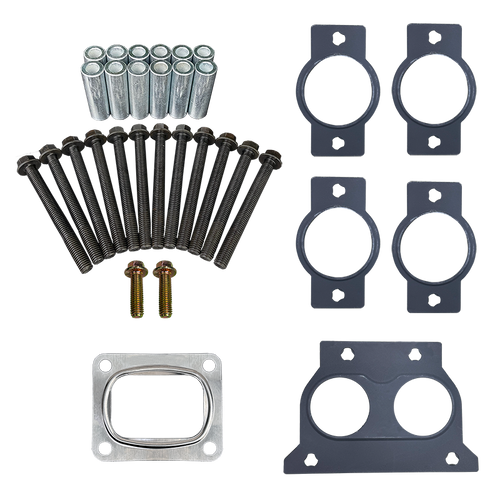
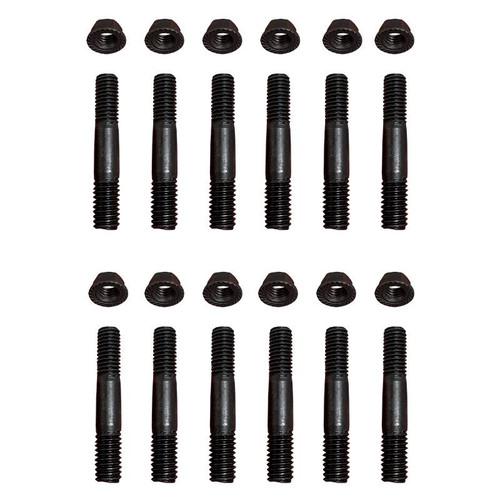
Application-specific turbo option(s), mounting brackets/adapters, manifold or manifold adapters as noted, hot-pipe and charge-air plumbing, oil feed/return solutions, clamps/couplers, heat shielding, and hardware. See each kit listing for the exact bill of materials, actuator provisions, and sensor port details.
Install & operations notes
- Pre-checks: Pressure-test CAC, inspect for pre-turbine leaks, and confirm MAP/DPF differential sensor health.
- Assembly: Use fresh gaskets and follow torque sequence on a cold engine; prime CHRA per instructions.
- Calibration: Many trucks run acceptably as-is, but aligning fueling limits and boost targets post-conversion can improve drivability and regen behavior.
- Monitoring: Track boost, (if equipped) drive pressure, and EGT during initial shakedown under typical route load.
Shopping related components? ISX15 Exhaust Manifolds (manifold-only solutions) | ISX Turbocharger Kits (single-turbo packages). Return here for full conversion systems that change your configuration.
Expected outcomes
- More stable grade speed at target GCW
- Reduced EGT and drive pressure on long pulls
- Improved sealing integrity and service consistency