-
-

-

(7)
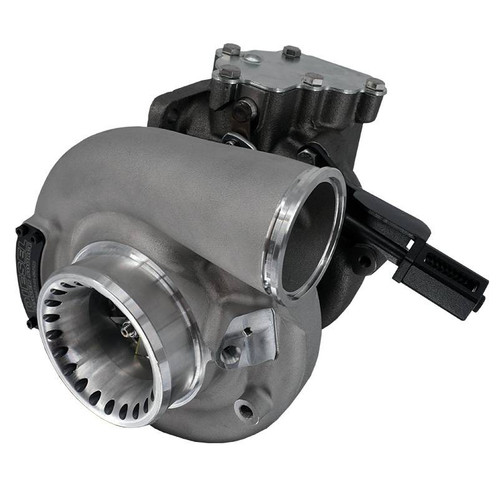
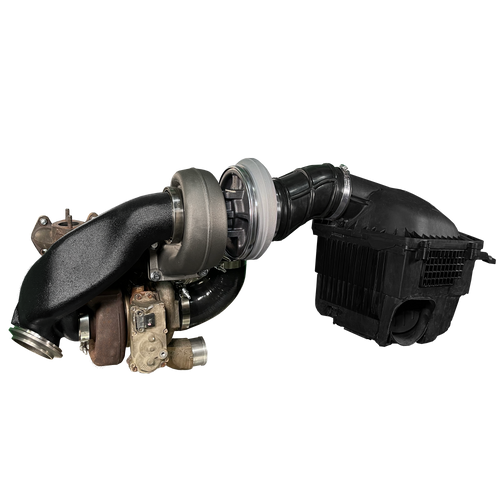
Ball Bearing Turbo for Dodge Cummins 1988 - 2007 -Dual Ceramic
Choose Options$1,939.00 - $4,189.00 -

-

-
-

-

-

-

-

-


Mechanical Simplicity Meets Modern Performance
The original 12-valve Cummins (1989-1993) represents the purest form of diesel performance mechanical P-pump injection, no electronics, and bulletproof reliability.
(7)
These first-generation Cummins trucks are prized for their simplicity and modification potential. Our performance parts are engineered specifically for 1st gen chassis fitment, delivering 200-300°F cooler EGTs, improved throttle response, and 400-800+ HP capability while maintaining the mechanical reliability these engines are famous for.
No electronics—just bolt-on and adjust pump
Proven thermal management for heavy towing
Designed for D250/D350/W250/W350 chassis
Mechanical pump's true potential unlocked
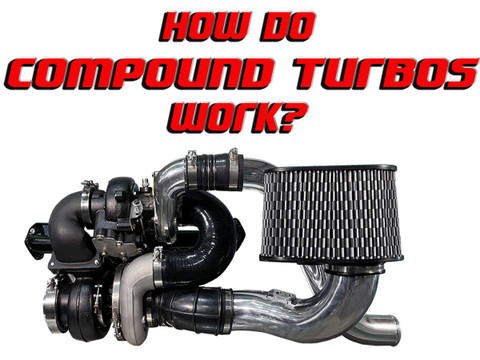
S300 single turbo (S362, S366) + fuel screw adjustment + 3" exhaust. Simple, reliable, 150-200°F cooler EGTs.
Larger S300 or S400 single + moderate P-pump work (gov springs, full cuts) + 4" exhaust. Great balance for work trucks.
Compound turbos + full P-pump build (delivery valves, 5k springs, custom cam) + built trans + supporting mods.
Why 1st Gen 12V is Special: These early Cummins engines have no emissions equipment, no electronics to fail, and respond incredibly well to modifications. The mechanical injection pump can be tuned with hand tools, and the engine itself is virtually indestructible when properly maintained.
Shop by component: Turbo Systems | Exhaust Manifolds | 12 Valve Cummins Guide | Compound Kits
The 1989-1993 first gen represents the original 12-valve Cummins in its earliest form.
Key differences from later 12V (1994-1998):
What's the same:
Power limitations with VE pump:
Why people love 1st gen 12V:
Turbo choice depends on your power goals and whether you're keeping the VE pump or swapping to P7100.
For VE pump (stock injection, up to 400 HP):
For P-pump swapped trucks (400-600 HP):
For serious builds (600-800+ HP):
1st gen chassis fitment notes:
Typical EGT reduction: 150-300°F depending on turbo and tuning.
Stock HX35 turbo baseline (common scenario):
After S366 single turbo upgrade:
After S300/S400 compound turbos:
Why EGT control matters on 1st gen 12V:
First mod for any 1st gen 12V: Install EGT gauge BEFORE turning up fuel. Know what you're working with. Then add turbo upgrade to safely support more fuel.
This category covers Dodge Ram trucks equipped with the 5.9L 12-valve Cummins diesel engine from 1988 to early 1993, commonly referred to as first-generation Cummins trucks.
First gen 12V trucks are reliable but have known weak points—performance parts address many of them.
Problem #1: Killer Dowel Pin (KDP)
Problem #2: Cracked Exhaust Manifold
Problem #3: Weak Intercooler (or None)
Problem #4: Restrictive Stock Turbo
Problem #5: Lift Pump Failure
Problem #6: Weak 53 Block (1989-1991 only)
Absolutely—properly modified 12V trucks make excellent daily drivers.
Why modified 1st gen 12V is great for daily use:
Daily driving considerations by power level:
Mild build (300-400 HP, S300 single):
Moderate build (400-550 HP, larger single or mild P-pump):
Serious build (600+ HP, compounds, full P-pump):
Real-world daily driving experience:
Both are excellent platforms with slightly different strengths.
1989-1993 (1st Gen) Advantages:
1989-1993 Disadvantages:
1994-1998 (2nd Gen) Advantages:
Which is better for performance?
Reality: Both are legendary platforms. 1st gen is for enthusiasts who value character and simplicity. 2nd gen is for those prioritizing power potential and refinement.
For a 1989–1993 VE-pump truck where the goal is primarily EGT reduction and improved drivability, the S362 or S366 single turbo delivers a 150 to 200 degree EGT reduction under typical tow loads compared to the stock HX35. This is meaningful — it takes a truck that previously ran dangerously hot on moderate grades and brings it into a safe operating range with room to spare. For trucks where the VE pump has been modified for additional fueling or where a P-pump conversion is planned, the S366 or S369 is the better long-term choice as it provides adequate airflow headroom for increased fuel delivery. The Diesel Power Source® S300 turbo for 12V Cummins is available in multiple configurations for both 1st and 2nd gen trucks.
No — a turbo upgrade delivers significant benefits on a VE-pump truck without any pump conversion. The S362 or S366 dramatically reduces EGTs and improves drivability at the fueling levels the stock VE pump supports. A P-pump conversion becomes relevant when the power target exceeds approximately 400 HP, because the VE pump cannot supply enough fuel volume to utilize the airflow of larger turbos or compound systems at higher power levels. For 1st gen owners whose priority is towing reliability, better EGT control, and improved throttle response rather than maximum power, a well-matched S300 turbo on the original VE pump is a complete and satisfying upgrade without any pump work required.
Yes. The Diesel Power Source® compound kit for 12V Cummins is designed to fit both 1989–1993 first-gen trucks and 1994–1998 second-gen trucks. The 1st gen D/W-Series chassis actually provides good clearance for compound turbo installations — the more upright hood and more open engine bay geometry compared to later rounded-body trucks makes fitting the large secondary turbo and piping less constrained. The kit includes all generation-specific piping pre-bent for the 1st gen engine bay. No custom fabrication is required.
This depends entirely on what you already have and what you want to do with it. If you own a solid 1989–1993 truck and want better towing performance and lower EGTs, a turbo upgrade is absolutely worth it — the cost is a fraction of buying a different truck and the result is a meaningfully more capable version of what you already have. The 1st gen chassis has genuine advantages in simplicity, character, and the pre-emissions mechanical purity that makes these trucks appealing. If your primary goal is building toward 500 HP or beyond, starting with a 1994–1998 P7100 truck is more efficient because the injection pump is already capable of supporting that power level — but that is a build strategy consideration, not a reason to dismiss the 1st gen platform for the use cases it excels at.