-
-

-

(7)
Ball Bearing Turbo for Dodge Cummins 1988 - 2007 -Dual Ceramic
Choose Options$1,939.00 - $4,189.00 -

-

-
-

-

-

-

-
-

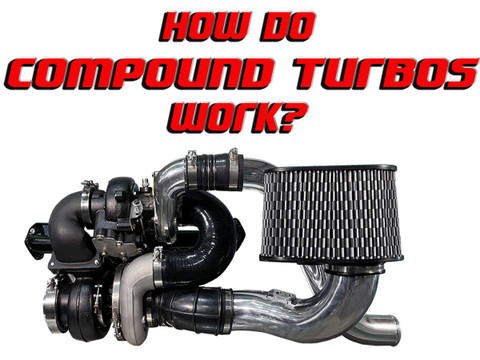

S300 single turbos, compound turbo kits, and high-flow exhaust manifolds for the 1994-1998 5.9L 12-valve Cummins - engineered by Diesel Power Source®.
(7)
The 2nd gen 12V Cummins is one of the most capable and modification-friendly diesel platforms ever built. The mechanical P7100 injection system responds directly to increased airflow with no electronic interference, no derating, and no tuner required — which makes it an ideal match for DPS single turbos, compound kits, and high-flow exhaust manifolds.
The factory HX35 turbo was a good turbo for its era, but it runs out of airflow quickly on any truck with modified fueling. DPS S300 single turbos flow nearly double the air of the factory turbo, and our compound kits deliver the widest powerband and biggest EGT reductions available for the 12V platform. Whether you’re towing heavy, building street performance, or going full competition, DPS builds the turbo system to match your fuel system’s capability.
S362 through S369, journal and ball bearing
Singles and compounds both reduce exhaust temps under load
Designed for 1994-1998 Dodge Ram 2500/3500
Mechanical injection responds directly to improved airflow
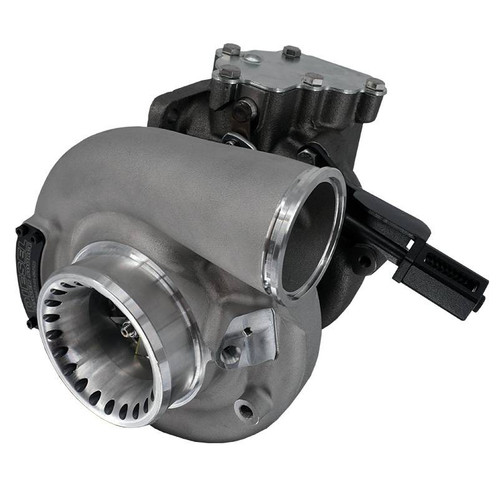
S362 or S363 single turbo or S362/S475 compound kit. Quick spool, measurably cooler EGTs, excellent street manners. The S362 flows nearly double the factory HX35 while spooling at similar RPM.
S366 or S369 single or the S363/73 over S475-S480 compound. Stronger midrange and top-end airflow for trucks with modified fueling. Ball bearing recommended to close the spool gap on larger compressors.
Compound kits (S366 or S369 over S480). Full two-stage turbo systems for maximum airflow. Plan supporting mods: head studs above 45 PSI boost, transmission upgrades around 400 RWHP, aftermarket rods near 800 RWHP.
Ready to upgrade? Browse 12V S300 Turbos, 12V Compound Kits, 12V Exhaust Manifold, or call 801-930-8404 for sizing help.
The P7100 P-pump is the key—it's the holy grail of mechanical diesel injection.
Why P7100 is legendary:
Advantages over other 12V years:
Why enthusiasts seek 94-98 specifically:
What makes 1998 special: The 1998 24-valve came out mid-year (98.5), so early 1998 trucks still have 12V with P-pump. Late 1998/1998.5 switched to 24V with VP44 electronic pump. Early 1998 12V trucks are highly sought after—newest 12V you can get.
The right turbo for a 1994–1998 12V Cummins depends on three things: how the truck is used, what P-pump work is planned, and what power level is the target. For a daily driver or moderate tow truck with basic P-pump adjustments targeting 450 to 550 HP, the S366 with the Turbonator® VGT option is the strongest all-around choice — quick spool, strong EGT reduction, and exhaust brake capability. For heavy towing builds targeting 600 HP and above, compound turbos deliver better EGT control and a wider powerband than large singles. For competition or extreme builds the turbo selection is driven by the fuel system — the P7100 will deliver whatever the pump is tuned for, and the turbo must be sized to handle that fuel volume efficiently. Contact the Diesel Power Source® team with your specific truck, current mods, and goals for a direct recommendation.
For P7100-equipped 1994–1998 trucks the S366 is the most popular choice for street and tow builds targeting 500 to 650 HP — it pairs well with the P7100's fueling characteristics and spools well in the RPM range where the 12V makes its best torque. The S362 is better suited to mild builds and VE-pump trucks where the goal is EGT reduction and improved drivability at moderate power levels. The S369 and S400-frame turbos suit more aggressive P-pump builds targeting 650 HP and beyond. For trucks used for sustained heavy towing, a compound system in the S300/S400 configuration delivers better EGT reduction and a wider usable powerband than any single turbo — the Diesel Power Source® 12V compound kit is available in multiple configurations to match the build level.
For towing applications on the 1994–1998 12V, the compound turbo kit in the S300/S400 configuration is the most capable and practical choice. The small high-pressure turbo provides the quick spool needed for pulling from a stop under load, while the large secondary turbo delivers sustained airflow on long grades that keeps EGTs 200 to 300 degrees below what a single-turbo truck sees under the same conditions. For trucks that must stay on a single turbo, the S366 with the Turbonator® VGT option provides the best combination of EGT reduction, towing response, and the exhaust brake function that makes extended descents under load safe and controlled.
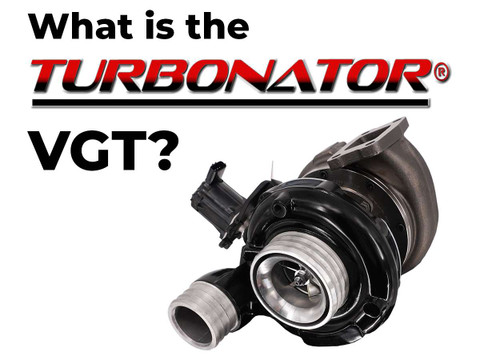
The Turbonator® VGT replaces the standard wastegated exhaust housing on the S300 turbo with a variable geometry housing that uses movable vanes to actively adjust exhaust flow. On the 12V Cummins this improves spool by approximately 200 to 300 RPM over a fixed-geometry housing and — most significantly for this platform — enables exhaust brake function. Neither the 1st gen nor 2nd gen 12V Cummins had factory exhaust braking, which means any extended descent under load relies entirely on friction brakes. The Turbonator® VGT exhaust brake changes this completely, providing meaningful engine braking on grades and extending brake life on trucks used for towing. It is available with or without the exhaust brake controller.
P7100 platform supports any turbo configuration—choice depends on power goals.
For street/tow builds (400-550 HP):
For performance/heavy towing (550-700 HP):
For ultimate performance (650-1000+ HP):
P7100-specific turbo advantages:
Second gen 12V is very reliable but has a few known issues to address.
Critical issue: Killer Dowel Pin (KDP)
Lift pump failure:
53 block concerns (1994 early models):
Front cover/timing gear noise:
Exhaust manifold cracking:
Transmission wear:
Otherwise bulletproof: Address KDP and lift pump, these engines run 500k+ miles regularly
Absolutely—with proper setup, high-HP 12V trucks make excellent daily drivers.
Why high-HP P-pump 12V works for daily use:
Daily driving by power level:
400-550 HP (S300 single, moderate P-pump):
550-700 HP (S400 single or compounds, full P-pump):
700+ HP (compounds, race P-pump, big injectors):
Real-world daily driving experience:
Keys to drivable high-HP 12V:
Fuel economy varies dramatically based on modifications and driving habits.
Stock 2nd gen 12V baseline:
Mild mods (basic P-pump tuning, turbo upgrade, conservative 400-450 HP):
Moderate builds (500-600 HP, full P-pump work):
High-HP builds (650+ HP, compounds, race pump):
Factors killing fuel economy:
Tips for better economy with P-pump mods:
No. A turbo upgrade does not affect the P7100 injection pump in any way — the two systems are mechanically independent. In fact, upgrading the turbo before turning up the P-pump is the correct sequence for a 1994–1998 12V build. The turbo upgrade lowers EGTs at current fueling levels, which creates headroom to safely increase fuel delivery through P-pump adjustments afterward. Running more fuel through the stock HX35 without first addressing the turbo raises EGTs to engine-damaging levels. Turbo first, then fuel — this is the standard upgrade sequence for P7100 builds.