4th Gen 6.7 Cummins | 2013 – 2018
2013-2018 6.7 Cummins Performance Parts | Fourth Gen Ram
HE300VG turbo upgrades, compound turbo kits, 3rd gen swap kits, and high-flow exhaust manifolds for the 2013-2018 6.7L Cummins - engineered by Diesel Power Source.
The 2013-2018 6.7L Cummins is the most refined iteration of the fourth-generation platform, featuring the highest factory power output (up to 930 lb-ft in 2018), improved emissions systems, and the option of the Aisin AS69RC transmission. DPS builds HE-series replacement turbos, S300 and S400 single turbos, compound kits, 3rd gen swap kits, and high-flow T4i exhaust manifolds specifically for this platform.
The factory HE300VG is a capable VGT, but it is known for actuator failures, sticking vanes, and P003A codes as these trucks accumulate miles and soot. DPS offers multiple upgrade paths - from direct HE-series replacements that maintain factory exhaust brake to full compound kits that deliver the widest powerband and biggest EGT reductions available for the 6.7L platform.
HE-series, S300, S400, swap kits, and compounds
Singles and compounds both reduce exhaust temps under load
Legendary Aisin AS69RC handles serious power
Keep exhaust brake or go maximum power
DPS Products for 2013-2018 6.7 Cummins
- HE-Series Turbo Upgrades - Direct HE300VG replacement with 63mm or 66mm DPS upgrade options. Maintains factory exhaust brake. Emissions compatible.
- 3rd Gen Swap Kit - Replace the factory VGT with an S300 or S400 turbo + DPS manifold. Stays in factory turbo location. No custom piping.
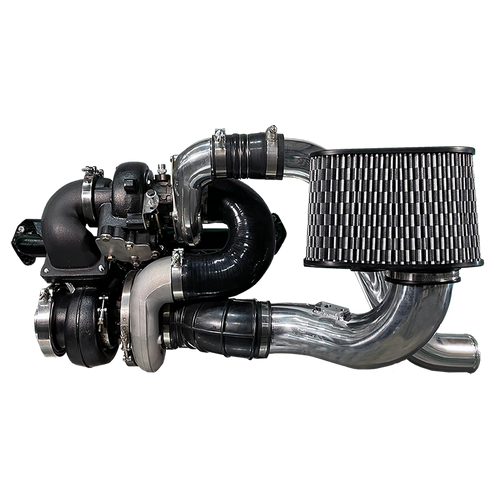
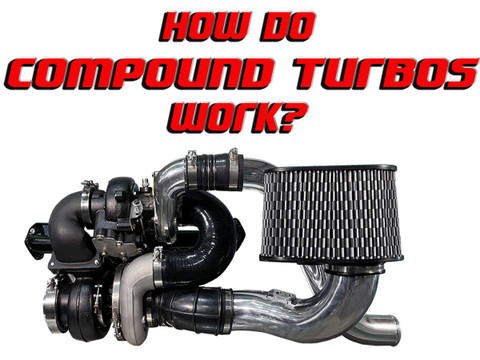
- Compound Turbo Kits - S300 + S400 two-stage systems, 450-1,200 HP. Includes both turbos, manifold, all piping, oil lines, and hardware.
- Add-A-Turbo Kit - Keeps your factory HE300VG turbo, adds an S475 atmospheric. Emissions compatible. Budget entry to compound performance.
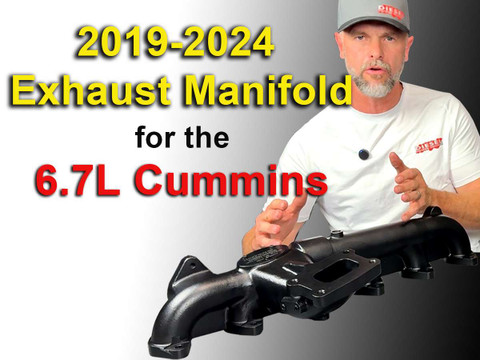
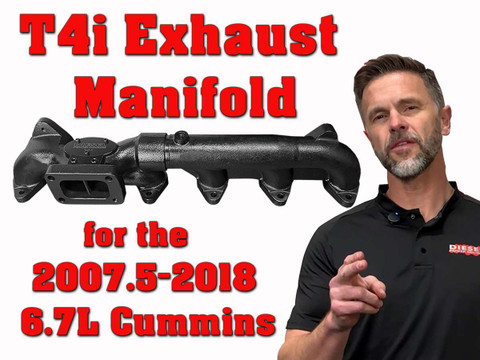
- T4i Exhaust Manifold - 2-piece HSMD ductile iron, 72% more flow than factory. Emissions compatible.
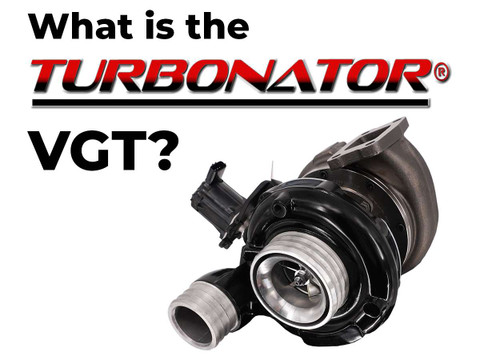
- Turbonator VGT Upgrade - Add variable geometry and exhaust braking to any DPS S300 turbo.
- Ball Bearing Upgrade - Approximately 200 RPM faster spool on any S300. ~$550 upgrade.
2013-2018 6.7 Cummins Platform Specifications
- Engine code: ISB 6.7L (408 cubic inches), 24-valve common rail
- Fuel system: Bosch high-pressure common rail, CP4.2 injection pump (CP3 conversion popular)
- Factory power: 370-385 HP / 800-850 lb-ft (2013-17), 370-400 HP / 850-930 lb-ft (2018)
- Stock turbo: Holset HE300VG variable geometry turbocharger
- Exhaust flange: T4i (proprietary)
- Chassis: Ram 2500/3500 fourth generation (2013-2018)
- Transmissions: 68RFE 6-speed automatic, Aisin AS69RC 6-speed automatic, or G56 6-speed manual
- Emissions: EGR, DPF, DEF/SCR with advanced controls
How to Choose the Right Upgrade for Your 2013-2018 6.7
HE-series replacement or upgrade turbos (HE363VG, HE366VG) are direct bolt-in fits that maintain EGR, DPF, DEF, and factory exhaust brake. Add-A-Turbo kits provide compound performance while keeping the factory HE300VG and emissions equipment in place.
Replace the factory VGT with a DPS manifold and S300 or S400 turbo. Stays in the factory turbo location, no custom intercooler or exhaust piping needed. Turbo and manifold bolt to factory connections.
Full compound turbo kits with two new DPS turbos, 450-1,200 HP. Plan supporting mods: head studs above 48 PSI boost, transmission upgrades around 400 RWHP, fuel system upgrades around 500-550 RWHP.
Fitment Notes
- Factory exhaust flange is T4i (proprietary to 2007.5-2018 6.7L)
- Factory turbo is HE300VG on all 2013-2018 trucks
- HE-series upgrades and add-a-turbo kits are emissions compatible
- Contact DPS at 801-930-8404 to match the right upgrade to your build goals
Common 2013-2018 Issues DPS Products Solve
- HE300VG actuator failures and sticking vanes
- P003A, P2262, P00AF, and P0299 turbo codes
- High EGTs under towing load
- Factory turbo running out of airflow on tuned trucks
Ready to upgrade? Browse HE-Series Turbos, 3rd Gen Swap Kits, Compound Kits, or call 801-930-8404 for help choosing.
Dodge / Ram Cummins 4th Gen (2013–2018) FAQs
The 2013-2018 generation represents the most refined and powerful iteration of the 6.7L platform.
Major improvements over 2007.5-2012:
- Power increases: Factory power grew from 350 HP / 650 lb-ft (2007.5) to 400 HP / 930 lb-ft (2018). Massive torque gains.
- Aisin transmission option: AS69RC 6-speed automatic (2013+) handles 600+ HP stock, legendary reliability
- Improved emissions: More advanced DEF/SCR system, better DPF regeneration strategies
- Enhanced ECM: More sophisticated tuning, better power delivery from factory
- Stronger internals: Continued improvements to pistons, rods, block casting
Why 2013-2018 is preferred for performance:
- Highest factory torque of any Cummins (930 lb-ft in 2018)
- Aisin transmission eliminates weak point (68RFE weak, Aisin strong)
- Better factory baseline = less work to reach 600+ HP
- Most modern platform = best resale value
- Advanced ECM tuning capabilities
Aisin transmission advantage:
- Stock Aisin good to 650-700 HP (vs. 68RFE weak at 450 HP)
- Built Aisin handles 1,000+ HP reliably
- Smooth shifts, excellent towing behavior
- This alone makes 2013+ trucks worth premium for serious builds
Late 6.7L supports all turbo options; Aisin transmission strength enables serious power.
VGT turbo upgrades (keep exhaust brake):
- Turbonator® VGT or upgraded HE300VG: Enhanced variable geometry
- Power range: 500-600 HP reliably
- Benefits: Keeps exhaust brake, tow/haul mode, emissions compatibility, 150-200°F cooler EGTs
- Best for: Daily drivers, heavy towing, emissions compliance, want factory features
- Supporting mods: EFILive tuning, 5" exhaust, cold air intake
S300 fixed-geometry singles:
- S362, S366, S369: Excellent for 550-700 HP
- Benefits: Quick spool, 200-250°F cooler EGTs, no VGT complexity, clean power
- Limitation: Lose exhaust brake
- Best for: Performance builds, don't need exhaust brake, want simplicity and power
S400 singles (serious power):
- S472, S475, S480: For 700-850 HP
- Benefits: Massive airflow, handles big fueling, competition-ready
- Limitation: Noticeable lag below 2000 RPM
- Best for: Competition, drag racing, sled pulling
Compound turbo systems (ultimate):
- S300/S400 or S400/S400: For 750-1000+ HP
- Benefits: Zero lag, 250-300°F cooler EGTs, massive power that's drivable
- Best for: Extreme towing (30k+ lbs), competition, high-HP street trucks
- Advantage: Aisin transmission handles compound power without upgrades to 700 HP
EGT improvements: 150-300°F depending on turbo and power level.
Stock HE300VG baseline (with aggressive tune):
- Towing 22,000 lbs up 6% grade with 550 HP tune: 1,200-1,300°F
- Stock turbo restrictive with big power; needs upgrade for safe temps
After Turbonator® VGT or upgraded HE300VG:
- Same load, same tune: 1,050-1,150°F (150-200°F cooler)
- Improved vane design and flow = lower temps
- Keeps exhaust brake for mountain safety
After S366 or S369 fixed-geometry single:
- Towing 25,000 lbs, 600 HP: 1,025-1,125°F (175-250°F cooler)
- Significantly more airflow capacity = cleaner combustion
After S300/S400 or S400/S400 compounds:
- Towing 30,000 lbs, 750+ HP: 975-1,075°F (225-300°F cooler)
- MORE weight, MORE power, yet dramatically cooler operation
- This is why compounds dominate serious 6.7L builds
Why EGT control matters for late 6.7L:
- High factory torque (930 lb-ft) means lots of fuel being burned
- Advanced ECM tuning can add power quickly; must add air to match
- Lower EGTs critical for head gasket longevity at high cylinder pressures
- Cooler operation extends all component life significantly
Safe EGT guidelines for 2013-2018 6.7:
- Cruising: Under 1,000°F ideal
- Towing: 1,000-1,150°F acceptable
- Max short bursts: 1,250°F for passing (brief only)
- Danger zone: Sustained 1,300°F+ risks damage
Generally very reliable; a few known issues to address.
CP4 injection pump failure (all years):
- Issue: CP4.2 pump catastrophic failure sends metal through fuel system
- Cost to repair: $10,000-18,000 (pump, injectors, lines, tank cleaning)
- Prevention: Dual CP3 conversion eliminates CP4 risk, adds power ($2,500-4,000)
- Many owners: Convert to dual CP3 preventatively, especially for performance builds
Emissions system issues:
- DPF clogging: Regen cycles, potential failures ($2,000-4,000 replacement)
- DEF system: Heater, sensor, injector failures ($600-2,500)
- EGR cooler: Can develop leaks ($1,000-2,500)
- Reality: Many performance owners delete emissions for reliability
Transmission (68RFE only):
- Issue: Weak with any power additions
- Solution: Build it ($4k-10k) or buy Aisin-equipped truck
- Aisin: Very reliable, rare issues even at high power
Lift pump:
- Issue: Stock system marginal for high-power builds
- Solution: Aftermarket lift pump ($600-900)
Exhaust manifold:
- Issue: Can crack with high EGTs and power
- Solution: Performance manifold (included in our turbo kits)
Grid heater:
- Issue: Element or relay can fail
- Solution: Replace or delete with block heater ($150-500)
Overall: Address CP4 (dual CP3 conversion), maintain emissions or delete, these trucks extremely reliable. Many exceeding 300k-500k miles.
Absolutely; best daily driver Cummins platform especially with Aisin.
Why 2013-2018 excels for daily use:
- Most refined: Quietest, smoothest, most comfortable Cummins generation
- Massive torque: 850-930 lb-ft stock makes everything effortless
- Aisin transmission: Smooth, intelligent shifts, handles power gracefully
- Modern amenities: Best interior, technology, comfort of any Cummins truck
- Instant power: High-pressure injection + huge displacement = immediate response
Daily driving by power level:
Mild (525-600 HP, VGT upgrade or S300):
- ✓ Drives like muscular stock truck
- ✓ Excellent fuel economy (14-18 MPG highway)
- ✓ Aisin handles power effortlessly
- ✓ VGT keeps exhaust brake
- ✓ Perfect daily driver configuration
Moderate (650-750 HP, S400 or compounds):
- ✓ Very drivable (compounds eliminate lag)
- ~ Fuel economy 12-16 MPG
- ✓ Aisin still stock or minor upgrades
- ✓ Incredible when you need power
High performance (800-1000 HP, full build):
- ✓ Daily drivable with compounds
- ~ Fuel economy 10-14 MPG
- ~ Built Aisin recommended
- ✓ Insane capability available instantly
Real-world daily experience:
- Cold starts: No issues; starts easily in any weather
- Idle: Very smooth and quiet (most refined Cummins)
- City driving: Massive low-end torque, easy to drive gently
- Highway: Quiet, comfortable, pulls effortlessly
- Aisin shifts: Smooth, intelligent, adapts to driving style
- Overall: Most modern, comfortable, refined Cummins for daily use
Fuel economy competitive with earlier generations despite more power.
Stock 2013-2018 6.7 baseline:
- Highway (conservative): 16-20 MPG
- Mixed driving: 14-17 MPG
- Towing 15k lbs: 10-13 MPG
- Emissions delete: Improves 2-4 MPG (no regen burning fuel)
Mild mods (turbo, tune, 550 HP):
- Highway: 14-18 MPG (deleted), 13-16 MPG (emissions)
- Mixed: 12-15 MPG
- Towing: 10-13 MPG
Moderate builds (700 HP, injectors):
- Highway: 12-16 MPG
- Mixed: 10-13 MPG
- Towing: 8-11 MPG
High-performance (850+ HP, compounds):
- Highway: 10-13 MPG
- Mixed: 9-11 MPG
- Towing: 7-10 MPG
Factors affecting fuel economy:
- Emissions equipment: DPF regen biggest fuel economy killer; delete helps significantly
- Driving style: Massive torque tempts heavy throttle use
- Tuning: Aggressive tunes prioritize power over economy
- Injector size: Bigger injectors make fuel more accessible
- Weight/aero: Heavy trucks with lifts and big tires suffer
Aisin vs 68RFE economy: Aisin typically 1-2 MPG better due to more efficient gear ratios and smoother lockup strategy.
All three codes are generated by the 6.7L Cummins VGT turbocharger system when the ECM detects a problem with vane position control or boost production. P003A means the actuator exceeded its position limit — it couldn't move the vanes to where the ECM commanded. P2262 means boost was not detected when the engine expected it, pointing to an actuator problem, stuck vanes, boost leak, or physical turbo damage. P226C is the most misunderstood of the three — it simply means the actuator relearn was never completed, which is extremely common after any turbo or actuator replacement. Before replacing parts, confirm which code is present and follow the correct diagnostic path for that specific code.
If P226C is the primary code — especially after a recent turbo or actuator replacement — start with the relearn procedure before replacing anything. Using a scan tool with bi-directional Cummins VGT support, command the actuator through its full range of travel to teach the ECM its endpoints. If P003A or P2262 is present without a recent parts replacement, use the scan tool to command the actuator to 0% and 100% while monitoring actual position feedback. If the actuator responds sluggishly, stalls, or can't reach the commanded position, it needs replacement. If it responds correctly but boost is still low, the problem is elsewhere — boost leak, exhaust manifold crack, or internal turbo wear.
For trucks with under 150,000 miles and an isolated actuator failure, a quality actuator replacement and relearn is a clean, cost-effective fix. For high-mileage trucks or those with repeated VGT issues, upgrading to the Turbonator® VGT delivers improved reliability, better performance, and a more durable actuator in a direct bolt-in package — all while keeping exhaust brake and emissions compatibility intact. For deleted trucks or builds targeting higher power, the DPS 3rd Gen Swap Kit eliminates the VGT system entirely with a proven fixed-geometry S300 setup.r
While you have the turbo system accessible, check the turbo oil feed and drain lines for restriction or clogging — degraded oil supply is a leading cause of turbo bearing failure. Inspect the coolant lines at the turbo for cracking and leaks. Check the downpipe for cracks that allow exhaust to escape before the aftertreatment system. Addressing these items at the same time as the turbo repair prevents repeat failures and avoids returning to the same job later.