-

(1)
DPS Ball Bearing 3rd Gen Swap Kit - 6.7 Cummins 2007.5 - 2018 Ram
Choose Options$2,649.00 - $4,799.00 -



Looking for a 2nd gen swap on your 6.7 Cummins? Diesel Power Source® builds the 3rd Gen Swap Kit — a better alternative that keeps the turbo in the factory location, bolts to your stock piping, and installs in about 3 hours on a deleted truck.
A traditional 2nd gen swap 6.7 Cummins conversion moves the turbo to a completely different location and requires custom intercooler piping, intake piping, and exhaust fabrication. The DPS 3rd Gen Swap eliminates all of that. The turbo and manifold stay in the factory position, all factory connections remain compatible, and you get 12–18% more power with 10–18% lower EGTs. If you’re dealing with stuck vanes, P003A codes, or a failing factory VGT on your 2007.5–2018 Ram, this is the permanent fix.
(1)
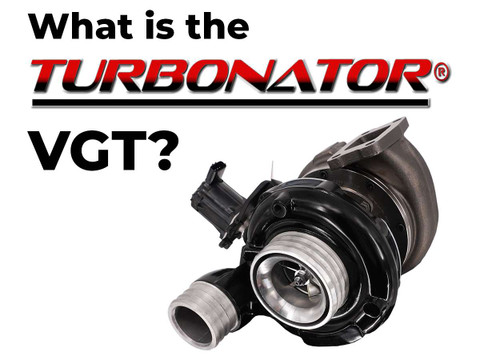
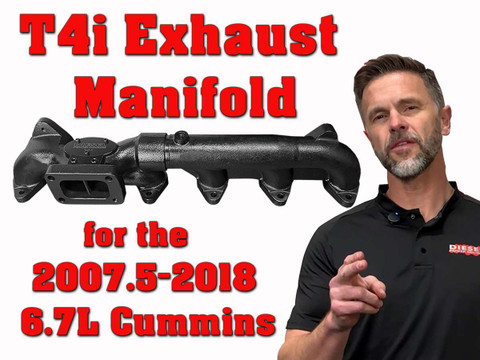
The DPS 3rd Gen Swap Kit converts your 2007.5–2018 Dodge Ram 6.7L Cummins from the factory VGT turbocharger to a 3rd-gen-style S300 fixed-geometry turbo with a DPS 2-piece high-flow exhaust manifold. Eight turbo configurations from 530 HP to 1,000 HP. Every kit includes turbo, manifold, gaskets, studs, oil drain, and water block-off plugs. Optional Turbonator® VGT adds exhaust braking and 200–300 RPM faster spool.
Bolts to factory exhaust, intake, and intercooler
Measurable RWHP gains over stock VGT
Cooler temps under load for safer towing
No more P003A, P2262, P00AF, or P0299
The factory HE300VG and HE351VE turbos develop sticking vanes, actuator failures, and soot buildup that trigger P003A, P2262, P00AF, and P0299 codes. The 3rd gen swap replaces the entire VGT system with a reliable fixed-geometry S300. No vanes, no actuator, no codes.
12–18% RWHP increase over the factory VGT with 10–18% lower exhaust gas temperatures under the same load. Better throttle response, faster spool-up, and cooler running under tow.
A traditional 2nd gen swap 6.7 Cummins requires relocating the turbo, fabricating piping, and rerouting intercooler connections. The 3rd gen swap keeps everything in the factory location — about 3 hours to install on a deleted truck.
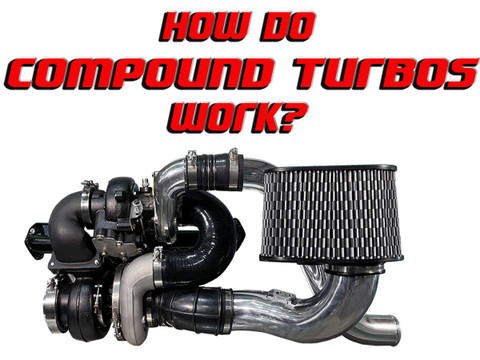
The 3rd gen swap uses the same manifold and turbo positioning as DPS compound kits. If you decide to add an atmospheric S400 turbo later, the 3rd gen swap is no harder to upgrade than a 2nd gen swap.
S363/73/.80 or S363/68/.70. Fastest spool, excellent low-end torque. Perfect for stock-to-mild builds focused on towing and daily driving. Most popular entry point.
S366/73/.80 or S369/73/.80. More compressor for mid-range power. Great balance of spool and top-end flow. Ball bearing upgrade recommended for best response.
S467.7/83/VGT or S472/83/VGT. S400-class turbo with Turbonator® VGT. Requires supporting mods (fuel system, transmission, head studs). Race and sled-pull builds.
Ready to upgrade? Browse the 3rd Gen Swap Kit, the Ball Bearing 3rd Gen Swap, or visit Compound Turbo Kits if you’re ready for twin turbos.
A 3rd gen swap kit allows you to install modern 3rd generation Cummins turbo technology (2003-2007 design) onto your older 2nd generation truck (1994-2002), replacing the factory VGT setup.
Why upgrade to 3rd gen turbo design?
This is especially popular for 1998.5-2002 24-valve trucks looking to modernize their turbo systems.
Our 3rd gen swap kits are truly complete—everything you need for the conversion:
You will NOT need to:
Everything is engineered to work together and bolt into your 2nd gen chassis.
Our 3rd gen swap kits are designed for:
Important considerations:
Each product page lists specific fitment details. Not sure? Send us your truck specs (year, engine, trans, current mods) and we'll confirm compatibility.
Power gains depend on which turbo size you choose and your supporting modifications:
Beyond just peak horsepower, you'll notice:
The real benefit isn't just peak power—it's having a modern, efficient turbo system that makes your 2nd gen feel like a completely different truck.
Moderate to advanced skill level required. This is more involved than a direct replacement turbo.
Installation time:
Why it takes longer than standard turbo swap:
Tools needed: Full socket/wrench set, jack and stands, penetrating oil, torque wrench, possibly cutting/grinding tools for downpipe work.
Our kits include detailed photo instructions. We also offer phone/email tech support during your install.
Yes, tuning is essential for optimal performance and safety.
Your stock ECU programming doesn't account for the increased airflow capability of the new turbo. Without proper tuning:
Tuning options for 2nd gen trucks:
We recommend working with a tuner experienced with 3rd gen swap setups. They'll optimize boost levels, fueling, and timing for your specific turbo configuration.