null Skip to main content

5.9 12V Cummins | 1989 – 1993

1989-1993 12V Cummins Performance Parts | First Gen Dodge

Mechanical Simplicity Meets Modern Performance

The original 12-valve Cummins (1989-1993) represents the purest form of diesel performance mechanical P-pump injection, no electronics, and bulletproof reliability.

These first-generation Cummins trucks are prized for their simplicity and modification potential. Our performance parts are engineered specifically for 1st gen chassis fitment, delivering 200-300°F cooler EGTs, improved throttle response, and 400-800+ HP capability while maintaining the mechanical reliability these engines are famous for.

Mechanical Simplicity

No electronics—just bolt-on and adjust pump

200-300°F Cooler EGTs

Proven thermal management for heavy towing

1st Gen Specific Fitment

Designed for D250/D350/W250/W350 chassis

400-800+ HP Capable

Mechanical pump's true potential unlocked

1989-1993 12V Cummins Platform Specifications

  • Engine code: 6BT 5.9L (359 cubic inches)
  • Fuel system: Bosch VE rotary mechanical injection pump
  • Factory power: 160 HP @ 2,500 RPM / 400 lb-ft @ 1,600 RPM
  • Stock turbo: Holset HX35 (small, restrictive by modern standards)
  • Chassis: Dodge D/W-Series (D250, D350, W250, W350)
  • Unique features: Getrag 5-speed manual or 727 automatic, solid front axle, simplest Cummins platform

Popular Upgrade Paths for 1989-1993 12V Cummins

Daily Driver / Moderate Towing (350-450 HP)

S300 single turbo (S362, S366) + fuel screw adjustment + 3" exhaust. Simple, reliable, 150-200°F cooler EGTs.

Heavy Towing / Street Performance (450-600 HP)

Larger S300 or S400 single + moderate P-pump work (gov springs, full cuts) + 4" exhaust. Great balance for work trucks.

Competition / High Power (600-800+ HP)

Compound turbos + full P-pump build (delivery valves, 5k springs, custom cam) + built trans + supporting mods.

Why 1st Gen 12V is Special: These early Cummins engines have no emissions equipment, no electronics to fail, and respond incredibly well to modifications. The mechanical injection pump can be tuned with hand tools, and the engine itself is virtually indestructible when properly maintained.

1988–1993 12-Valve Cummins Performance FAQs

The 1989-1993 first gen represents the original 12-valve Cummins in its earliest form.

Key differences from later 12V (1994-1998):

  • Injection pump: VE rotary pump (89-93) vs. P7100 inline pump (94-98). VE pump is more limited for extreme power.
  • Power rating: 160 HP stock (89-93) vs. 175-215 HP (94-98)
  • Block casting: Earlier casting numbers, slightly different water passages
  • Intercooler: Most 89-91 trucks had no intercooler; 92-93 added intercooler
  • Chassis: D/W-Series body style (boxier, more utilitarian) vs. 2nd gen rounded body (94+)

What's the same:

  • Same 6BT 5.9L engine block (very strong, reliable foundation)
  • Mechanical injection (no electronics)
  • Simple, proven drivetrain
  • Excellent modification potential

Power limitations with VE pump:

  • VE pump reliable to ~400 HP with modifications
  • Beyond 400 HP, P7100 P-pump swap strongly recommended
  • Many 1st gen owners do P-pump conversion for 500+ HP builds

Why people love 1st gen 12V:

  • Simplest Cummins—easy to work on, no complicated electronics
  • Distinctive square body style
  • Pre-emissions (no EGR, catalytic converter, or DEF)
  • Strong following and aftermarket support

Turbo choice depends on your power goals and whether you're keeping the VE pump or swapping to P7100.

For VE pump (stock injection, up to 400 HP):

  • HX35 or HX40 upgrade: Simple replacement, 250-350 HP range, good for towing
  • S300 singles (S362, S366): 300-400 HP, excellent street/tow balance, big improvement over stock
  • EGT improvement: 150-200°F cooler than stock HX35
  • Best for: Daily drivers, moderate towing, keeping it simple

For P-pump swapped trucks (400-600 HP):

  • Larger S300 or S400 singles: S369, S472, S475 depending on goals
  • Power range: 450-650 HP with proper pump and supporting mods
  • EGT improvement: 175-250°F cooler than stock
  • Best for: Performance builds, heavy towing, competition-lite

For serious builds (600-800+ HP):

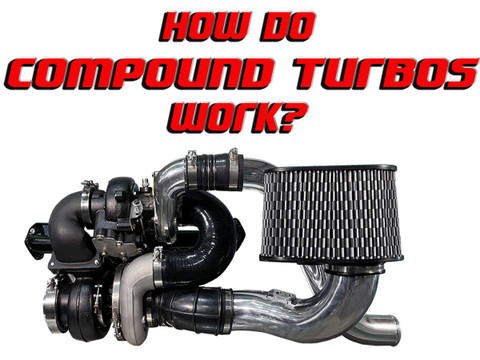
  • Compound turbo systems: S300/S400 or S400/S400 compounds
  • Requires: Full P-pump build, big injectors, built trans, head studs
  • EGT improvement: 200-300°F cooler even at high power
  • Best for: Sled pulling, drag racing, extreme towing

1st gen chassis fitment notes:

  • More hood clearance than 2nd gen trucks—compounds usually fit
  • Solid front axle provides good clearance for downpipes
  • Simple engine bay makes turbo installation easier

Typical EGT reduction: 150-300°F depending on turbo and tuning.

Stock HX35 turbo baseline (common scenario):

  • Towing 15,000 lbs up 6% grade with fuel screw turned out
  • EGTs: 1,350-1,450°F (danger zone, backing out of throttle)
  • Black smoke, sluggish response, constant worry

After S366 single turbo upgrade:

  • Same load, same grade, same pump settings
  • EGTs: 1,150-1,250°F (150-200°F cooler)
  • Minimal smoke, better power, much more confidence

After S300/S400 compound turbos:

  • Same load, even with MORE fueling/power
  • EGTs: 1,050-1,150°F (250-300°F cooler than stock)
  • Clean exhaust, instant response, can tow anything anywhere

Why EGT control matters on 1st gen 12V:

  • No pyrometer from factory: Many owners don't realize how hot they're running
  • Mechanical pump encourages over-fueling: Easy to turn fuel screw without adding air = high EGTs
  • Head gasket risk: Sustained temps over 1,400°F will blow head gasket (common 12V failure)
  • Manifold cracking: High EGTs crack exhaust manifolds (another common issue)

First mod for any 1st gen 12V: Install EGT gauge BEFORE turning up fuel. Know what you're working with. Then add turbo upgrade to safely support more fuel.

This category covers Dodge Ram trucks equipped with the 5.9L 12-valve Cummins diesel engine from 1988 to early 1993, commonly referred to as first-generation Cummins trucks.

First gen 12V trucks are reliable but have known weak points—performance parts address many of them.

Problem #1: Killer Dowel Pin (KDP)

  • Issue: Front gear case dowel pin can work loose and fall into timing gears, destroying engine
  • Solution: KDP tab or removal ($15-50 part, critical preventive maintenance)
  • Do this FIRST: Before any performance mods, address KDP

Problem #2: Cracked Exhaust Manifold

  • Issue: Stock cast manifolds crack from thermal cycling
  • Solution: Performance exhaust manifold (included in our turbo kits)
  • Benefit: Thicker walls, better flow, won't crack

Problem #3: Weak Intercooler (or None)

  • Issue: 89-91 had no intercooler; 92-93 had small intercooler
  • Result: Hot intake temps, reduced power, higher EGTs
  • Solution: Upgrade to large aftermarket intercooler ($500-1,200)
  • Benefit: 100-150°F cooler intake temps = more power, safer EGTs

Problem #4: Restrictive Stock Turbo

  • Issue: Small HX35 chokes airflow, causes high EGTs, limits power
  • Solution: Our turbo upgrades (S300, S400, compounds)
  • Benefit: 150-300°F cooler EGTs, 100-400+ HP gains, better response

Problem #5: Lift Pump Failure

  • Issue: Mechanical lift pump on block fails over time
  • Result: Starves injection pump, causes damage, poor performance
  • Solution: Aftermarket electric lift pump ($300-600)
  • Do this: Essential for any performance build

Problem #6: Weak 53 Block (1989-1991 only)

  • Issue: Early 53-block castings had thinner walls, prone to cracking at high power
  • Identification: Cast number on block front-left
  • Solution: Keep power under 600 HP, or swap to later 12V block
  • Note: 1992-1993 had stronger blocks, not an issue

Absolutely—properly modified 12V trucks make excellent daily drivers.

Why modified 1st gen 12V is great for daily use:

  • Reliable platform: Mechanical injection = no electronics to fail, simple to fix roadside
  • Better drivability: Turbo upgrade improves throttle response and reduces smoke
  • Proven longevity: Many 12V trucks with 300k+ miles still running strong
  • Easy maintenance: Can be serviced with basic tools, no dealer scan tool needed

Daily driving considerations by power level:

Mild build (300-400 HP, S300 single):

  • ✓ Drives like stock with more power
  • ✓ Good fuel economy (15-18 MPG highway possible)
  • ✓ Minimal smoke, streetable manners
  • ✓ Stock transmission adequate (though upgrade recommended)

Moderate build (400-550 HP, larger single or mild P-pump):

  • ✓ Still very drivable if tuned properly
  • ✓ Transmission upgrade needed for reliability
  • ✓ Fuel economy slightly worse (13-16 MPG) but manageable
  • ✓ Some smoke on hard acceleration (part of the charm)

Serious build (600+ HP, compounds, full P-pump):

  • ✓ Can be daily driven but requires dedication
  • ~ Fuel economy suffers (10-14 MPG typical)
  • ~ More maintenance-intensive (check fluids, boost leaks regularly)
  • ~ Fun factor high, but not for everyone

Real-world daily driving experience:

  • Cold starts: 12V starts easily even in cold weather (no glow plugs on early models, not needed)
  • City driving: Responsive off idle, easy to modulate power
  • Highway cruising: Comfortable, but loud (it's a mechanical diesel in a 1980s truck)
  • Reliability: With proper maintenance, can be driven hard daily without issues

Both are excellent platforms with slightly different strengths.

1989-1993 (1st Gen) Advantages:

  • Simplicity: Even simpler than later 12V (no electronics at all on early models)
  • Character: Square body styling, more utilitarian, "OG" Cummins
  • Solid front axle: Simpler, cheaper to maintain than later Dana 60
  • Lightweight: Slightly lighter than 2nd gen trucks
  • Following: Strong enthusiast community, distinctive look

1989-1993 Disadvantages:

  • VE injection pump: Limited to ~400 HP without P-pump swap
  • Weaker transmissions: Getrag G360 and 727 both weak compared to later options
  • No intercooler (89-91): Must be added for performance
  • Older chassis: More rust concerns, dated interior, fewer creature comforts
  • Parts availability: Some 1st gen-specific parts harder to find

1994-1998 (2nd Gen) Advantages:

  • P7100 P-pump: 500-800+ HP capable without pump swap
  • Better transmissions: NV4500 manual or 47RE auto much stronger
  • All have intercoolers: Better cooling from factory
  • More refined chassis: Better ride, quieter, more comfortable
  • Higher factory power: 175-215 HP stock vs. 160 HP

Which is better for performance?

  • For 300-400 HP: Either works great, choose based on body style preference
  • For 500+ HP: 2nd gen (94-98) easier due to P7100 pump already in place
  • For ultimate simplicity: 1st gen wins (no electronics whatsoever)
  • For serious towing: 2nd gen has better trans options from factory

Reality: Both are legendary platforms. 1st gen is for enthusiasts who value character and simplicity. 2nd gen is for those prioritizing power potential and refinement.

#1 RATED COMPOUND TURBO KITS - FREE SHIPPING ON ORDERS OVER $300 - MADE IN THE USA - BACKED BY INDUSTRY LEADING ENGINEERING - SHOP WITH CONFIDENCE -