null Skip to main content

Turbonator® VGT Upgrades

Turbonator® VGT Upgrades for Cummins

Variable geometry turbos and turbine housings for S300 and S400 builds on 5.9L and 6.7L Cummins, plus Ford 6.0L Powerstroke.

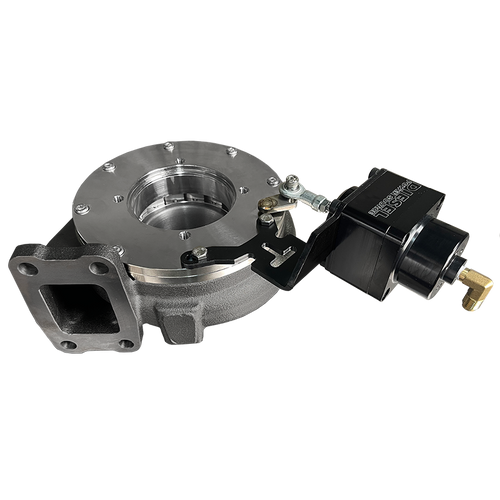
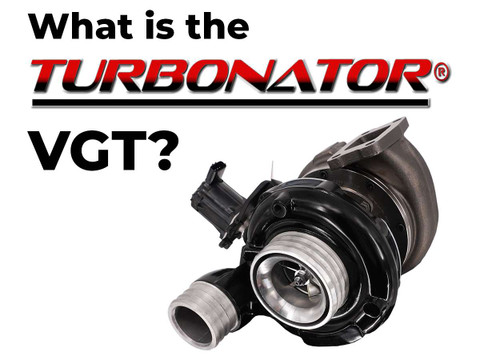
The Diesel Power Source® Turbonator® VGT replaces a fixed A/R turbine housing with variable geometry vanes that adjust to exhaust flow. The vanes start at approximately 0.45 A/R for fast spool at low RPM and open to approximately 1.1 A/R for top-end airflow, so one turbo gets the response of a tight housing and the breathing of a large one. The Turbonator® VGT is built on the S300 and S400 platforms and is available as a complete turbocharger or as a housing-only upgrade for an existing S300 or S400 turbo. The electronic version adds exhaust brake capability.

200-300 RPM Faster Spool

Compared to a fixed A/R turbo with the same compressor wheel

Exhaust Brake Capable

Electronic version, with no air compressor or pneumatic lines

About 0.45 to 1.1 A/R

Infinitely variable between low-RPM spool and top-end flow

Complete Turbo or Housing Only

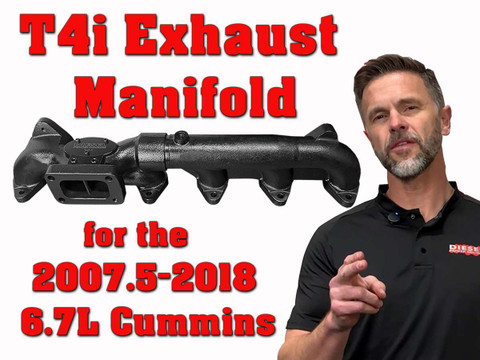
S300 and S400 platforms, T3 and T4 flanges, plus a T4i version for the 6.7L

Turbonator® VGT Products by Application

How the Turbonator® VGT Works

A fixed A/R turbo is a compromise. A tight housing, such as 0.70 A/R, spools quickly but runs out of flow at high RPM. A loose housing breathes well up top but spools slowly. Every fixed housing sits at one point between those extremes no matter what the engine needs.

The Turbonator® VGT removes that compromise. Its stator vanes start at approximately 0.45 A/R, which raises exhaust velocity and directs flow to the outer tip of the turbine wheel at low RPM. As exhaust flow increases, the vanes open, increasing flow and matching exhaust speed to the turbine wheel, until they reach approximately 1.1 A/R at peak flow. The vanes ride on a patented ball bearing unison ring, which gives precise vane positioning and resists wear from soot over time.

On the S300 platform, the Turbonator® VGT typically spools 200-300 RPM sooner than a fixed A/R turbo with the same compressor wheel. Smaller compressor wheels see closer to 200 RPM and 66mm and larger wheels see closer to 300 RPM. If the Turbonator® VGT has a larger compressor wheel than the stock turbo it replaces, it can spool later than stock. The fair comparison is always against a fixed A/R turbo of the same size.

Comparison Fixed A/R Turbo Turbonator® VGT
A/R at low RPM Fixed (e.g., 0.70) About 0.45 for spool
A/R at high RPM Fixed (e.g., 0.70) About 1.1 for flow
Spool vs. same wheel size Baseline 200-300 RPM sooner
Exhaust brake No Yes, electronic version
Adjustable vane starting position No Yes, dash-mounted dial

Electronic vs. 3-Stage Pneumatic Actuator

  • Electronic actuator (recommended): Fully electronic, with an exhaust pressure sensor, boost sensor, controller, wiring harness, and a dash-mounted dial. No air compressor or pneumatic lines. Adds exhaust brake capability and includes the ball bearing unison ring. Works on emissions-equipped trucks and on the factory T4i manifold on 2007.5-2018 6.7L trucks, and provides full VGT and exhaust brake function on earlier trucks, including mechanical 12V Cummins. Easier to install than the pneumatic version.
  • 3-stage pneumatic actuator: A patented mechanical actuator with three spring stages matched to the boost curve. No electronics or wiring, and no exhaust brake. It delivers the variable geometry spool benefit and is for pre-2007 trucks or fully deleted trucks. It is not compatible with 2007.5-2024 6.7L trucks that use the factory manifold.

For customers who tow or want engine braking, the electronic actuator is the recommended choice.

Turbonator® VGT in a Compound Turbo Kit

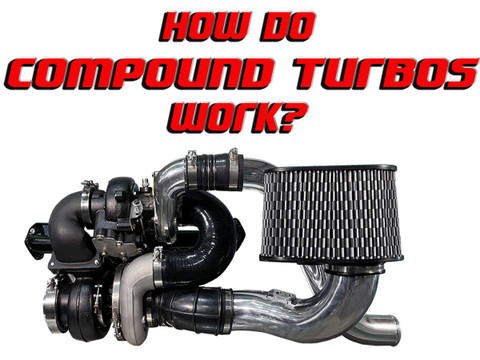
The Turbonator® VGT is available as the small, high-pressure turbo in DPS compound turbo kits for 5.9L and 6.7L Cummins from 1988-2018. It adds two things to a compound system:

  • Earlier spool: The high-pressure turbo spools sooner, which brings the whole compound system on earlier.
  • More top-end flow and an exhaust brake: Opening to about 1.1 A/R lets the small turbo contribute more exhaust flow than a fixed 0.70, 0.80, or 0.90 A/R small turbo, and the electronic version adds exhaust brake capability to the compound build.

Turbonator® VGT FAQ

What is a VGT turbo and how does the Turbonator® VGT work?

A variable geometry turbo uses movable vanes in the turbine housing to change the effective A/R. At low RPM the vanes close to speed up exhaust gas and spool the turbo. At high RPM they open for maximum flow. The Turbonator® VGT operates from approximately 0.45 A/R to 1.1 A/R.

Will a Turbonator® VGT work with my emissions equipment?

It depends on the version. The electronic 6.7L T4i Turbonator® VGT bolts to the factory manifold and keeps EGR, DPF, and DEF equipment in place. T3 and T4 Turbonator® VGT turbos on a 2007.5-2018 6.7L are used with 3rd Gen swap and compound kits, which are for trucks that are already deleted. The 3-stage pneumatic version is for pre-2007 or fully deleted trucks. Diesel Power Source® does not sell emissions delete components.

How does the exhaust brake work?

On an emissions-equipped 2007.5-2018 6.7L, the electronic Turbonator® VGT follows the factory exhaust brake button, including cruise control and warm-up features. On 1998.5-2007 trucks and deleted 6.7L trucks, it can run from a dash toggle switch that brakes when your foot is off the throttle. On 12V trucks, it runs from an on/off switch. On a deleted 6.7L that should use the factory exhaust brake button, the factory turbo should not be electronically deleted in the tune. Confirm your setup with DPS before ordering.

What does the dial on the electronic controller do?

The dash dial sets the starting vane position before the controller takes over. Start at 5, drive with normal throttle, and adjust one click at a time. Most trucks run best between 3 and 8. A higher number does not mean more power; the right position is the one where your truck responds best.

How does it compare to a factory 6.7L VGT turbo?

The factory HE351VE (2007.5-2012) and HE300VG (2013-2018) turbos are also variable geometry. The 6.7L T4i Turbonator® VGT is built on the S300 platform in S363, S366, and S369 compressor sizes, which is more airflow than the factory turbo, and it bolts to the factory manifold. It suits builds past the range of HE-series replacement turbos. For direct replacement, see HE300VG replacement turbos.

Can I add a Turbonator® VGT to my existing turbo or compound kit?

Often, yes. The housing-only upgrade replaces the fixed A/R turbine housing on a compatible S300 or S400 turbo, including the high-pressure turbo in a DPS compound kit. Contact DPS to confirm compatibility with your turbo.

What flanges are available?

T3 and T4 on the S300 and S400 platforms, and T4i for the 6.7L Cummins version that bolts to the factory manifold. Specify your flange when you order.

Does the Turbonator® VGT need maintenance?

An annual cleaning of the exhaust pressure reference tube, turbine housing, and pressure sensor is recommended on the electronic version. Customers and shops can do it with brake cleaner and compressed air. Call DPS for the procedure.

Cummins is a registered trademark of Cummins Inc. Diesel Power Source® is not affiliated with Cummins Inc.

Turbonator® VGT Upgrade FAQs

Turbonator® VGTs are enhanced-performance VGT turbos—not just stock replacements.

Key improvements over stock VGT:

  • Upgraded internal components: Better bearings, stronger actuator mechanisms, improved seals for longer service life
  • Optimized vane geometry: Enhanced vane design for better spool characteristics and airflow efficiency
  • Improved actuator: More reliable VGT actuator with better response and longevity
  • Better quality control: More stringent manufacturing tolerances than typical OEM replacements
  • Performance-oriented design: Engineered for 400-500+ HP capability vs. stock's conservative ratings

Compare to basic stock replacement:

  • Stock replacement: Just restores factory performance, similar durability concerns as original
  • Turbonator: Noticeably better spool, supports more power, lasts longer, better build quality

Yet maintains all OEM features: Emissions compatibility, tow/haul mode, exhaust brake, factory-like drivability.

These three codes all point to the VGT (variable geometry turbocharger) system on the 6.7L Cummins. P003A means the actuator's position has exceeded its learned limit — the ECM commanded a vane position the actuator couldn't reach or hold. P2262 means boost pressure was not mechanically detected when expected, indicating an actuator problem, stuck vanes, boost leak, or physical turbo damage. P226C means the VGT position relearn was never completed after a turbo or actuator replacement, so the ECM can't accurately control vane position. Each code has a distinct cause and requires a different starting point for diagnosis.

Turbonator® VGTs support 400-500+ HP with proper tuning and supporting modifications.

Power ranges by model:

  • Turbonator® 300 Series: 400-475 HP (excellent for daily drivers and moderate towing)
  • Turbonator® 400 Series: 475-550+ HP (heavy towing, performance-focused builds)

Supporting mods for these power levels:

  • Essential: Quality tuning matched to VGT, 4" turbo-back exhaust
  • Recommended for 450+ HP: Upgraded intercooler, lift pump, EGR delete or upgrade (where legal)
  • Required for 500+ HP: Injector upgrades, possibly CP3 pump work, transmission upgrades

Real-world performance gains:

  • Stock 6.7L: ~350 HP, 650 lb-ft → Turbonator with tuning: 425-475 HP, 850-950 lb-ft
  • Noticeable improvement in throttle response, towing capability, and passing power
  • 150-200°F cooler EGTs when towing heavy loads

Yes—Turbonator VGTs are designed to maintain full emissions compatibility.

Works with all factory emissions systems:

  • EGR (Exhaust Gas Recirculation): VGT controls backpressure for proper EGR function
  • DPF (Diesel Particulate Filter): Maintains heat generation needed for DPF regeneration
  • SCR/DEF system: No interference with selective catalytic reduction
  • Emissions sensors: All factory sensors (boost, exhaust temp, NOx) work normally

Street-legal in emissions-regulated states:

  • California and CARB states: Turbonator VGTs work with intact emissions systems
  • Maintains on-road legality when used with emissions-compliant tuning
  • No modification to emissions equipment required

⚠️ Important: While the turbo itself is emissions-compatible, your tuning must also be emissions-compliant to remain street-legal. Work with tuners who understand emissions-on programming.

Yes—100% of factory functionality is retained.

Features that continue working perfectly:

  • Exhaust brake: VGT closes vanes to create backpressure—critical for controlling speed on descents
  • Tow/haul mode: Transmission shift logic and VGT control work exactly as factory designed
  • Engine braking: VGT-based compression braking remains fully functional
  • Cruise control: VGT adjusts seamlessly to maintain speed under varying loads
  • Factory diagnostics: All OBD-II systems and dealer scan tools work normally

Why this matters for towing:

  • Exhaust brake can provide 60-70% of braking force needed on steep descents
  • Saves service brakes from overheating and premature wear
  • Essential safety feature for mountain towing, heavy RVs, hot-shot work

This is a major advantage over fixed-geometry turbos (S300, S400 singles), which eliminate VGT-based exhaust brake and engine braking.

Turbonator VGTs and HE-series VGTs are similar concepts with slightly different approaches:

Similarities:

  • Both use variable geometry technology
  • Both maintain emissions compatibility and factory features
  • Both support 400-550 HP range
  • Both are direct bolt-in replacements for stock 6.7L VGTs

Key differences:

  • Turbonator: DPS-enhanced design with upgraded internals, optimized for balanced performance and durability
  • HE-series: Holset-based enhanced VGTs, proven OEM-style design with performance upgrades
  • Turbonator: Typically includes additional quality control and DPS-specific enhancements
  • HE-series: More closely follows Holset OEM design philosophy

Which to choose?

  • Both are excellent options for VGT upgrades
  • Turbonator offers DPS's unique enhancements and quality standards
  • HE-series offers proven Holset engineering legacy
  • Either will significantly outperform stock VGT turbos

Contact our tech team to discuss which VGT option best fits your specific truck, power goals, and budget.

Installation is straightforward—similar to replacing any stock VGT turbo.

Installation time:

  • DIY with mechanical experience: 4-6 hours
  • Professional installation: 3-4 hours ($500-800 labor)

Why installation is easier than fixed-geometry turbos:

  • Direct bolt-in: Mounts exactly where stock turbo was located
  • Same oil connections: Uses factory oil feed and drain locations (no custom lines needed)
  • Factory downpipe compatible: Often works with stock or aftermarket downpipes without modification
  • Electrical plug-and-play: VGT actuator connector plugs into factory harness
  • No custom fabrication: Everything fits using factory mounting points

Installation steps (overview):

  • Disconnect batteries and remove intake system
  • Disconnect VGT actuator electrical connector
  • Remove oil feed and drain lines
  • Unbolt downpipe from turbo
  • Remove turbo mounting bolts and remove old turbo
  • Install new Turbonator VGT (reverse removal process)
  • Perform VGT actuator relearn procedure (via scan tool or tuner)

Tools needed: Socket set, wrenches, jack and stands, penetrating oil, torque wrench. No special tools required.

Our kits include detailed photo instructions and we offer phone/email support during installation.

A VGT (Variable Geometry Turbocharger) uses a set of movable internal vanes to change the turbo's flow characteristics based on engine speed and load. At low RPM the vanes close to increase exhaust velocity and spool the turbo quickly. At high RPM they open to allow maximum airflow. On the 6.7L Cummins, an electronic actuator mounted to the turbo controls vane position based on commands from the ECM. This design also enables exhaust brake function — the ECM closes the vanes to create backpressure that slows the truck without using the friction brakes.

The two most common failures are carbon buildup on the internal vane assembly and electronic actuator failure. Carbon accumulates from exhaust soot over time and causes the vanes to stick or seize, resulting in low boost, black smoke, and reduced throttle response. The actuator is mounted in a high-heat environment and can fail mechanically or electronically — common fault codes include P2262 and P226C. In many cases the vanes are fine and only the actuator needs replacement. Maintaining clean oil and monitoring EGTs are the most effective ways to extend VGT life.

Yes. Any time a VGT turbo or actuator is replaced on a 6.7L Cummins, the actuator must be calibrated using a scan tool that supports bi-directional VGT control. This procedure teaches the ECM the actuator's full range of travel. Skipping it will result in continued fault codes even with a new, fully functional actuator or turbo installed. The Turbonator VGT is a direct plug-in replacement that uses the factory actuator connector, so the relearn procedure is the same as a stock turbo replacement.

A VGT controller manages vane position either independently of or alongside the factory ECM's commands. On stock or mildly tuned trucks, the factory control strategy is sufficient. On heavily tuned builds with elevated boost and fueling targets, the ECM may not open the vanes aggressively enough at high loads, causing excessive backpressure and elevated EGTs. An aftermarket VGT controller lets the vane position be tuned alongside fueling and boost strategy. For most Turbonator® VGT applications paired with a moderate tune, the factory controller is adequate — your tuner can advise if your specific power level warrants an aftermarket unit.

#1 RATED COMPOUND TURBO KITS - FREE SHIPPING ON ORDERS OVER $350 - MADE IN THE USA - BACKED BY INDUSTRY LEADING ENGINEERING - SHOP WITH CONFIDENCE -